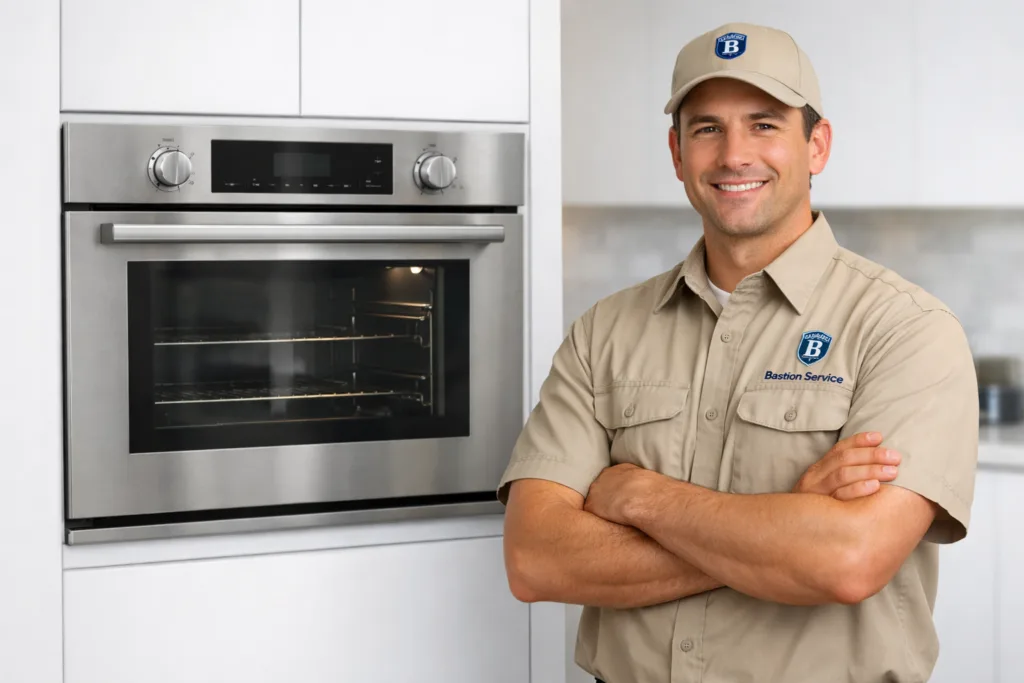
Electrolux ovens are built for precise cooking, so even a small change in performance can show up quickly in everyday use. If meals are taking longer than expected, baking results are inconsistent, or the oven will not complete a normal cycle, the most useful next step is to identify which part of the heating or control system is failing.
Why accurate diagnosis matters with Electrolux ovens
Several different faults can create the same symptom. An oven that seems like it has a bad element may actually have a sensor issue, a relay problem, a wiring fault, or a control failure. That is why symptom-based testing matters. It helps determine whether the problem is isolated to one component or part of a larger issue affecting temperature regulation, startup, or safety functions.
For homeowners in Inglewood, this matters because continued use of a malfunctioning oven can sometimes turn a manageable repair into a more expensive one. Heat-related faults, door issues, and electrical interruptions tend to get worse with repeated use rather than resolve on their own.
Common Electrolux oven problems and what they often mean
Oven will not heat
If the display turns on but the cavity never gets hot, the failure may involve the bake element, broil element, igniter, thermal cutoff, temperature sensor, relay, or incoming power path. In some cases, the oven appears normal from the outside even though the heating circuit is not completing properly.
Uneven baking or unreliable temperatures
Food that browns too much on one side, stays raw in the center, or comes out differently from one use to the next often points to poor temperature control. Common causes include a weak element, a drifting sensor, a failing control, or a worn door gasket allowing heat to escape. These problems can be especially noticeable during longer baking cycles.
Slow preheating
When preheat times keep stretching out, one stage of the heating process may not be working correctly. Electric ovens may be operating with one weak or failed element. On gas versions, ignition performance can slow down heating. A slow preheat problem often starts gradually, then becomes easier to notice over time.
Panel works, but bake or broil does not start
A responsive screen or touch panel does not always mean the oven is fully functional. If the controls light up but cooking modes will not engage, the issue may be tied to the electronic control, selector input, door lock system, or a safety interruption elsewhere in the circuit.
Oven shuts off during cooking
An oven that stops mid-cycle can indicate overheating protection, unstable sensor readings, control faults, or electrical connection issues. If this happens more than once, it is usually a sign that the appliance needs testing before it is used again for a full cooking cycle.
Error codes, burning smells, or breaker trips
These are higher-priority symptoms. Error codes may point to sensor, latch, communication, or control faults. A burning odor, sparking, or breaker tripping can indicate an electrical problem that should not be ignored. In those cases, stopping use until the cause is identified is the safer choice.
Signs the oven should be checked soon
Some oven problems are obvious, but many begin with smaller performance changes that are easy to dismiss at first. It makes sense to schedule service when you notice patterns like these:
- preheat taking longer than it used to
- temperature not matching the selected setting
- baking results changing without a recipe change
- broil or bake working inconsistently
- the oven turning off before cooking is finished
- the door not closing, sealing, or locking correctly
- repeated fault codes after resetting power
Addressing these signs earlier can help prevent a complete loss of heat or additional damage to controls, wiring, or surrounding components.
What can cause temperature swings in an Electrolux oven
Temperature complaints are common because they affect everyday cooking right away. If the oven seems too hot one day and too cool the next, the cause is often one of a few key parts. A sensor may be reading incorrectly, a control may be cycling heat at the wrong intervals, or a heating element may be weakening and no longer delivering steady performance.
Door-related problems can also contribute. If the gasket is worn or the door is not sealing tightly, heat escapes and the oven may struggle to maintain the selected temperature. In households that bake frequently, these changes can become noticeable before the appliance fully stops working.
Repair or replacement: how to think about the decision
Not every Electrolux oven problem means replacement is the better option. Many faults involve a single failed part and can be corrected without replacing the entire appliance. Repair often makes sense when the oven is otherwise in good condition, matches the kitchen well, and has a defined issue with a reasonable repair path.
Replacement becomes more likely when there are multiple major failures, severe internal wear, recurring electronic problems, or repair costs that no longer make sense relative to the oven’s age and condition. A diagnosis should help clarify whether the problem is isolated or whether several systems are beginning to fail at once.
What a service visit should help you understand
A helpful oven service appointment should do more than confirm that something is wrong. It should narrow down the failed component or system, explain how that failure matches the symptoms you are seeing, and determine whether continued use is safe. For many homeowners in Inglewood, that information is what makes the repair decision much easier.
Depending on the symptom, testing may involve checking element or igniter operation, verifying sensor readings, evaluating control response, inspecting wiring connections, and confirming whether the oven is reaching and holding temperature correctly. The goal is to avoid guesswork and focus on the fault that is actually causing the problem.
Household impact when an oven starts failing
Oven issues do not just affect large meals or holiday cooking. They can disrupt weeknight routines, meal prep, and basic kitchen planning. A unit that runs too cool can leave food undercooked, while one that overheats can ruin dishes and create safety concerns. When the symptom repeats, it usually points to a component problem rather than normal variation.
If your Electrolux oven has gone from occasional inconsistency to a pattern you can count on, that is usually the point where repair becomes more worthwhile to evaluate. Small symptoms rarely stay small for long when heat, electronics, and repeated use are involved.
Electrolux oven repair in Inglewood with symptom-based guidance
The best repair decisions come from understanding the exact symptom pattern, the likely failed part, and the condition of the appliance as a whole. Whether the issue is no heat, uneven baking, slow preheat, control trouble, or repeated shutdowns, a focused evaluation helps determine the next sensible step for your home oven.