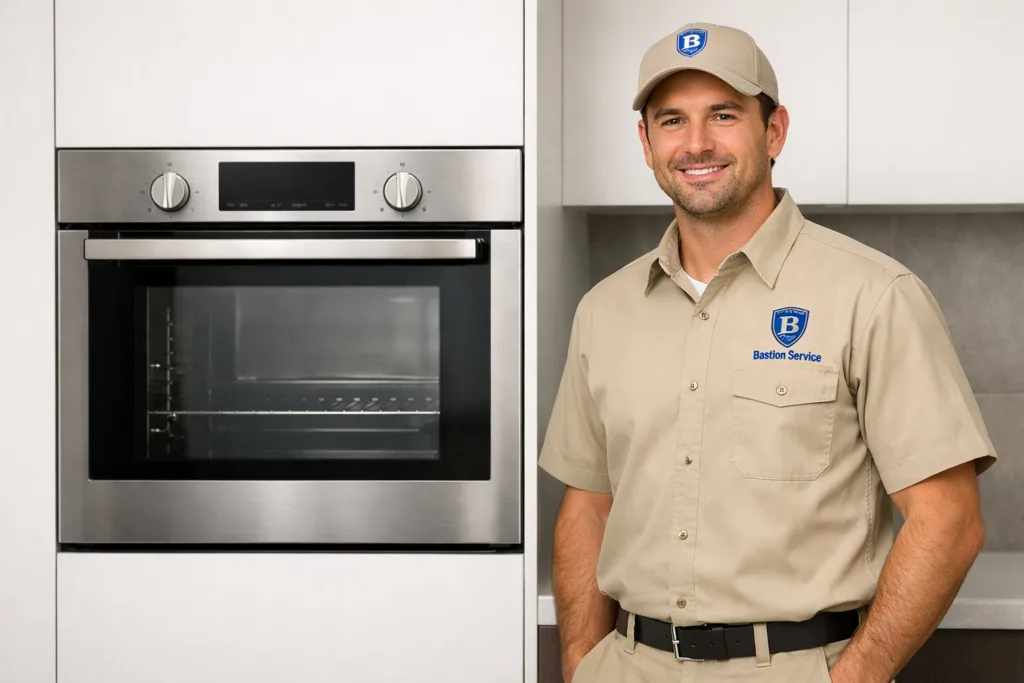
Common Asko oven problems in Inglewood homes

Oven trouble usually follows a recognizable pattern. Paying attention to how the problem shows up can help narrow down whether the issue is related to heating components, temperature sensing, controls, door sealing, or power supply.
Oven not heating at all
If the display turns on but the cavity stays cold, the failure may involve a bake element, broil element, igniter, relay, thermal cutoff, sensor, or electronic control. In some cases, an oven appears to start normally even though one key component is no longer doing its job. A no-heat symptom is usually not something that improves on its own.
Uneven baking and inconsistent results
When one tray browns too fast, the center stays underdone, or results change from one meal to the next, the oven may be struggling to hold the selected temperature. Weak elements, sensor drift, calibration issues, poor airflow, or a door that is not sealing well can all contribute. This is a common complaint when the oven still works, but no longer cooks predictably.
Slow preheating
An Asko oven that takes much longer than normal to reach temperature may have a partially failed heating component or a control problem that is not driving heat correctly. Gas-equipped models can also develop ignition-related delays. Slow preheat often starts gradually, then becomes more obvious over time.
Temperature swings during cooking
Some fluctuation is normal, but large swings can lead to scorched edges, underbaked interiors, and recipes that no longer finish on time. If the oven overshoots the set temperature or drops too far before reheating, the problem may involve the sensor, calibration, relay behavior, or the control board.
Control, display, or door problems
Unresponsive buttons, flashing errors, a locked door that will not release, or a door that does not close firmly can all interfere with normal operation. A bad seal can let heat escape and force longer cook times, while a control fault can interrupt preheat, cancel a cycle, or prevent the oven from starting at all.
What these symptoms often mean
The same complaint can come from different failures, which is why symptom-based testing matters. For example, an oven that runs cool is not always suffering from a bad element. It could also be reading temperature incorrectly, losing heat through the door, or receiving incomplete commands from the control.
- Cold oven with working display: possible element, igniter, relay, sensor, or power issue
- Food cooking unevenly: possible element weakness, airflow issue, calibration problem, or poor door seal
- Long preheat times: possible partial heating failure or ignition delay
- Error codes or dead controls: possible interface, control board, latch, or communication fault
- Oven runs too hot: possible sensor inaccuracy, relay sticking, or control failure
That is why replacing parts by guesswork often leads to extra cost without solving the underlying problem.
When to stop using the oven
Some problems are inconvenient but not urgent. Others deserve immediate attention before the appliance is used again. If the oven is overheating, shutting off unexpectedly, tripping a breaker, giving off a burning smell, failing to shut off correctly, or showing persistent error messages, it is best to pause use until the cause is identified.
Door problems can also move beyond inconvenience. If the door will not latch, stays locked after a cycle, or leaks heat badly enough to affect surrounding surfaces and cooking performance, the appliance should be checked before regular use continues.
For any gas-related cooking setup, a persistent gas smell should always be treated as a safety issue first, not a routine performance complaint.
Why proper diagnosis matters with Asko ovens
Asko ovens often combine electronic controls with tightly integrated heating and sensor systems, so overlapping symptoms are common. An oven may look like it has a simple heating problem when the actual cause is a control fault, or it may seem like an electronic issue when the root problem is a worn component affecting temperature response.
Testing helps determine whether the problem is isolated and repairable, whether multiple components are involved, and whether the appliance remains a sensible repair candidate. This is especially helpful for households trying to decide whether to move forward with service now or start considering replacement.
Repair or replacement: how homeowners usually decide
Many oven problems can be worth repairing when the unit is otherwise in good shape. Heating elements, igniters, some sensors, certain door parts, and a range of control-related issues may be repairable if the overall condition of the appliance supports it.
Replacement starts to make more sense when:
- the oven has had repeated breakdowns in a short period
- multiple systems are failing at the same time
- major electronic components are involved
- parts availability is limited
- overall wear suggests more repairs may follow soon
A single isolated fault is very different from a pattern of declining performance. If the oven has been reliable until this issue, repair is often easier to justify. If heating, controls, and door function have all been slipping, replacement may be the more practical long-term choice.
What to note before scheduling service
A few details can make the diagnosis process faster and more accurate. Try to note whether the problem affects bake, broil, or both; whether preheat completes; whether the issue is constant or intermittent; and whether any error code appears on the display.
It also helps to mention if:
- the oven recently started taking longer to cook familiar meals
- the cavity light, fan, or display still works normally
- the problem began after a self-clean cycle
- the door feels loose, stiff, or misaligned
- the unit has already had prior oven-related repairs
These details can help separate a straightforward component failure from a broader electrical or control issue.
Service expectations for households in Inglewood
Most homeowners are not looking for a technical lecture. They want to know why the oven is misbehaving, whether continued use could cause more damage, and whether the repair path makes financial sense. A practical repair plan starts with the actual symptom pattern and the condition of the appliance, not assumptions.
For homes in Inglewood, the most useful outcome is a service recommendation that explains what failed, what the repair is likely to involve, and whether the oven is worth fixing based on age, condition, and overall performance. That helps restore cooking routines without unnecessary trial and error.