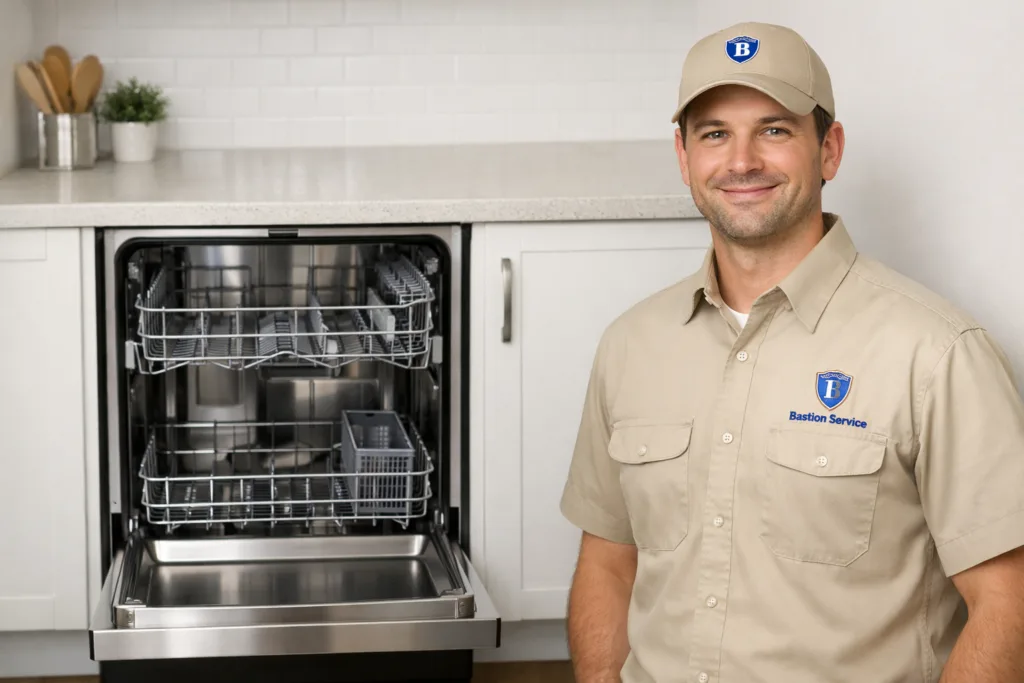
Dishwasher problems rarely stay minor for long. A little standing water can turn into odor, a weak wash cycle can become dishes that never come clean, and a small leak can affect flooring or cabinet edges before it gets noticed. With Blomberg models, the best repair path usually starts by matching the symptom to the part of the machine that is actually failing, rather than guessing based on one visible problem.
Common Blomberg Dishwasher Problems in West Los Angeles Homes
Most service calls fall into a handful of symptom patterns. Understanding what each pattern can mean helps you decide whether a simple maintenance issue is likely or whether the dishwasher needs a repair appointment.
Standing water after the cycle ends
If water is still sitting in the bottom of the tub, the problem may be in the filter area, drain hose, drain pump, or the control sequence that should send the unit into drain mode. In some cases the dishwasher hums but does not move water out, which can point to debris in the pump or a worn pump motor. When this continues, the dishwasher may start to smell, dishes may stay dirty, and the next cycle may perform even worse.
Poor wash results, residue, or cloudy dishes
When glasses come out cloudy or plates still have food residue, the cause is not always detergent. Blomberg dishwashers can show this symptom when spray arms are restricted, filters are clogged, water circulation is weak, or the machine is not heating water properly. If the problem appears on every cycle, especially after basic cleaning, a circulation or heating issue becomes more likely.
Leaking from the door or underneath
Leaks can come from a worn door gasket, lower door seal, loose hose connection, cracked component, oversudsing, or overfilling. A leak near the front may look like a door problem even when the root cause is elsewhere in the fill or wash system. Any repeat leak deserves attention because even a slow drip can damage surrounding materials over time.
Dishwasher will not start
If the unit does not respond when you press start, possibilities include a latch problem, control issue, power supply fault, or wiring failure. Sometimes the display lights up but the cycle never begins, which may suggest the dishwasher is not sensing a properly closed door or is failing a startup check.
Cycle stops midway or never finishes
A dishwasher that fills and begins washing but stops before draining or drying can have trouble with heating, draining, sensing, or electronic controls. Repeated pauses, flashing lights, or a machine that seems stuck in one phase of the cycle usually point to a fault that will not improve with continued use.
Low rinse temperature or poor drying
If dishes are still wet at the end of the cycle and plastic items never dry well, the heating system may not be doing its job. Low rinse temperature can also affect sanitation and leave dishes with residue or a film. This symptom may involve the heater, temperature sensing, or a control issue that is not completing the heating portion of the program.
Grinding, buzzing, or unusual pump noise
New noises during wash or drain often suggest a pump obstruction, spray arm interference, or motor wear. A brief sound once in a while can be minor, but repeated grinding or loud buzzing during every cycle usually means something mechanical needs to be checked before it fails completely.
Why the Same Symptom Can Have Different Causes
Dishwashers often produce similar symptoms for very different reasons. Dirty dishes might come from weak circulation, low fill, blocked spray arms, or low heat. Water left in the tub might be a clogged filter, a kinked hose, or a failing drain pump. A leak at the front can be caused by the door seal, but it can also happen when the dishwasher is overfilling or producing too many suds.
That is why symptom-based repair matters. Looking at how the machine fills, sprays, heats, drains, and seals during operation is usually the fastest way to narrow down the real failure and avoid replacing parts that are still working.
Basic Checks You Can Safely Make First
Before scheduling service, there are a few simple checks that may help rule out routine maintenance problems:
- Remove and clean the filter if it has visible buildup
- Inspect spray arms for blocked openings
- Make sure dishes are not loaded in a way that blocks arm movement
- Confirm the door closes fully and latches securely
- Check for visible kinks in an accessible drain hose
- Use the correct dishwasher detergent and avoid excess soap
If the same symptom returns right away, the machine stops mid-cycle, or water is leaking onto the floor, the issue usually goes beyond basic cleaning or loading adjustment.
Signs the Dishwasher Should Be Repaired Soon
Some problems are easier and less expensive to deal with before they trigger secondary damage. It is smart to schedule Blomberg dishwasher repair in West Los Angeles sooner if you notice any of the following:
- Standing water after multiple cycles
- Recurring leaks near the toe kick or door
- Dishes that stay dirty despite filter cleaning
- A cycle that repeatedly stops or resets
- Controls that do not respond consistently
- Burning smells or unusual electrical behavior
- Loud new noises during wash or drain
Waiting too long can make a limited repair turn into a larger one. A stressed pump can fail completely, a leak can spread, and repeated unsuccessful cycles can waste time, water, and energy without solving the original problem.
Repair or Replace: What Usually Makes Sense
Many Blomberg dishwashers are worth repairing when the machine is otherwise in good condition and the issue is isolated to a drain pump, inlet valve, latch, seal, heater-related component, or control-related fault. Repair becomes less appealing when the dishwasher has several unrelated problems at once, has suffered repeated leaks, or shows broader wear that suggests more failures may follow.
For households in West Los Angeles, the decision is usually less about the brand name alone and more about the exact failed part, the overall condition of the unit, and whether the dishwasher has been reliable up to this point. A proper diagnosis makes that decision much easier because it separates a fixable problem from a machine that is nearing the end of its useful life.
What a Focused Service Visit Should Address
A useful service approach should do more than confirm the obvious symptom. It should identify whether the dishwasher is filling with the correct amount of water, circulating properly through the spray arms, reaching the right rinse temperature, draining fully, and sealing correctly during operation. That process helps distinguish between buildup, wear, and actual component failure.
For homeowners dealing with interrupted kitchen routines, the goal is straightforward: restore normal dishwasher use without unnecessary part replacement or trial-and-error repairs. When the fault is identified clearly, it becomes much easier to decide whether to move forward with the repair and what to expect from the result.