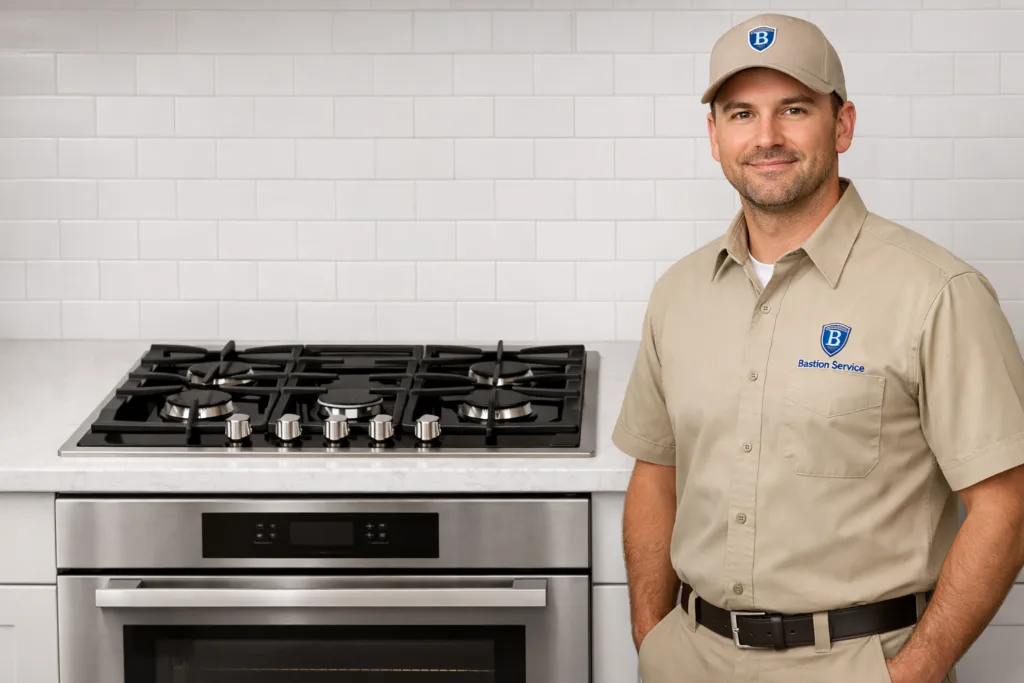
Cooktop problems rarely stay minor for long. A burner that starts clicking more than usual, heats slower than normal, or responds unpredictably to the knob can turn everyday meal prep into guesswork. With Blomberg cooktops, the important first step is matching the symptom to the likely failure area so the repair decision is based on what is actually happening inside the appliance.
Common Blomberg cooktop symptoms in Santa Monica homes
Most cooktop failures begin with one specific symptom rather than a full shutdown. Paying attention to that pattern helps narrow down whether the issue is with ignition, heat regulation, surface components, wiring, or the control system.
Burner will not ignite
On gas models, a burner that will not light can be caused by moisture around the igniter, a misaligned burner cap, clogged burner ports, a worn spark component, or a fault in the ignition circuit. Sometimes the burner clicks normally but never catches. In other cases, there is no spark at all. Those are different failure paths and usually need to be diagnosed differently.
Clicking continues after the flame is lit
Persistent clicking often points to an ignition switch problem, moisture contamination, or a burner part that is not seated correctly. Even if the burner still works, ongoing clicking is a sign that the ignition system is not operating as it should. Leaving it alone can make the problem more frustrating and may lead to repeated misfires.
Burner heats weakly or cooks unevenly
Uneven cooking usually means the burner is not delivering stable heat. On gas units, that can come from restricted flame flow, burner assembly issues, or control-related problems. On electric or radiant surfaces, weak heat may point to a failing element, a damaged connection, or a switch that no longer regulates temperature properly.
One burner fails while the others still work
When the rest of the cooktop operates normally, the problem is often isolated to one burner position. That could mean a single igniter, switch, element, burner head, or localized wiring fault. This is one reason symptom-based testing matters. Swapping parts based on guesswork can miss the actual cause and leave the same burner unreliable.
Knobs or controls do not respond normally
If a control feels loose, sticks, spins incorrectly, or no longer matches the heat output, the issue may be more than cosmetic. Worn switches, damaged stems, and internal electrical faults can all affect how safely and accurately the cooktop operates. If the heat level does not track with the setting, service is worth scheduling before regular use continues.
Cracked glass or visible surface damage
On glass cooktops, any crack should be taken seriously. Surface damage can affect both safety and performance, especially if heat is no longer distributed evenly or moisture can reach internal components. Chips, impact damage, or shifting around burner zones should be inspected before the cooktop is used again.
What different symptoms usually suggest
The same general complaint can come from very different causes. A burner that “isn’t working” might actually be dealing with one of several issues:
- No ignition sound at all: possible switch, spark module, or power-related problem
- Clicking but no flame: possible burner blockage, cap misalignment, or gas-flow issue
- Flame appears but is uneven: possible burner head contamination or assembly problem
- Slow electric heating: possible element weakness, wiring damage, or control failure
- Heat too high or too low regardless of setting: possible regulator or switch malfunction
That is why a useful service visit should do more than identify the symptom. It should determine which component has failed and whether any connected parts have also been affected.
When continued use is a bad idea
Homeowners often keep using the burners that still seem functional, but some signs mean the cooktop should be checked sooner rather than later. Service is a smart next step when:
- A burner lights inconsistently or not at all
- Clicking continues after ignition
- Heat output changes from one use to the next
- The cooktop shuts off unexpectedly or trips power
- Controls do not match actual cooking temperature
- There is visible cracking, scorching, or damage around the cooking surface
These problems can affect both cooking performance and safe operation. In many cases, what starts as a single-burner issue can lead to more wear on switches, ignition parts, or surrounding components if the cooktop is used in a faulty condition.
Repair decisions that make sense for Santa Monica households
Not every cooktop problem leads to the same recommendation. A repair often makes sense when the failure is limited to one part or one cooking zone and the rest of the unit is in good shape. That commonly includes issues such as a failed igniter, a worn switch, a bad element, or a burner assembly problem.
Replacement becomes more worth considering when there are several active problems at once, the cooking surface is badly damaged, or performance issues have spread across multiple burners and controls. For households in Santa Monica, the right choice usually comes down to whether the repair is likely to restore stable everyday use rather than temporarily patch a larger decline.
What a proper cooktop diagnosis should confirm
A good inspection should answer a few practical questions clearly:
- Which specific component has failed?
- Is the problem isolated to one burner or affecting the system more broadly?
- Has the issue caused wear or damage to nearby parts?
- Is continued use reasonable before repair?
- Is the repair worthwhile based on the cooktop’s overall condition?
This kind of explanation helps homeowners avoid replacing parts unnecessarily and makes it easier to decide whether repair is the right path.
Blomberg cooktop issues are often easier to solve when caught early
Small changes in ignition, flame pattern, or heating speed are easy to put off, especially if at least one burner still works. But early symptoms are often the best clue to what is failing. Addressing them sooner can help prevent added strain on controls, wiring, or surrounding cooking components.
If your Blomberg cooktop is no longer working consistently, the most useful next step is a symptom-based inspection that identifies the source of the problem and lays out the repair path in plain terms.