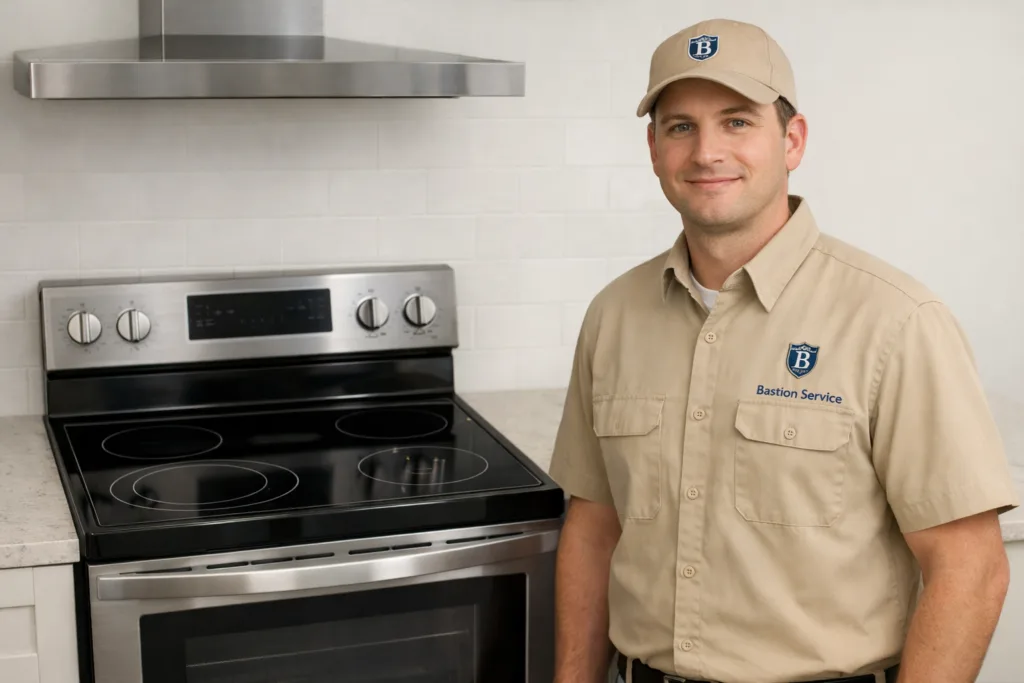
Cooktop problems tend to interrupt the whole kitchen routine because even a single failed burner can limit how meals are prepared. With Whirlpool units, the same visible symptom can come from several different causes, so the most effective next step is to look at how the failure appears, whether it affects one burner or several, and whether the issue is electrical, ignition-related, or tied to the surface itself.
Symptoms that usually point to a repairable Whirlpool cooktop issue
Many Whirlpool cooktop failures begin with one noticeable change in performance. A burner may stop heating, a gas burner may click without lighting, or the cooktop may start heating unevenly. In many cases, these are tied to a specific component rather than complete appliance failure.
Electric cooktops often develop problems related to the radiant element, switch, wiring connection, or terminal area. Gas cooktops more commonly show issues with igniters, burner caps, burner heads, switches, or the ignition circuit. Surface damage, including cracks on glass-top models, is a separate category because it can affect both function and safe operation.
How different symptom patterns help narrow the cause
One burner is not working
If only one burner has failed and the rest of the cooktop still works normally, the problem is often isolated to that burner position. On an electric Whirlpool cooktop, that may mean a bad element, receptacle, switch, or wiring fault. On a gas model, it may involve the igniter, burner head, cap placement, or a switch that is not triggering ignition properly.
When several burners stop working at once, the issue may be more central, such as incoming power, shared wiring, or a control-related fault. That difference matters because a single-burner repair is very different from a broader electrical problem.
Burner heats, but not correctly
A burner that gets too hot, does not respond to the selected setting, or cycles strangely can be just as disruptive as one that does not turn on at all. Electric Whirlpool models may show this when the control switch is failing or the element is no longer regulating heat as it should. The result is cooking that feels unpredictable, with pans overheating or food taking too long to cook.
On gas models, uneven flame, hot spots, or inconsistent heating often point to blocked burner ports, poor cap alignment, ignition problems, or burner wear. These issues can make simmering difficult and can affect everyday cooking results even when the burner still lights.
Clicking, delayed ignition, or repeated sparking
One of the most common gas cooktop complaints is a burner that clicks repeatedly without lighting right away. Sometimes this is caused by moisture after cleaning, but when it keeps happening, the problem may involve the igniter, switch, burner alignment, or debris in the burner assembly.
Delayed ignition should not be ignored. If gas is present before the flame catches, the burner may light roughly or inconsistently. Repeated clicking after ignition can also signal that the ignition system is not sensing or operating normally.
Weak flame or uneven burner output
A weak flame is not always a gas supply problem. On Whirlpool cooktops, it can also be caused by buildup in the burner ports, partial blockage, or parts that are sitting out of position after cleaning. Homeowners in Hawthorne often notice this first when boiling takes longer than usual or when a burner no longer holds a steady simmer.
If cleaning and proper burner cap placement do not restore normal performance, the burner should be inspected more closely rather than used as-is.
Cracked glass or damaged cooking surface
Glass-top Whirlpool cooktops need special attention when the surface is cracked, chipped, or visibly stressed. Surface damage is more than cosmetic. It can affect heat transfer, create cleaning and moisture issues, and raise concerns about continued use.
If the crack extends near an active burner or appears to be spreading, it is best to stop using the appliance until the condition is evaluated. Continued heating can worsen the damage and may affect internal components beneath the surface.
When the problem should be checked sooner rather than later
Some cooktop issues are inconvenient but stable, while others tend to worsen quickly. It is usually worth scheduling service sooner if a burner overheats, fails to shut off correctly, sparks abnormally, smells hot, lights with a delay, or stops working intermittently. Intermittent problems are especially important to address early because they often point to worn switches, loose connections, or ignition components that are getting less reliable over time.
For households in Hawthorne, waiting too long can turn a limited repair into a more involved one. A weak electrical connection can create heat damage. A burner that keeps clicking may wear ignition parts further. A damaged glass surface may spread with continued use.
Repair versus replacement for a Whirlpool cooktop
Many Whirlpool cooktop issues are worth repairing when the fault is limited to a burner element, igniter, switch, burner assembly, or related wiring component. If the cooktop is otherwise in good shape and the problem is isolated, repair is often the sensible choice.
Replacement becomes more likely when the unit has extensive surface damage, multiple independent failures, a long repair history, or aging components that make the overall repair less favorable. This is especially true if both the functional parts and the cooking surface are compromised at the same time.
The key is to separate a single failed part from a larger pattern of decline. That helps homeowners make a decision based on condition and value instead of frustration alone.
What to note before service for faster troubleshooting
If you are arranging Whirlpool cooktop repair in Hawthorne, a few details can make diagnosis more straightforward. Try to note whether the problem affects one burner or all burners, whether it happens every time or only occasionally, and whether the symptom began after cleaning, a spill, or a power interruption.
- Does the burner fail completely, or does it work inconsistently?
- Is the issue limited to heating, ignition, temperature control, or the cooktop surface?
- On gas models, does the burner click, light late, or keep clicking after ignition?
- On electric models, does the burner stay too hot or fail to respond to setting changes?
- Is there any visible cracking, scorching, looseness, or damage around the burner area?
These observations help connect the symptom to the likely system involved and reduce guesswork.
Practical guidance for Hawthorne homeowners
A cooktop does not have to fail completely to need attention. Reduced burner performance, unreliable ignition, unstable temperatures, and surface damage all affect daily use and can point to a problem that is likely to keep recurring. In most cases, the best repair outcome comes from addressing the issue while it is still limited to one component or one section of the appliance.
For residential kitchens in Hawthorne, the goal is usually simple: restore safe, consistent cooking without replacing the cooktop unnecessarily. When the exact failure is identified, it becomes much easier to decide whether repair is the right move or whether the condition of the appliance points toward replacement instead.