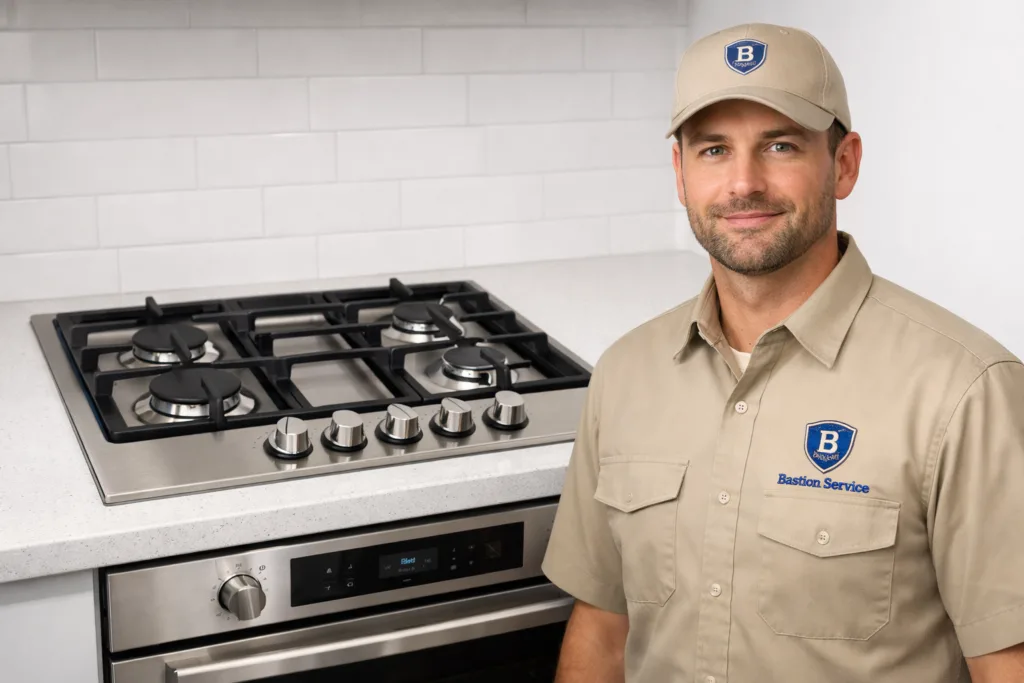
Common Blomberg cooktop problems homeowners notice first

Cooktop issues usually show up in everyday use before they turn into a full breakdown. A burner may stop lighting on the first try, one zone may heat much slower than the others, or the controls may respond inconsistently. On Blomberg units, those symptoms can come from very different causes, so the most useful starting point is matching the behavior of the appliance to the right repair path.
In Hawthorne homes, the most common concerns tend to be repeated clicking, burners not heating properly, ignition delays, cracked glass on smooth-top models, and controls that do not match the selected setting. Some problems affect only one burner. Others point to a wider issue involving the control system, wiring, or power supply.
Symptom-based repair guidance
A burner will not ignite
When a gas burner does not light, the fault may be with the igniter, burner cap alignment, burner head blockage, switch behavior, or the spark system. If the clicking is present but ignition does not happen, that often means the unit is trying to light but the flame is not establishing correctly. If there is no clicking at all, the failure may be in a different part of the ignition circuit.
If only one burner is affected, the issue is often localized. If several burners stop igniting around the same time, the diagnosis may need to look beyond the burner itself. Any ongoing gas odor should be treated as a safety concern first, not just an appliance convenience issue.
The cooktop keeps clicking after ignition
Continuous clicking is one of the most frustrating cooktop problems because the burner may still work while the appliance clearly is not operating normally. Moisture after cleaning can sometimes contribute, but repeated clicking that returns often points to a switch, igniter, or ignition system problem that needs inspection. Letting it continue can put added wear on related components and make the problem more expensive later.
One burner heats weakly or unevenly
Uneven heating can show up as poor simmer performance, long cooking times, hot spots, or a burner that never seems to reach the expected temperature. On electric and radiant models, this may involve the element, sensor feedback, control regulation, or internal wiring. On gas models, weak flame pattern or partial burner blockage can cause uneven cookware heating and unreliable cooking results.
If one pan now takes much longer to boil on the same burner than it used to, that is a useful clue. So is a burner that appears to heat but does not maintain a steady cooking level once the appliance has been on for several minutes.
The cooktop will not turn on
A completely unresponsive cooktop may have a power supply issue, a failed control, a wiring fault, or a safety-related interruption. In some cases, homeowners notice that the unit went dead after a breaker event, cleaning, or a recent performance issue that gradually got worse. Intermittent power loss is especially important to document because it can point toward a loose connection or control failure that does not show up every time.
Controls are not responding correctly
When knobs feel normal but the burner does not behave correctly, or touch controls react unpredictably, the problem may be in the switch or control pathway rather than the heating component itself. A burner that stays too hot, does not change levels properly, or turns on only occasionally often needs more than a surface-level adjustment. This kind of symptom is a good example of why replacing parts by guesswork can miss the real cause.
Glass is cracked or damaged
On smooth-top Blomberg cooktops, cracked glass is more than a cosmetic issue. Damage to the surface can affect safe operation, heat transfer, and long-term reliability. Even a crack that seems small can worsen with continued heating and cooling. If the glass is chipped, split, or visibly compromised around a burner area, it is best to stop using the appliance until it has been properly evaluated.
When a cooktop issue should not be ignored
Some problems are inconvenient but manageable for a short time. Others should be addressed quickly because they can progress or create a safety concern. Service is worth scheduling promptly when:
- a burner repeatedly fails to ignite
- clicking continues after the flame is lit
- the cooktop trips power during use
- a burner overheats or does not regulate temperature
- the appliance shuts off unpredictably
- the glass top is cracked
- there is any unusual smell, sparking pattern, or visible damage
These are signs that the problem is established enough to warrant attention before it spreads to additional parts or leaves the cooktop unusable.
What repair visits often determine
A service call is not just about confirming that something is wrong. It helps identify whether the issue is isolated, whether the cooktop is a good repair candidate, and whether the symptom points to a straightforward part failure or a broader condition affecting the appliance. That matters because a single bad burner component is very different from multiple failing controls or evidence of wider wear.
For Hawthorne homeowners, that kind of practical repair guidance is often what makes the decision easier. If the problem is limited and the rest of the cooktop is in solid condition, repair may be the sensible choice. If several systems are failing at once, replacement may make more sense.
Repair or replace?
Many Blomberg cooktop problems are worth repairing when the fault is confined to one burner, one ignition path, one control issue, or another clearly defined component problem. A cooktop may be less attractive to repair when it has repeated failures, major surface damage, multiple nonworking zones, or costs that approach the value of replacement.
Age alone does not decide the answer. The bigger questions are how many systems are affected, whether the appliance has been otherwise reliable, and whether the repair is likely to restore normal daily cooking without recurring trouble.
How to prepare before scheduling service
A few details can make diagnosis faster. Before the visit, it helps to note:
- which burner or burners are affected
- whether the issue is constant or intermittent
- what happens when you try to ignite or heat
- whether the problem began after cleaning or a power interruption
- if the burner clicks, smells unusual, overheats, or shuts off unexpectedly
- whether cookware is heating slower than normal
That symptom history often helps narrow the cause much faster than a general description like “it stopped working.”
Why symptom patterns matter on Blomberg cooktops
Two cooktops can appear to have the same problem while needing very different repairs. For example, a burner that does not heat could be dealing with a failed element, a switch problem, a control issue, or wiring damage. A burner that keeps clicking could involve moisture, but it could also reflect a repeat ignition fault that will not go away on its own. Looking closely at the pattern of failure is what turns a vague complaint into a useful repair plan.
For households in Hawthorne, the goal is not simply getting the cooktop running for the moment. It is restoring stable, predictable performance so everyday cooking feels normal again.