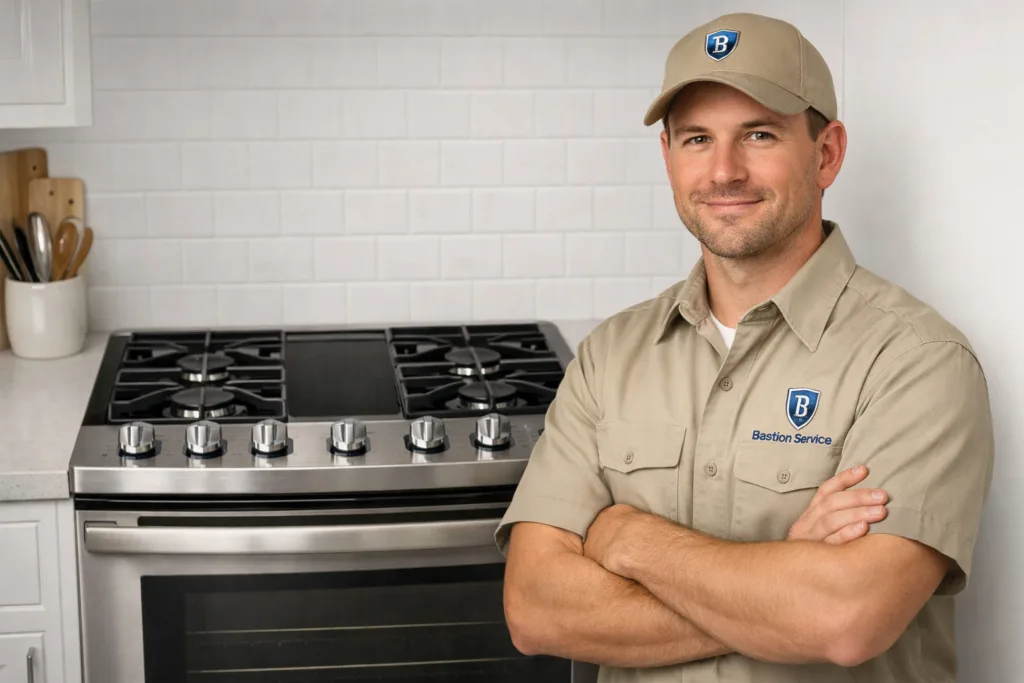
Common GE cooktop problems in Hawthorne homes

GE cooktops can develop problems gradually or fail all at once during normal meal prep. In many Hawthorne homes, the first signs are easy to notice: a burner that will not light, an element that stays cool, controls that feel inconsistent, or a cooktop that makes unusual clicking or sparking sounds. While those symptoms may look straightforward, the actual cause can vary from a worn surface element or igniter to a switch, wiring fault, or control problem.
Because gas and electric GE cooktops behave differently, the symptom pattern matters. A single weak burner calls for a different repair path than repeated ignition failure across multiple burners, and a burner stuck on high should be treated more urgently than a minor delay in heating.
Burners that will not ignite or heat
On gas models, a burner that clicks without lighting may be dealing with a dirty burner port, misaligned cap, moisture around the igniter, or a failing spark ignition component. If the burner lights only occasionally, the issue may still be limited to one area rather than the full cooktop system. On electric models, a burner that stays cold can point to a failed radiant element, damaged connection, switch problem, or control fault.
Homeowners often notice this problem when one cooking zone lags behind the others or stops responding completely. If the same burner repeatedly fails after cleaning and resetting, the cooktop usually needs service rather than more troubleshooting at home.
Uneven heat or weak flame
Uneven performance can show up as food scorching on one side of a pan, water taking too long to boil, or flame patterns that look irregular. On gas units, weak or uneven flame may come from blocked burner openings, burner head issues, or regulation problems. On electric units, inconsistent heating may be caused by a failing switch, sensor-related control issue, or element that is no longer cycling correctly.
This kind of symptom is often dismissed at first because the cooktop still works, but poor heat control tends to get worse over time. If settings no longer match actual cooking performance, repair is usually worth considering before the problem spreads to daily reliability.
Burner stuck on high or not adjusting properly
If a GE cooktop burner does not respond correctly to the knob or touch controls, the problem may involve the infinite switch, user interface, control board, or wiring connection. A burner that jumps from low to very hot, stays on one level, or does not shut off normally is more than a cooking inconvenience.
Uncontrolled heat can damage cookware, create safety concerns, and make the appliance unpredictable to use. In most cases, this is a symptom that should not be ignored, especially if the burner overheats or reacts differently each time it is used.
Clicking, sparking, or intermittent power loss
Continuous clicking after ignition, random sparking, or loss of power during use can indicate moisture intrusion, a failing ignition switch, loose wiring, damaged harness connections, or another electrical issue inside the cooktop. After a spill or deep cleaning, moisture can briefly affect gas ignition, but repeated clicking that does not stop normally should be checked.
If the cooktop trips a breaker, shows signs of arcing, or loses power across more than one burner, it is best to stop using it until the fault is identified. Electrical symptoms tend to move beyond a single burner and can lead to larger component damage if left unresolved.
How symptom patterns help narrow down the repair
Two cooktops can show the same visible problem for completely different reasons. That is why the most useful starting point is not the part name but the exact behavior. Whether the problem affects one burner or several, happens all the time or only after cleaning, and appears on gas ignition or electric heat controls can all change the likely diagnosis.
- One burner only: often points to a localized problem such as an igniter, burner head, element, or switch.
- Several burners with the same issue: may suggest a control, wiring, power-supply, or shared ignition problem.
- Intermittent operation: can indicate moisture, a loose connection, or a component that is failing under heat.
- Constant overheating or no response to settings: often suggests a control-side fault rather than a simple cleaning issue.
Looking at the pattern helps avoid replacing parts based on guesswork. It also gives homeowners a better sense of whether the issue is likely limited and repairable or part of a broader decline in cooktop performance.
When to stop using the cooktop and schedule service
Some cooktop problems are inconvenient but manageable for a short time. Others should be treated as a reason to stop using the appliance until it has been checked. A burner that will not ignite once may not be urgent. A burner that keeps sparking, overheats, trips the breaker, or will not regulate temperature is a different situation.
It makes sense to schedule service if you notice any of the following:
- A burner will not turn on or will not shut off normally
- Ignition clicks continue after the burner is lit
- Heat output is much too low or much too high for the selected setting
- Multiple burners begin acting up around the same time
- The cooktop loses power during use
- The surface is cracked or damaged near an active heating area
- There is scorching, burning smell, or visible sparking near controls
These symptoms can point to faults that affect safe operation, not just cooking convenience. Prompt service can also prevent added wear on switches, wiring, and control components.
Cracked glass and surface damage
On GE glass cooktops, a crack in the surface is not just cosmetic. Damage can affect how heat transfers to cookware, expose internal components to moisture, and raise safety concerns during use and cleaning. Even a hairline crack can spread with repeated heating and cooling cycles.
If the glass is chipped, fractured, or visibly stressed around a burner, it is usually best to stop using that area right away. Whether repair makes sense depends on the extent of the damage, the condition of the cooktop overall, and whether additional electrical or control issues are present at the same time.
Repair versus replacement for an older GE cooktop
Many GE cooktop problems are still worth repairing when the failure is limited to a single component such as an igniter, switch, burner assembly, or surface element. A focused repair can restore normal operation without turning into a major project. That is especially true when the rest of the cooktop has been performing well and the issue is isolated.
Replacement may make more sense when several problems are happening together, when major control components fail on an older unit, or when physical damage and functional faults appear at the same time. Households in Hawthorne often make the best decision by looking at three factors together:
- The exact component that failed
- The overall condition and age of the cooktop
- Whether performance has been stable aside from the current issue
If the appliance has become unreliable in multiple ways, replacement can be the better long-term investment. If the cooktop has otherwise been dependable, a targeted repair is often the more sensible path.
What a service-focused visit should accomplish
A good service visit should do more than confirm that the cooktop is not working. It should identify which part of the system is failing, explain whether continued use is safe, and outline the repair path in plain language. For GE cooktops, that usually means checking burner performance, ignition behavior, control response, visible wear, and signs of electrical stress or connection failure.
For homeowners in Hawthorne, the most helpful outcome is a diagnosis tied to the actual symptom pattern, along with honest repair guidance based on the appliance condition and the likely next step. That makes it easier to decide whether to proceed with repair now or start planning for replacement.