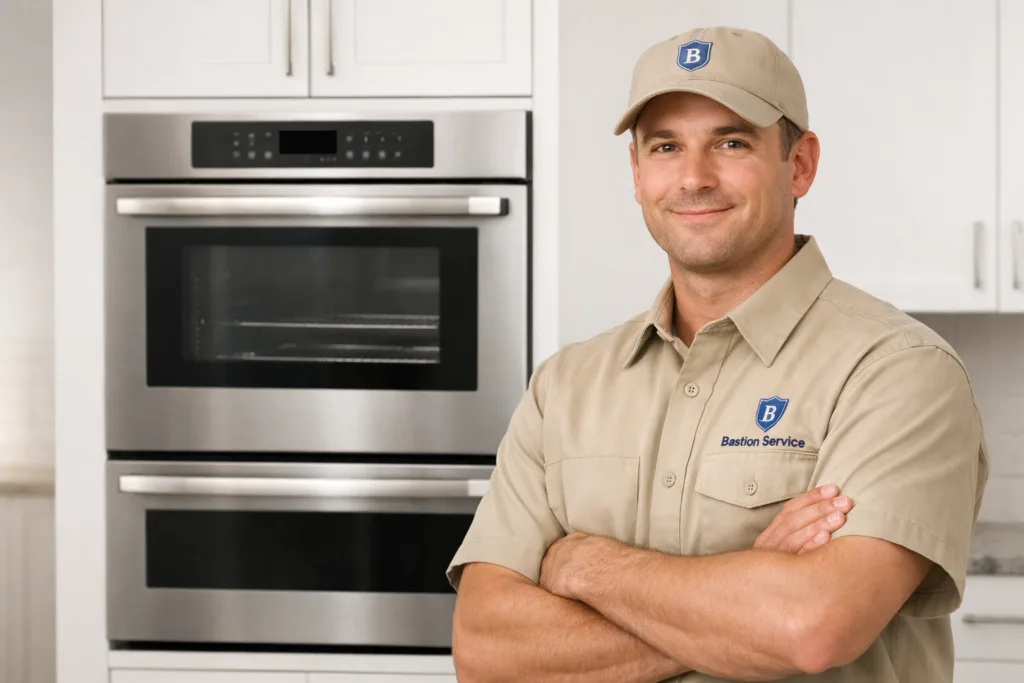
A Whirlpool wall oven that stops heating properly, bakes unevenly, or shuts off during use can interrupt everyday cooking fast. In many cases, the symptom looks straightforward, but the actual cause may involve the heating circuit, temperature sensing, electronic controls, door components, or a power-related fault.
What Different Symptoms Usually Point To
Built-in ovens can hide problems better than freestanding units because most working parts are not visible during normal use. Looking at the exact pattern of failure helps narrow down where the problem is starting and whether the issue is isolated or part of a larger electrical or control problem.
Oven not heating at all
If the display works but the oven never gets hot, possible causes include a failed bake element, broil element, temperature sensor, control board issue, thermal protection problem, or wiring failure. On some Whirlpool wall ovens, one cooking mode may seem normal while another does not heat correctly, which is an important clue during diagnosis.
Slow preheat or weak heat
An oven that eventually reaches temperature but takes far too long may be struggling with a weakened element, inaccurate sensor readings, or an electronic control issue that is not sending heat at the right time. Slow preheat often starts gradually, so homeowners may first notice dinner taking longer or recipes no longer matching their usual cook times.
Uneven baking and temperature swings
When one tray browns too quickly while another stays pale, the problem may be more than normal hot spots. Temperature drift, cycling problems, poor heat retention, or a sensor that is no longer reading accurately can all affect results. If foods that used to bake consistently now come out overdone on the edges or undercooked in the center, the oven may no longer be regulating heat correctly.
Intermittent shutdowns or loss of power
If the unit turns off mid-cycle, resets, or goes blank without warning, it is important to stop assuming it is a one-time glitch. Intermittent failures can come from loose connections, heat-stressed controls, a failing fuse, or internal electrical faults. These symptoms are worth checking promptly because continued use can worsen damage to sensitive components.
Common Whirlpool Wall Oven Problems Seen in Hawthorne Homes
Households in Hawthorne often rely on a wall oven for daily meals, weekend baking, and holiday cooking, so even a minor performance issue becomes noticeable quickly. Whirlpool wall oven repairs commonly begin with one or more of these complaints:
- The oven will not start or will not respond to commands
- Preheat takes much longer than it used to
- Food cooks unevenly from rack to rack
- The displayed temperature does not match actual cooking results
- The unit trips a breaker or loses power during operation
- Error codes appear repeatedly
- The oven door will not close, unlock, or latch properly
- Problems begin right after a self-clean cycle
These symptoms can overlap, which is why part replacement based on guesswork often leads to extra cost without solving the underlying problem.
Door, Latch, and Self-Clean Related Issues
Not every wall oven problem starts with the heating system. A door that does not seal well can allow heat to escape and create long cook times or inconsistent baking. Worn hinges, a damaged gasket, or alignment issues may all affect performance.
Latch failures are another common source of frustration, especially if the door stays locked after self-clean or the oven refuses to begin a cycle because it cannot confirm the latch position. Self-clean places heavy heat stress on components, and that can expose weaknesses in fuses, sensors, switches, wiring, or the control system. If the oven started acting differently right after a cleaning cycle, that timing matters.
Control Panel and Display Problems
When buttons stop responding, the screen goes blank, or the oven starts selecting functions unpredictably, the issue may involve the user interface, main control, or power feed to the appliance. Some control failures are constant, while others are heat-related and only show up after the oven has been running for a while.
Homeowners sometimes notice this as a keypad that works only part of the time, a clock that resets, or settings that will not stay entered. Those signs are useful because they help distinguish a simple access problem from a deeper electronic fault.
When Repair Usually Makes Sense
Repair is often the better option when the Whirlpool wall oven is otherwise in solid condition and the failure is limited to a serviceable part or system. Elements, sensors, certain door components, wiring repairs, and many control-related issues can often be addressed without replacing the entire appliance.
It is also worth considering repair when:
- The oven has been reliable until one recent symptom appeared
- The cabinet opening and kitchen layout make replacement more complicated
- The problem is affecting performance but not multiple major systems at once
- The appliance still fits the household’s cooking needs
When Replacement May Be the Better Choice
Replacement becomes more reasonable when the oven has multiple major failures, recurring electrical problems, severe control damage, or part availability issues that make repair difficult to justify. Built-in appliances can involve more planning than freestanding models, so the decision should be based on the overall condition of the unit rather than frustration with a single symptom.
If the repair path points to several worn components at once, or if the oven has become unreliable in repeated ways, comparing the cost and expected lifespan after repair can help make the next step clearer.
Signs You Should Stop Using the Oven Until It Is Checked
Some symptoms suggest more than a routine performance issue. It is best to stop using the unit if you notice:
- A burning smell that does not fade quickly
- Visible sparking
- Breaker trips during preheat or baking
- The oven overheats far beyond the set temperature
- The display cuts out while the oven is still hot
- The door remains locked and the controls are unresponsive
These warning signs can indicate a fault that may damage other components or create a broader safety concern if ignored.
What Homeowners in Hawthorne Can Do Before Scheduling Repair
There are a few simple observations that can help clarify the problem before service is scheduled. Check whether the issue happens in bake, broil, or both modes. Notice whether preheat completes normally, whether the display shows any error code, and whether the problem started after a power interruption or self-clean cycle. If cooking results are inconsistent, think about whether food is consistently overcooking, undercooking, or alternating between both.
It also helps to note whether the failure is constant or intermittent. A wall oven that never heats presents a different repair path than one that works for twenty minutes and then shuts down.
Focused Whirlpool Wall Oven Repair in Hawthorne
For Hawthorne homeowners, the most useful approach is symptom-based testing that identifies which system is actually failing. That matters whether the problem appears as no heat, slow preheat, uneven baking, a locked door, repeated error codes, or a dead control panel. A dependable repair decision starts with knowing why the oven is misbehaving, not just which symptom showed up first.
If your Whirlpool wall oven has become unpredictable or no longer supports normal daily cooking, service is easiest to plan while the pattern is still clear and before a smaller fault develops into a larger one.