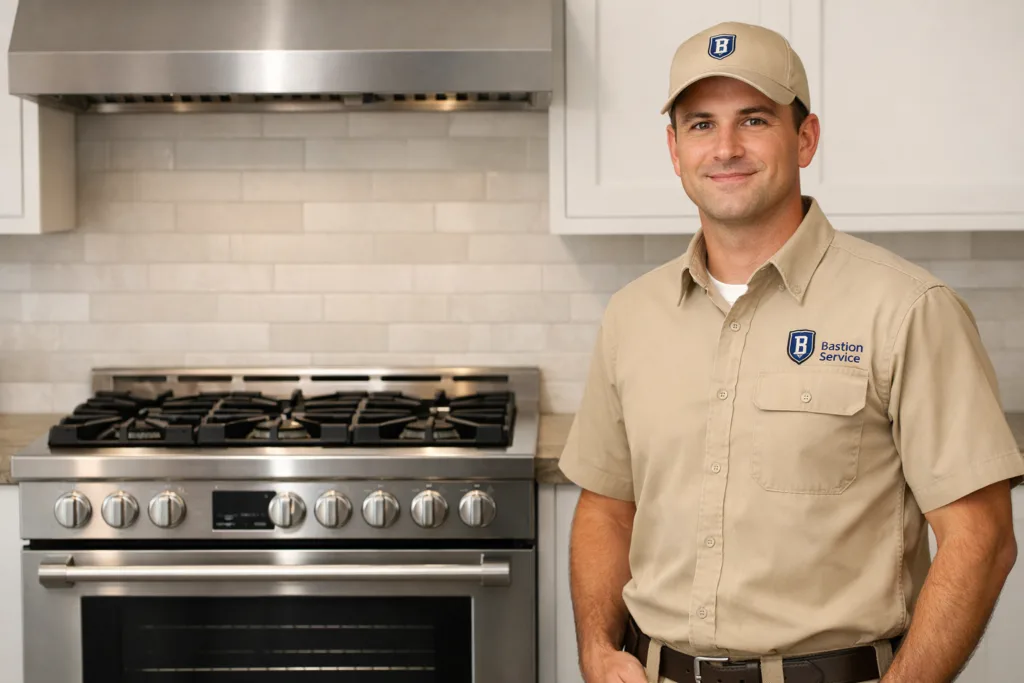
Thermador ranges often show trouble in small ways before a full failure happens. A burner may click longer than usual, the oven may need extra time to preheat, or cooking results may become less predictable from one meal to the next. Paying attention to those early signs can help prevent a minor issue from turning into a larger repair.
Start with the exact symptom, not just the appliance type
A range combines surface burners, oven heating components, ignition parts, sensors, controls, and wiring in one unit. Because of that, two problems that look similar from the outside can come from very different causes. For example, an oven that will not heat at all may have a very different fault than an oven that heats, but cannot hold temperature. A burner that clicks constantly may need a different repair than a burner that lights with a weak or uneven flame.
For homeowners in Rancho Palos Verdes, the most useful service call usually starts with what the range is doing consistently, what happens only sometimes, and whether the problem affects the cooktop, the oven, or both.
Common Thermador range problems and what they may mean
Burner clicks but does not ignite
This often points to an ignition-related problem, but the exact cause can vary. Moisture, burner cap misalignment, clogged ports, worn spark components, or wiring faults can all interfere with normal lighting. If one burner behaves differently from the others, that detail matters. If every burner shows the same symptom, the diagnosis may move in a different direction.
Repeated clicking should not be ignored just because the burner eventually lights. A burner that becomes harder to ignite over time can leave the range less reliable for daily cooking and may lead to additional wear on related components.
Burner lights but the flame is weak or uneven
An unstable flame can affect both cooking speed and cooking consistency. Homeowners may notice pans heating unevenly, simmer settings becoming unreliable, or flames that look smaller than normal. In some cases, buildup in the burner assembly is involved. In others, the issue may be tied to internal gas flow or burner component wear.
When the flame changes color, shape, or stability, it is a sign the range should be checked rather than worked around.
Oven will not heat or heats very slowly
If the oven stays cool, struggles to preheat, or takes much longer than normal to bake, the cause may involve the igniter, bake function, broil support, sensor performance, relays, or the electronic control system. Homeowners often first notice this through undercooked food, long preheat times, or recipes that suddenly stop turning out the way they used to.
Slow heating is especially important to address early, because many ovens continue operating in a weakened state before failing completely.
Oven temperature is off
Some Thermador range issues are not complete failures. Instead, the oven may run hotter or cooler than the selected setting, or temperatures may swing too far during baking. That can point to a sensor issue, calibration problem, control fault, or a heating system that is no longer cycling correctly.
If one rack browns much faster than another, if baked goods finish unevenly, or if roasting times suddenly change, the problem may be more than simple recipe variation.
Controls respond, but performance is inconsistent
Intermittent problems are among the most frustrating. The display may appear normal while the oven fails to maintain heat or a burner works one day and not the next. These patterns can suggest control, connection, or wiring issues that do not show up in a steady, obvious way.
In these cases, a good symptom history helps. It is useful to note whether the problem appears after preheating, during longer cooking cycles, at high heat, or only on a specific burner.
Knobs, door, or user controls are not working properly
Not every range repair centers on ignition or heating output. A damaged door gasket can affect temperature retention. A loose or failing knob assembly can make heat settings inaccurate. A control panel problem can make it difficult to select functions reliably. These issues may seem secondary at first, but they can lead to poor results and unnecessary strain on the appliance.
Signs the range should be serviced soon
- Burners click repeatedly before lighting
- One or more burners fail to ignite
- The oven takes much longer than usual to preheat
- Food cooks unevenly or finishes at unpredictable times
- The appliance overheats or does not match the selected setting
- Controls behave erratically or stop responding consistently
- The range trips electrical protection during use
Even when the range is still partly usable, these symptoms often mean the appliance is no longer operating normally. Prompt attention can help avoid secondary damage to controls, igniters, sensors, or heating components.
When to stop using the range right away
Some situations go beyond inconvenience. If the appliance produces a persistent gas odor, stop using it immediately. Leave the area if needed and contact the gas utility or emergency service before arranging appliance repair. If the range is overheating, sparking, or tripping breakers repeatedly, it should also be taken out of normal use until it is inspected.
For less urgent but still important symptoms, such as repeated misfires or unreliable oven temperatures, it is usually best to schedule service before heavier cooking use continues.
Repair versus replacement
Many Thermador range problems are tied to a specific failed part and can be resolved without replacing the appliance. Repair is often worth considering when the range otherwise fits the kitchen well, has been dependable overall, and the issue is limited to a defined system such as ignition, temperature sensing, or a control component.
Replacement may make more sense when the appliance has several major faults at once, has a long history of repeat problems, or would require extensive work relative to its condition. Age matters, but so do performance history, parts involved, and how broadly the failure affects the appliance.
That is why a practical repair plan based on the exact symptom pattern is more useful than guessing from a single sign like clicking or slow preheat.
What to note before a service visit
A few details can make diagnosis more efficient:
- Whether the problem affects the oven, the cooktop, or both
- Whether one burner or multiple burners are involved
- Whether the issue is constant or intermittent
- Whether the problem began suddenly or worsened over time
- Whether the display, lights, or controls are acting unusually
- Whether the oven fails during preheat, baking, or longer cooking cycles
For households in Rancho Palos Verdes that rely on the range every day, these observations can help narrow the issue faster and support more accurate repair decisions.
Focused help for Thermador range issues in Rancho Palos Verdes
Thermador cooking appliances are built for performance, but when a range begins misfiring, heating unevenly, or losing control accuracy, the problem usually does not improve on its own. Addressing the symptom early can help restore normal cooking, protect related components, and reduce the chance of a more disruptive failure later.
Whether the issue involves burner ignition, oven heating, temperature regulation, or control response, the best next step is to evaluate the actual behavior of the appliance and match the repair to that specific fault.