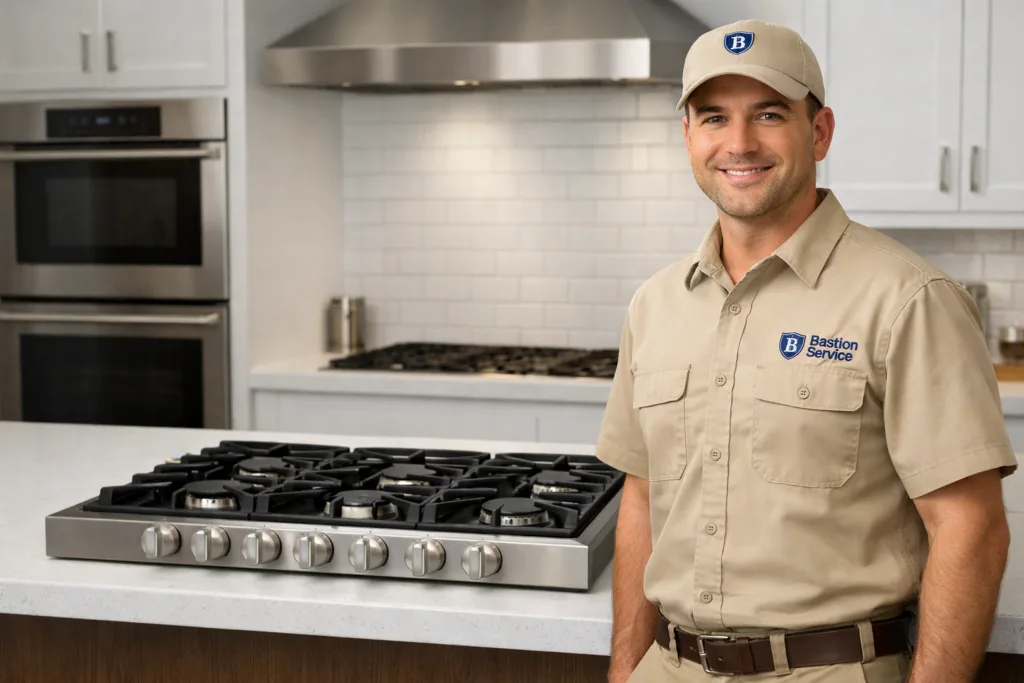
Cooktop problems rarely stay minor for long. A single burner that hesitates to ignite, an element that runs cooler than the setting suggests, or controls that respond inconsistently can all interfere with everyday cooking and may point to a part that is wearing out rather than a one-time glitch.
With Thermador units, the same symptom can come from more than one source. A burner that will not light may be dealing with residue around the ports, a weak igniter, a switch issue, or a spark module problem. An induction zone that seems erratic may involve pan detection, a sensor fault, or an electronic control problem. Sorting out the exact cause first is usually the fastest way to decide whether repair makes sense.
Common Thermador cooktop symptoms and what they often mean
Burner will not ignite
On gas models, failure to ignite often starts with the burner assembly itself. Misaligned caps, clogged ports, and moisture after cleaning are common causes. If those basics are not the issue, the fault may be in the electrode, ignition wire, switch, or spark module. When only one burner is affected, the problem is often local to that burner. When several burners act the same way, shared ignition components become more likely.
Clicking that continues after the flame lights
Persistent clicking usually means the ignition system is still trying to spark when it should have stopped. This can happen because of trapped moisture, debris around the burner, or a failing ignition switch. Continuous clicking is more than a nuisance if it keeps returning, since it suggests the cooktop is not reading burner status correctly.
Weak flame or uneven heating on gas burners
If the flame looks low, unstable, or uneven around the burner ring, the cooktop may not be delivering heat the way it was designed to. Burner port blockage, cap placement problems, and fuel or regulation issues can all contribute. Homeowners often notice this first when pans heat unevenly or cooking times suddenly change.
Electric or induction zone not heating properly
On electric and induction Thermador cooktops, a zone that stays cold, heats slowly, cycles strangely, or overheats can point to a failed element, sensor trouble, relay problems, or a control board issue. Induction models may also stop heating if the unit is not detecting cookware properly, though repeated problems with pan detection can indicate a deeper electronic fault.
Controls not responding
Knobs that no longer regulate heat correctly, touch controls that ignore input, or settings that jump on their own can signal switch wear, interface failure, or a damaged control. If a burner will not turn down, will not turn off normally, or behaves differently from the selected setting, service should be scheduled promptly.
Cracked glass or surface damage
A cracked glass surface is not just a cosmetic problem. On radiant and induction units, damage to the top can affect safe operation and may expose underlying components to moisture. Continued use depends on the location and severity of the crack, so the surface should be evaluated before the cooktop is used normally again.
Why symptom patterns matter
One of the most useful details is whether the problem affects one cooking zone or multiple zones. A single problem burner often points to a localized component failure. Several burners showing similar symptoms at once may suggest a shared electrical, ignition, or control issue.
It also helps to note whether the problem is constant or intermittent. A burner that fails every time usually leads in a different diagnostic direction than one that only acts up after a spill, after cleaning, or once the cooktop has been hot for a while. Intermittent faults often involve moisture, heat-sensitive wiring, switches, or controls that are beginning to fail.
When to stop using the cooktop
Some issues should not be pushed through for convenience. Stop using the affected burner, or the entire appliance if needed, when you notice:
- a burner that clicks repeatedly without normal ignition
- a strong or persistent gas smell
- a cooking zone that will not shut off correctly
- sparking behavior that seems abnormal
- a cracked glass surface that may compromise safe use
- controls that behave unpredictably
For gas-related odor concerns, handle immediate safety first before arranging appliance service. Once the area is safe, the cooktop can be inspected for the underlying fault.
Repair or replace?
Many Thermador cooktop problems in Manhattan Beach are repairable, especially when the issue is limited to ignition parts, switches, elements, sensors, wiring, or certain control-related components. Repair is often worth considering when the unit is otherwise in good shape and the failure is confined to one system.
Replacement becomes a more serious consideration when the cooktop has multiple major failures at once, extensive electronic damage, recurring breakdowns after recent repairs, or surface damage severe enough to affect overall value. The deciding factors are usually the exact failed parts, the age and condition of the cooktop, and whether the repair is likely to restore stable day-to-day performance.
What homeowners in Manhattan Beach should watch for
In Manhattan Beach homes, cooktops often see steady daily use, and small changes in performance are easy to miss at first. A burner that starts lighting a little slower, a zone that seems slightly cooler than before, or controls that occasionally misread input may be early warning signs of a larger issue developing.
Boil-overs, cleaning residue, normal heat exposure, and moisture around burner assemblies can all affect operation over time. That is why symptom-based troubleshooting is so useful on premium appliances: the visible problem is not always the failed part.
Helpful details to gather before service
Before scheduling Thermador cooktop repair in Manhattan Beach, it helps to have a few basics ready:
- whether the cooktop is gas, electric, or induction
- whether one burner or multiple burners are affected
- if the problem is constant or comes and goes
- whether there is clicking, slow ignition, weak flame, uneven heat, or no heat
- any error codes or unusual control behavior
- whether the issue started after a spill, cleaning, or power interruption
Those details can narrow the likely causes and make the visit more efficient. For most homeowners, the goal is straightforward: identify the failed component, avoid unnecessary part replacement, and restore the cooktop to safe, reliable use.