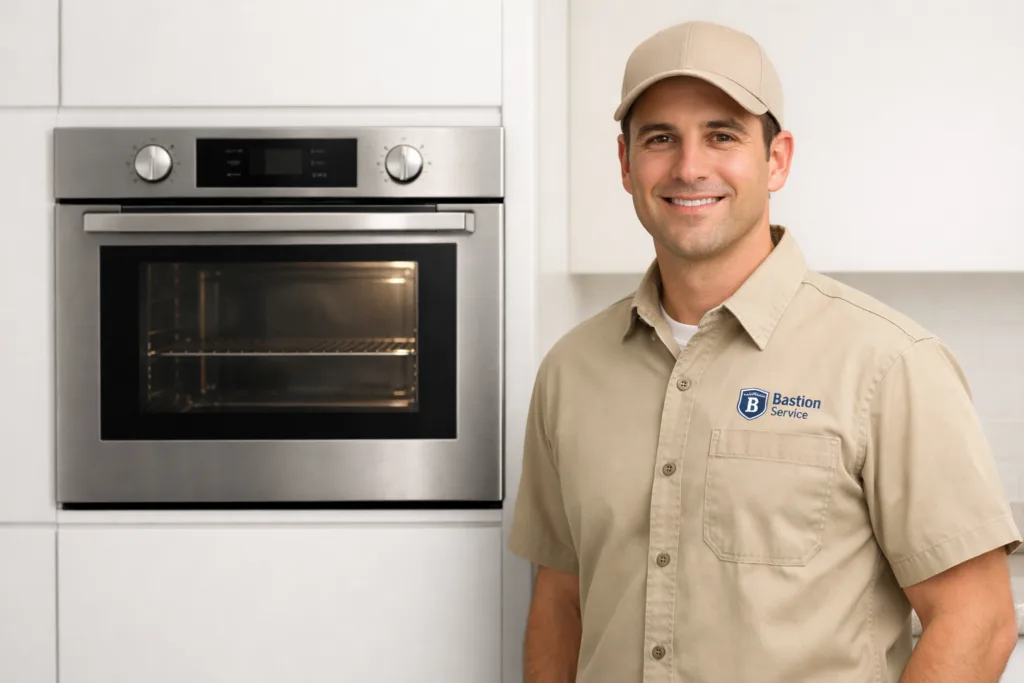
Common Bosch oven symptoms and what they often mean

Oven problems rarely stay small for long. A little extra preheat time can turn into uneven baking, missed temperatures, or an oven that stops working when you need it most. With Bosch units, the symptom pattern matters because the same complaint can come from different parts of the heating, sensing, or control system.
Not heating at all
If the oven powers on but never gets hot, the fault may involve the bake element, broil element, igniter, thermal cutoff, control relay, wiring, or power supply to the heating circuit. On some models, the display and keypad still appear normal even though the oven is not actually producing heat.
This is one of the most important symptoms to check correctly, because “no heat” can look simple from the outside while the real cause sits deeper in the control or safety circuit.
Slow preheating
When preheat takes much longer than it used to, the oven may still be heating, but not with full output. A weakening bake element, a tired igniter, a sensor drifting out of range, or a relay that is not cycling correctly can all cause long warm-up times. Many households first notice this as meals taking longer than recipe times suggest.
Uneven baking or roasting
If one side browns faster than the other, the center lags behind the edges, or repeated recipes stop coming out right, the issue may be related to poor temperature regulation, weak heat distribution, convection problems, or heat loss at the door. In some cases, homeowners compensate by rotating pans more often or extending cook times before realizing the oven itself is no longer performing normally.
Temperature swings
An oven that runs too hot, too cool, or fluctuates noticeably during baking may have a faulty temperature sensor, calibration issue, control board problem, or intermittent heating component. Temperature swings matter because they affect more than convenience. They change cooking results, can dry out food, and make baking unreliable from one cycle to the next.
Won’t start, shuts off, or shows control problems
If the oven will not respond, turns off during a cycle, beeps unexpectedly, or displays recurring fault codes, the problem may involve the electronic control, keypad, sensor circuit, latch assembly, or electrical connections. Intermittent issues are especially frustrating because the oven may work one day and fail the next.
Door and self-clean issues
A Bosch oven door that does not close firmly can let heat escape and make preheat slower or baking less consistent. If the door lock sticks or the oven starts acting differently after a self-clean cycle, heat-related stress on the latch, sensor, fuse, or control components may be involved.
Why Bosch oven problems should be diagnosed by symptom, not guesswork
Replacing parts based only on a broad complaint can lead to wasted time and unnecessary cost. For example, an oven that is not reaching temperature could have a sensor issue, a weak heating component, a control fault, or a door seal problem. The symptom sounds the same, but the repair path is not.
That is why the most useful service approach starts with how the oven behaves in real use: whether broil still works, whether preheat completes, whether the temperature overshoots, whether the problem happens every cycle, and whether the fault appeared gradually or all at once. That pattern often points the diagnosis in the right direction.
Signs the issue is getting worse
Some oven faults stay stable for a while. Others tend to spread. It is smart to stop putting off service when you notice symptoms like these:
- Preheat times getting longer week by week
- Food consistently undercooked even after longer bake times
- Burning on top while the center stays underdone
- Error codes that return after clearing
- The oven shutting off before the cycle is finished
- A door that no longer seals tightly
- Burning smells, sparking, or breaker trips
In Pico-Robertson homes where the oven is used regularly, these symptoms can turn routine cooking into guesswork. They can also place extra strain on related parts when the appliance keeps trying to operate through a fault.
When continued use may cause more trouble
Using a failing oven is not always harmless. A weak igniter can delay ignition and affect how the heating system cycles. A damaged seal can force longer run times. A control problem can create overheating or erratic shutdowns. If electrical symptoms are present, repeated use may make the eventual repair more involved.
If you notice tripped breakers, visible sparking, a strong electrical smell, or overheating that seems beyond normal cooking heat, the appliance should be evaluated before regular use continues.
Repair or replace: what usually matters most
For many households in Pico-Robertson, the decision comes down to four things: the exact failed part, the age of the oven, the condition of the rest of the appliance, and whether the problem appears isolated or part of broader wear. A single failed component in an otherwise solid Bosch oven often makes repair worthwhile. Multiple major faults, chronic control issues, or significant overall wear can shift the calculation.
The key is knowing what actually failed. Once that is established, it becomes much easier to judge whether the repair is practical or whether replacement deserves serious consideration.
What homeowners can observe before service
You do not need to disassemble anything to provide useful clues. A few simple observations can help narrow the issue:
- Whether the oven reaches any heat at all
- Whether broil works when bake does not
- How long preheat now takes compared with normal
- Whether the issue happens on every cycle or only sometimes
- Any recent error codes, unusual noises, or door-lock behavior
- Whether the problem started after a self-clean cycle or power interruption
Details like these can make diagnosis faster and help distinguish between a heating fault, sensor issue, latch problem, or electronic control failure.
What a focused Bosch oven service visit should accomplish
A worthwhile visit should verify the complaint in a real-world way, test the most likely failure points, and confirm whether the oven is heating and regulating temperature as it should. It should also rule out related problems that could affect the outcome of the repair, such as damaged wiring, door-seal wear, or secondary control faults.
For homeowners dealing with Bosch Oven Repair in Pico-Robertson, the goal is not just getting the oven to turn on again. It is restoring stable, usable cooking performance so everyday baking, roasting, and weeknight meals are predictable again.