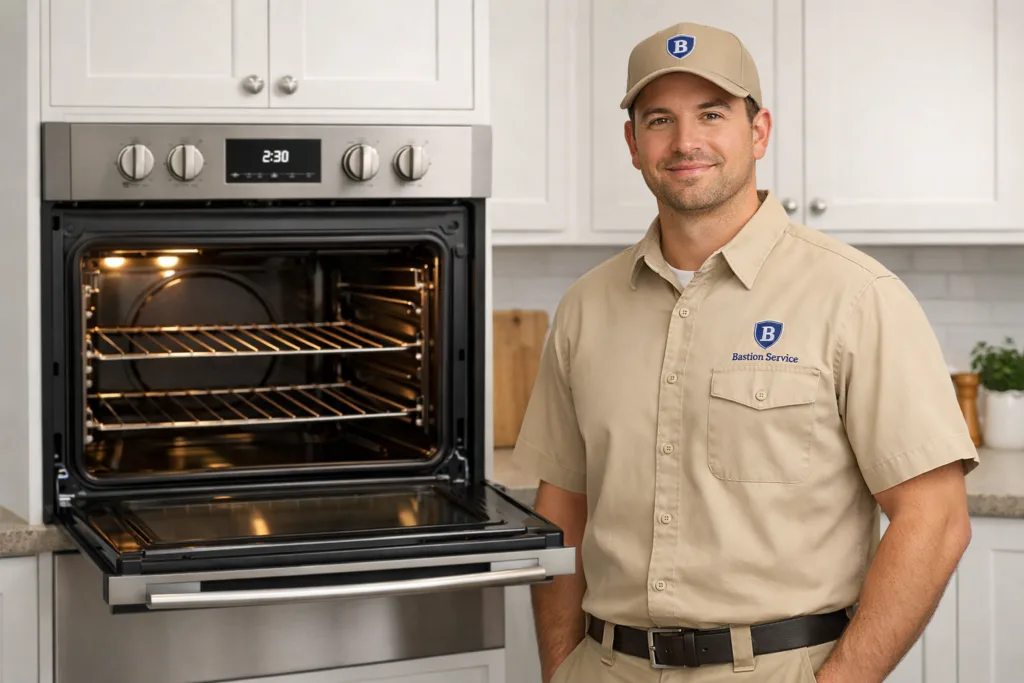
Cooking problems are easier to solve when the symptom is narrowed down early. An oven that will not heat at all is diagnosed differently from one that preheats slowly, runs too hot, or shuts off midway through baking. In Pico-Robertson homes, that distinction matters because the right repair often depends on whether the fault is in the igniter, bake element, temperature sensor, control system, door seal, or electrical supply.
Common oven problems homeowners notice
Some failures are immediate and obvious, such as an oven that stays cold even though the display appears normal. Others build gradually, like longer preheat times, uneven baking, or temperature swings that make familiar recipes hard to trust. Those slower changes often point to a part that is weakening rather than completely failed.
Homeowners also notice issues like error codes, a broiler that works while the bake function does not, a light that turns on with no heat, or a door that will not close tightly. If the problem is limited to a separate built-in unit rather than a standard oven below a cooktop, Wall Oven Repair in Pico-Robertson may be the better fit for that layout.
What different symptoms can indicate
Oven not heating or barely heating
On electric models, a failed bake element, damaged wiring, or a bad relay can keep the oven from reaching cooking temperature. On gas models, a weak igniter is a common cause, especially when it glows but does not draw enough current to open the gas valve consistently. If broil still works but baking does not, the fault is often more specific than a total power problem.
Repeatedly restarting a weak oven can add strain to other components and still leave food undercooked. A proper diagnosis usually checks whether the unit is getting full power, whether the heating circuit is closing correctly, and whether the temperature is rising at the expected rate.
Slow preheat
Slow preheat can feel minor at first, but it often signals a part that is no longer performing properly. A tired igniter, partially failed element, inaccurate sensor, or control issue can all cause the oven to take much longer than normal to reach the selected temperature. In daily use, that means rushed dinners, inconsistent baking, and extra energy use without better results.
If the symptom involves surface burners acting up along with oven performance, Range Repair in Pico-Robertson may be more relevant because the issue may involve the full range rather than the oven section alone.
Uneven baking and temperature swings
When one side of a tray browns faster than the other, or the center stays underdone while the edges overcook, the problem may be inaccurate sensing, poor heat cycling, or weak heating output. This is especially common when an oven technically turns on but no longer holds a stable temperature through the full cooking cycle.
Temperature complaints can also come from heat escaping around the door. Worn gaskets, loose hinges, or a door that does not seal well force the oven to work harder and can create inconsistent results from rack to rack.
Intermittent shutdowns or control issues
An oven that starts normally and then cuts out may be dealing with overheating protection, failing electronic controls, loose wiring connections, or incoming power issues. These faults are frustrating because the appliance may work one day and fail the next. Intermittent problems usually get worse over time, which is why guessing at parts replacement can become expensive without fixing the root cause.
Control problems may also show up as unresponsive buttons, flashing displays, or modes that will not engage even though the unit has power. When that happens together with breaker trips or burning smells, the safer next step is service rather than continued use.
Door, latch, and self-clean related problems
A door that will not close correctly affects more than convenience. It can lead to heat loss, poor roasting performance, and long preheat times. Self-clean cycles can also expose weak parts, especially sensors, latches, control boards, and nearby wiring that are already under stress.
If problems started right after a high-heat cleaning cycle, the oven may need inspection before regular cooking resumes. That is particularly true if the door remains locked, the display shows a persistent code, or the cavity no longer heats after the cycle ends.
How to tell whether the problem is really the oven
Some households have cooking setups where the lines between appliances are not obvious. A freestanding unit may combine oven and burners in one chassis, while other kitchens have a separate cooktop above a built-in oven. If the trouble is centered on the upper burners or ignition at the cooking surface, Cooktop Repair in Pico-Robertson may be the better place to start.
Likewise, some homeowners describe any full cooking unit as a stove, even when the service issue could involve both top burners and oven heating. If the symptom involves burner heat and oven temperature at the same time, Stove Repair in Pico-Robertson may be the better service path.
When to schedule service
It makes sense to schedule service when the oven stops heating, takes far too long to preheat, produces inconsistent results with the same recipes, or starts showing electrical behavior that was not there before. Waiting can turn a single failed component into extra wear on sensors, relays, igniters, and controls.
Service is also worth arranging when the appliance trips a breaker, displays recurring errors, smells unusually hot, or shuts down during use. These symptoms are not just inconvenient; they can point to faults that make continued operation unreliable or unsafe.
Repair versus replacement
Many oven problems are still repairable when the issue is limited to a sensor, igniter, heating element, switch, latch, or accessible control-related part. Repair becomes less appealing when there are multiple failures at once, serious cavity damage, recurring board problems, or costs that approach the value of replacement.
The most useful decision usually comes from looking at the oven as a whole: how it heats, whether it holds temperature, whether the controls behave normally, and whether there are signs of broader electrical or structural wear. That gives homeowners in Pico-Robertson a realistic way to weigh a targeted repair against moving on from the unit.
What to expect from an oven service visit
A productive visit focuses on confirming the fault rather than replacing parts by guesswork. That may include checking heating output, sensor readings, igniter performance, control response, door condition, and visible wiring or connection issues tied to the symptom. Once the cause is identified, the next step is explaining what repair makes sense and whether continued use could lead to more damage.
For most households, the goal is simple: get back to predictable cooking. Whether the issue involves baking, roasting, broiling, or everyday meal prep, a properly functioning oven should heat consistently, respond to settings correctly, and stop turning dinner into a troubleshooting project.