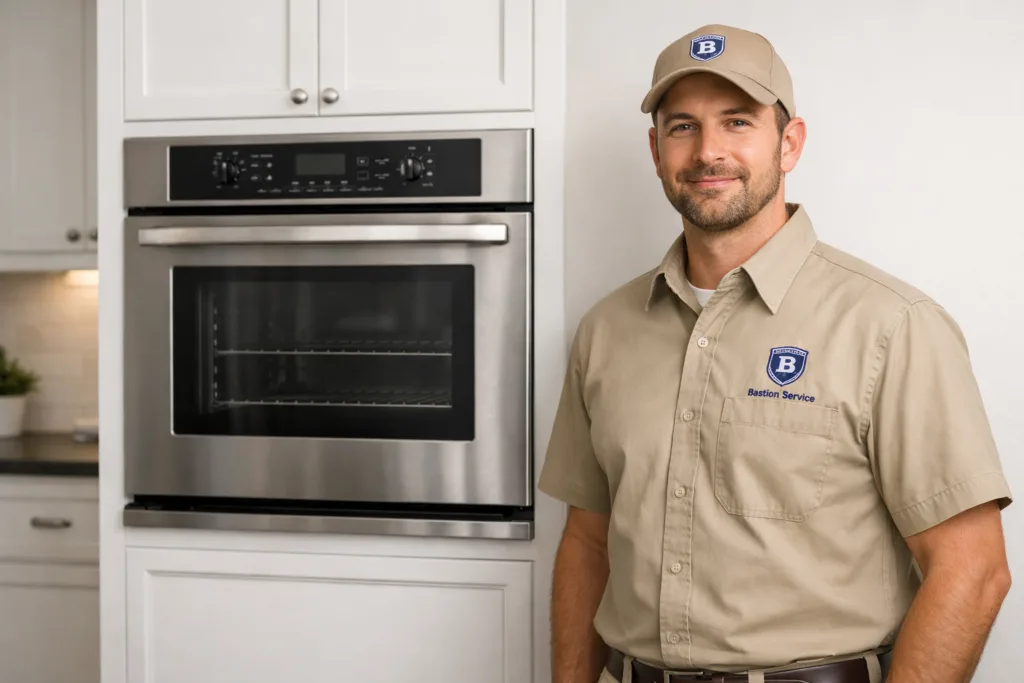
Cooking problems usually show up before a complete breakdown. A Kenmore oven may still turn on and light up while struggling to hold temperature, preheat on time, or bake evenly from rack to rack. Looking closely at the exact symptom pattern helps narrow the likely cause and keeps the repair decision grounded in what the appliance is actually doing.
Kenmore oven problems homeowners often notice first
Many oven issues start with food quality rather than a visible failure. Cookies may brown too fast on the bottom, casseroles may need extra time, or one side of a sheet pan may cook faster than the other. In other cases, the display works normally but the cavity never gets hot enough to cook.
Common signs that a Kenmore oven needs attention include:
- Oven not heating at all
- Slow preheat or repeated long preheat times
- Uneven baking or roasting
- Temperature swings during a cycle
- Food burning despite normal settings
- Control panel not responding
- Door not closing fully or sealing tightly
- Unit shutting off mid-cycle
These symptoms can come from very different faults, which is why the same complaint should not automatically lead to the same repair.
What specific symptoms can indicate
Oven will not heat
When the oven does not heat at all, the likely causes depend on the model type. Electric units may have a failed bake element, broil element, sensor issue, wiring problem, or control failure. Gas models often point to an igniter problem if the oven does not light properly. A homeowner may hear normal clicks or see the display operate, but that does not mean the heating system is functioning.
Slow preheat
A Kenmore oven that eventually reaches temperature but takes much longer than before can be dealing with a weakening igniter, a partially failed element, sensor drift, or a heat-loss issue around the door. Slow preheat often gets dismissed at first, but it is one of the more useful early warnings that a component is wearing out.
Uneven baking
If the top rack browns too quickly, the back corner cooks faster, or recipes become inconsistent without any change in cookware or settings, the problem may involve uneven heat distribution, reduced element performance, a worn gasket, or a convection-related fault on models equipped with convection. This is especially noticeable for baking, where small temperature differences affect results quickly.
Oven runs too hot or temperature keeps drifting
Overheating can point to a faulty temperature sensor, relay problem, or control issue. Some ovens swing noticeably above and below the selected setting, while others steadily run hotter than they should. If food is burning on standard recipes and pans are coming out darker than expected, temperature regulation should be checked before continued use causes additional stress on internal parts.
Display or control problems
A blank display, unresponsive buttons, random resets, or a unit that powers on and off unexpectedly may involve the control board, touchpad, wiring, or incoming power connection. In these cases, the issue may not be the oven cavity itself but the system that tells it when and how to heat.
Door and latch issues
A door that will not shut completely can let heat escape and create misleading temperature complaints. Worn hinges, a damaged gasket, or latch trouble after a self-clean cycle can all change oven performance. If the door needs to be lifted to close, pops open slightly, or feels misaligned, that detail matters during diagnosis.
Why symptom timing matters
It helps to note when the problem happens. Some Kenmore ovens fail only during preheat, while others begin normally and then lose heat partway through a cycle. A unit that misbehaves only after it gets hot may suggest a different failure path than one that never starts heating in the first place.
Useful details include:
- Whether the problem happens every time or only occasionally
- Whether broil works even if bake does not
- Whether the issue started after self-cleaning
- Whether the display shows an error code
- Whether the oven trips power or shuts down during use
- Whether the door closes tightly throughout the cycle
Those observations can help separate a heating fault from a control, wiring, or door-related problem.
When to stop using the oven
Some symptoms are more than an inconvenience. If the oven is overheating badly, failing to ignite reliably, shutting off during cooking, tripping breakers, showing repeated error codes, or giving off unusual electrical smells, it is best to stop using it until it has been checked. Continued operation in those conditions can lead to more damage and more expensive repairs.
Less urgent problems, such as slow preheat or mild temperature inconsistency, may still allow limited use, but they tend to worsen over time. Addressing them earlier can prevent the problem from spreading to other components.
Repair or replace?
Many Kenmore oven problems are repairable, especially when the issue is isolated to a part such as an igniter, heating element, sensor, switch, hinge, or certain control-related components. Repair often makes sense when the oven is otherwise in good shape and the fault is limited to one system.
Replacement becomes a more serious consideration when there are multiple major failures, repeated electronic problems, significant internal wiring damage, or overall wear affecting several functions at once. The right choice depends on the appliance condition, the type of failure, and whether the repair is likely to restore reliable daily use.
What a useful service visit should accomplish
For homeowners in Pico-Robertson, the real goal is not just confirming that the oven is malfunctioning. It is identifying which system is failing and whether the repair path is straightforward or likely to lead to additional issues. That distinction matters when deciding how much to invest in an older appliance.
A thorough evaluation should separate complaints like no heat, uneven baking, overheating, and control failure instead of treating them as one generic oven issue. That approach gives you a better basis for deciding whether to move forward with repair, keep watching a minor issue for a short period, or start planning for replacement.
Keeping a Kenmore oven dependable at home
Even small changes in oven performance can disrupt everyday cooking routines. If your Kenmore oven in Pico-Robertson is taking longer to preheat, producing inconsistent results, or acting unpredictably from one meal to the next, those are usually signs that the problem is becoming easier to identify, not harder. Catching the pattern early often makes the next step clearer and helps avoid wasting time on guesswork.