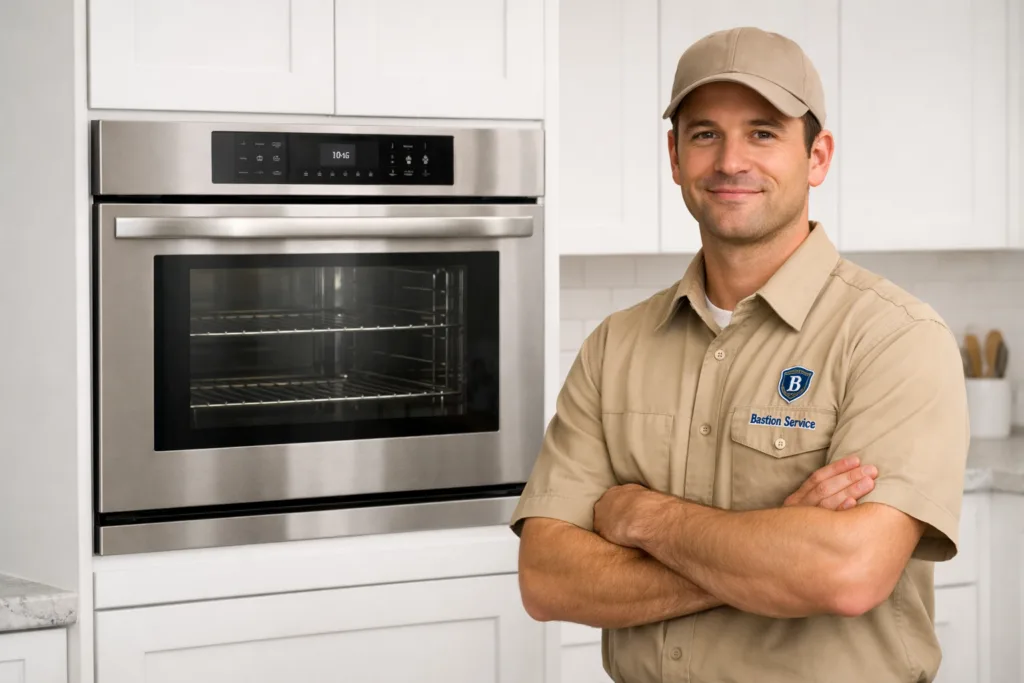
Oven problems often start as cooking inconsistencies before they turn into a full failure. A meal that takes much longer than usual, a preheat cycle that drags on, or food that browns unevenly can all point to a component that is weakening rather than completely broken. In El Segundo homes, catching those patterns early can help prevent wasted groceries, frustrating dinner prep, and more expensive damage later.
Common LG oven symptoms and what they usually mean
Many LG oven issues look similar on the surface, but the underlying causes can be very different. The symptom matters because it helps narrow down whether the problem is related to heat production, temperature sensing, controls, or a door and latch issue.
Oven not heating at all
If the oven turns on but never gets hot, the failure may involve the bake element, broil element, igniter, thermal protection components, wiring, or the control system. Gas and electric models fail differently, so the testing approach depends on the type of unit. In some cases the oven may appear to start normally while the actual heating circuit never engages.
Slow preheating
Slow preheat is one of the most common complaints because the oven still works just enough to seem usable. A weak igniter, partially failed element, sensor issue, or relay problem can all stretch preheat time. Homeowners usually notice it when familiar recipes suddenly need extra minutes and the oven struggles to reach the selected temperature.
Uneven baking
When one side of a tray browns faster than the other, or the top cooks differently from the bottom, the issue may be related to cycling problems, airflow, sensor accuracy, or a heating component that is no longer performing evenly. This can be especially noticeable with cookies, sheet-pan meals, casseroles, and anything that depends on stable oven temperature.
Temperature swings during cooking
An LG oven that overshoots the set temperature or drops too low between heating cycles can produce inconsistent results even though it never fully stops working. A faulty temperature sensor, calibration drift, electronic control problem, or intermittent heating component may be responsible. These problems often show up as burned edges, undercooked centers, or recipes that behave unpredictably from one use to the next.
Display, keypad, or control issues
If the control panel does not respond reliably, shows error codes, beeps randomly, or resets during use, the problem may be electronic rather than mechanical. Some control issues also affect heating because the board is responsible for sending power to the right oven functions at the right time. A display problem that seems minor can still interfere with normal operation.
Door not closing or locking properly
A door that does not seal well can let heat escape and make cooking times longer and less predictable. If the latch sticks, the lock will not release, or the door alignment feels off, the oven may not be safe or practical to use until it is checked. Self-clean cycle problems often show up here, especially when a door lock system does not reset correctly afterward.
Symptoms that should not be ignored
Some oven problems are inconvenient, while others are a reason to stop using the appliance until it has been inspected. Watch for these warning signs:
- Burning smells that continue after visible residue has been cleaned
- Sparking or arcing inside the oven cavity
- Smoke that is not tied to spilled food
- Repeated breaker trips during preheat or baking
- An oven that shuts off mid-cycle without explanation
- Gas ignition that seems delayed or irregular
- A door that will not shut securely during use
These symptoms can point to overheating, electrical faults, ignition problems, or damaged internal parts. Continuing to use the oven may increase the risk of a larger failure.
Why the same symptom can come from different parts
An oven that is “not heating right” does not always have one obvious failed part. For example, poor baking results could come from a temperature sensor that is reading incorrectly, an element that heats only intermittently, a weak igniter in a gas model, or an electronic control issue that disrupts normal cycling. That is why diagnosis should focus on measured performance and model-specific testing rather than assumptions based on the first visible symptom.
This is also why part-swapping can become expensive. Replacing a component that seems likely, without confirming the cause, can leave the original issue unresolved and create unnecessary repair cost.
How repair decisions are usually made
For many homeowners in El Segundo, the key question is not just what failed, but whether the repair makes sense for the oven overall. A good repair candidate is usually an LG oven with a single serviceable issue and otherwise solid performance. Problems involving an igniter, sensor, heating element, latch assembly, or a specific control-related fault are often worth considering if the appliance is in good condition.
Replacement may make more sense when the oven has multiple major problems, a history of recurring electronic failures, or signs of broader wear that make future repairs likely. Age matters, but condition matters just as much. An older oven with one isolated fault may still be a better candidate for repair than a newer unit with repeated control and heating problems.
What homeowners can check before scheduling service
There are a few simple observations that can help make the problem clearer:
- Whether the oven reaches any heat at all
- Whether broil works even if bake does not, or vice versa
- How long preheat takes compared with normal
- Whether the display shows an error code
- Whether the issue happens every time or only on certain settings
- Whether the door closes tightly and evenly
These details can help identify whether the issue is related to heat generation, controls, or temperature regulation. Homeowners should avoid disassembly or live electrical testing, but noting symptom patterns is useful.
When service is the practical next step
If the oven has stopped heating, takes too long to preheat, cooks unreliably, or shows recurring control problems, service is usually the most practical next step. The goal is to determine exactly what is failing, whether the repair is straightforward, and whether continued use could cause more damage.
For residential LG oven repair in El Segundo, the most helpful outcome is a practical repair plan based on the actual symptom pattern, the condition of the appliance, and the likely path to reliable operation again.