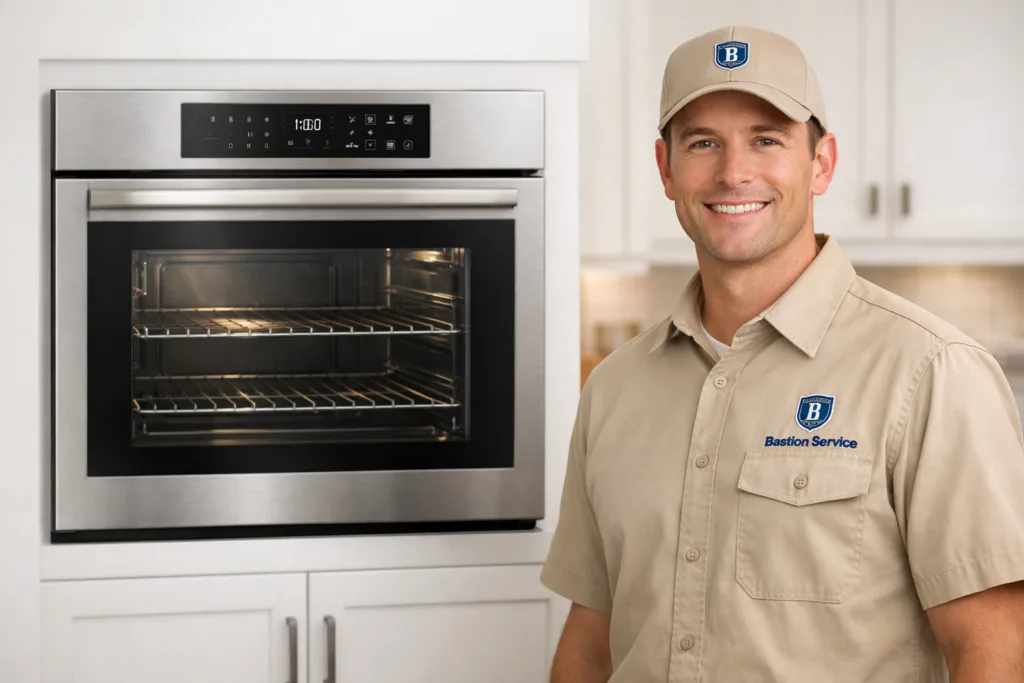
Temperature problems in a Samsung oven usually show up long before the appliance stops working completely. You may notice longer preheat times, baked food finishing unevenly, a cavity that feels hotter than the display suggests, or cycles that seem to stop and restart at the wrong times. In many El Segundo homes, these symptoms point to a heating, sensing, airflow, or control issue rather than one obvious failed part.
Start with what the oven is actually doing
The most useful way to evaluate an oven problem is by the pattern. A unit that never reaches temperature is different from one that overheats after preheat. An oven that works sometimes but shuts off mid-cycle calls for a different repair path than one with a dead display or an unresponsive keypad. Looking closely at the symptom pattern helps separate a routine component failure from a larger electronic or power-related issue.
Not heating or taking too long to preheat
If the oven turns on but struggles to heat, electric models may have a weakened bake element, a broil element that is not assisting as it should, a sensor sending the wrong temperature feedback, or a relay problem on the control. On gas models, the igniter is a common cause. It may glow yet still be too weak to open the gas valve reliably, which leads to delayed ignition, poor heat, or no heat at all.
Slow preheat can also be misleading. Some homeowners assume the appliance is simply getting older, but a Samsung oven that takes much longer than normal often has a repairable fault that will continue to affect cooking results until it is corrected.
Uneven baking, hot spots, or temperature swings
When one rack cooks faster than another, cookies brown on one side, or casseroles come out overdone around the edges and undercooked in the center, the issue is often temperature regulation rather than raw heating power. Possible causes include:
- A drifting oven sensor
- Control calibration problems
- Convection fan or airflow faults
- A worn door gasket allowing heat loss
- Intermittent element or igniter performance
These problems can be frustrating because the oven may appear to work, yet the cooking results are inconsistent from meal to meal.
Shutting off during use or failing to start
A Samsung oven that goes blank, cancels a cycle unexpectedly, or will not start at all may have a power supply issue, a failed user interface, a control board problem, or a door-lock-related fault. If the unit loses power only during heating, that can suggest an internal electrical problem triggered under load rather than a simple settings mistake.
Repeated shutdowns should not be ignored. What starts as an intermittent issue can become a full no-start condition.
Error codes and control panel issues
Error codes are helpful, but they do not always identify the exact failed part. In many cases, a code points to the system that needs testing, such as temperature sensing, door locking, or communication between controls. A keypad that misses selections, changes settings on its own, or stops responding can also affect heating performance because the command side of the oven is no longer working correctly.
Door, hinge, and seal problems
Heat has to stay in the cavity for the oven to perform normally. If the door does not close squarely, the gasket is worn, the hinges are loose, or the inner glass is damaged, heat can escape and create longer cook times, poor browning, and strain on other components. A door issue may seem minor, but it can be one reason the oven never feels consistent.
Signs the problem should be checked sooner rather than later
Some symptoms are mostly inconvenient, while others can lead to added damage or create a safety concern. It is wise to stop putting off service if you notice:
- The oven overheats or burns food despite normal settings
- Preheat gets slower week after week
- The same error code keeps returning
- The control panel behaves erratically
- The door lock sticks or will not release properly
- The oven shuts off in the middle of cooking
For gas models, ignition trouble deserves special attention. If the oven is not lighting properly, stop using it until the issue is assessed. If you smell gas strongly or persistently, leave the area if needed and contact the gas utility or emergency service before arranging appliance repair.
Why continued use can make repair more complicated
Trying to cook through an oven problem can sometimes turn a limited repair into a broader one. Repeated failed preheat attempts can strain heating and control components. Running self-clean while the appliance already has a temperature or latch fault can add stress to parts that are already failing. Using an oven with a damaged seal or misaligned door can force it to cycle longer than normal, which affects both performance and wear.
When symptoms are getting worse, the goal is not just restoring heat. It is preventing a smaller failure from affecting neighboring parts.
Repair or replacement: how to think it through
Many Samsung oven issues are worth repairing when the problem is isolated to one system, such as an igniter, heating element, sensor, latch assembly, door gasket, or interface component. Replacement becomes a stronger consideration when there are multiple unrelated failures, extensive electronic damage, or repair cost begins to approach the value of the appliance.
A homeowner in El Segundo can usually make the decision more confidently by asking:
- Is there one main failure, or are several systems showing problems?
- Has the oven been reliable until this issue, or has performance been declining for a long time?
- Will the repair restore normal daily cooking use?
- Does the overall condition of the appliance justify the investment?
This is where practical repair guidance matters. The right next step depends on whether the fault is contained and correctable or part of a larger pattern of wear.
What homeowners often notice before calling
Oven problems are not always dramatic at first. Common early signs include:
- Needing to add extra cooking time to familiar recipes
- Food browning too quickly on top but staying underdone inside
- Preheat tones sounding even though the cavity still feels cool
- Controls that lag, freeze, or require repeated input
- A door that must be pushed firmly to close
- Unexpected temperature changes during longer baking cycles
These details are useful because they help narrow down whether the issue is with heating output, temperature feedback, airflow, sealing, or controls.
What a service visit should accomplish
A well-run residential oven repair visit should do more than name a likely part. It should connect the symptom to the actual failed system, rule out look-alike causes, and clarify whether the repair is sensible for the appliance’s condition. That means evaluating the complaint in normal household terms: how the oven preheats, how it cycles, whether the display and controls respond normally, and whether the door and safety-related functions operate as they should.
For homeowners in El Segundo, that kind of assessment makes it easier to decide what comes next. If the failure is limited, repair may return the oven to reliable daily use. If the issue is broader, you can make a replacement decision with better information instead of guessing.