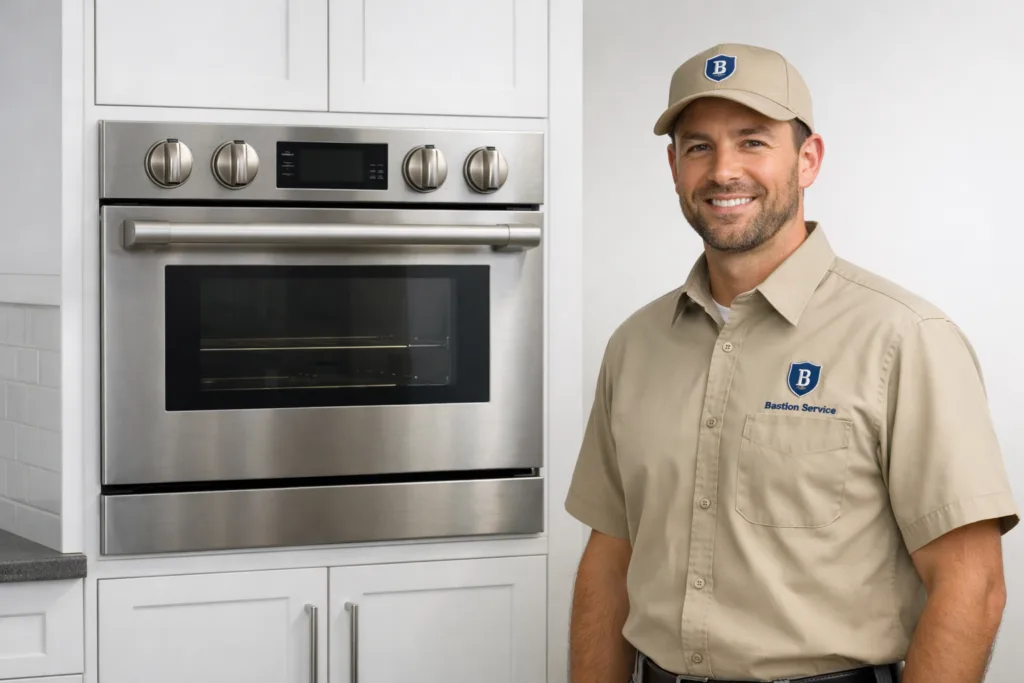
How Wolf oven problems usually show up in daily use

Most oven failures start as a pattern rather than a complete breakdown. You may notice longer preheat times, a dish that comes out underdone in the center, broil that seems weaker than usual, or controls that respond inconsistently. Those details matter because similar symptoms can come from different parts of the oven system.
In El Segundo homes, the most useful way to approach a Wolf oven issue is to look at exactly when the problem happens. Does it fail during preheat only? Does the temperature drift after reaching the set point? Is baking affected while broil still works? Does the display stay on even though the cavity never gets hot? Those clues help separate a heating problem from a sensor, control, door, or power issue.
Common symptoms and what they may point to
Oven not heating at all
If the oven turns on but never heats, possible causes include a failed igniter, a bad bake element on electric models, a thermal cutoff issue, a control board fault, or a power supply problem. In some cases the display and lights still appear normal, which can make the problem seem smaller than it is.
If neither bake nor broil is working, that often suggests a broader electrical or control problem rather than a single heating component. If only one cooking mode is affected, the failure may be more isolated.
Slow preheat
A Wolf oven that eventually heats but takes much longer than before often has a weak igniter, a heating element that is no longer performing correctly, or a sensor issue that is affecting how the oven cycles. Slow preheat is easy to live with for a while, but it usually gets worse rather than better.
This symptom is worth paying attention to if weeknight cooking starts taking longer, the oven struggles to reach higher temperatures, or the appliance sounds like it is trying repeatedly to ignite without fully starting the heat cycle.
Uneven baking
Uneven results can show up as browned edges with raw centers, one rack cooking faster than another, or cookies and casseroles needing far more time than expected. That may point to poor temperature regulation, a failing convection fan, a sensor drifting out of range, or a door seal problem that lets heat escape.
When uneven baking is consistent across different recipes and cookware, it is less likely to be user error and more likely to be a service issue.
Temperature swings or inaccurate temperature
If the oven runs too hot, too cool, or cannot hold a steady temperature, the problem may involve the temperature sensor, electronic control, relay function, or calibration. Some cycling is normal in any oven, but wide swings that affect cooking results are not.
Homeowners often notice this first with baking because breads, pastries, and roasts reveal temperature instability faster than simple reheating does.
Display or control problems
Unresponsive buttons, flickering displays, random beeping, lost settings, or a clock that resets can all point to an interface or control issue. Sometimes the oven still heats but becomes unreliable to operate. In other cases, the controls are the reason the oven will not start a cycle at all.
Door and latch issues
A door that will not close tightly can cause long cook times, heat loss, and poor temperature consistency. If the latch is involved, self-clean and normal operation may both be affected. Hinges, gaskets, and latch components can all play a role in how well the oven performs.
Unexpected shutdowns, smells, or unusual noises
If the oven shuts off during use, clicks repeatedly without heating properly, or starts making new sounds during operation, it should be checked before regular cooking continues. Some expansion and cooling noises are normal, but repeated ignition attempts, electrical buzzing, or shutdowns mid-cycle are signs that something is not working as intended.
If there is a persistent gas smell, stop using the appliance and address safety first.
Why symptom overlap makes testing important
One reason Wolf oven problems can be frustrating is that different failures can look almost identical from the outside. A weak igniter, a faulty sensor, and a control problem can all lead to slow heating or temperature complaints. A door seal issue and a convection problem can both make baking uneven. That is why replacing parts based only on the symptom can lead to wasted time and money.
The better approach is to confirm which part of the system is actually failing, then decide whether the repair is straightforward or part of a larger wear pattern in the appliance.
When it makes sense to schedule service
It is usually time to schedule service when the same problem repeats, cooking results become unreliable, or the oven has to be coaxed through normal use. A single odd cycle may not mean much, but recurring symptoms usually do.
- The oven no longer reaches the selected temperature
- Preheat has become noticeably slower
- Food cooks unevenly even after basic adjustments
- The oven stops during baking or broiling
- Controls do not respond consistently
- Error codes return after resetting power
- The door does not seal or close properly
For households in El Segundo that use the oven regularly, early service can prevent a manageable repair from turning into a more expensive one.
When continued use can lead to bigger problems
Some faults are mostly inconvenient. Others can put extra stress on related components. A weak ignition system can force repeated start attempts. An oven that overheats can affect sensors and controls. A poor door seal can increase run time and make heating components work harder than they should.
If the oven is clearly operating outside normal behavior, continuing to use it every day may increase wear and make the final repair more involved.
Repair or replacement: what homeowners should weigh
Many Wolf oven issues are repairable, especially when the failure is limited to a sensor, igniter, heating element, fan motor, latch assembly, or a specific control-related component. Replacement becomes a more serious consideration when there are multiple major failures, recurring electronic issues, or overall condition problems that make repair hard to justify.
A useful decision comes from looking at three things together:
- The exact part or system that has failed
- The overall condition of the oven
- Whether the repair is likely to restore consistent daily performance
That gives a much better answer than judging the oven by age alone.
What homeowners should note before a service visit
If you are arranging Wolf oven repair in El Segundo, it helps to note the symptom pattern before the appointment. Try to remember whether the issue affects bake, broil, convection, or all cooking modes. Error codes, flashing displays, repeated clicking, delayed ignition, and shutdown timing are all useful details.
It is also helpful to mention whether the problem is constant or intermittent. An oven that fails every time is diagnosed differently from one that works normally for days and then acts up during a long cook cycle.
What good oven service should clarify
A worthwhile service visit should do more than name a symptom. It should identify what is failing, explain how that failure affects performance, and make clear whether continued use is reasonable while repair is pending. That makes it easier to decide on the next step without guessing or replacing parts blindly.
When a Wolf oven is not heating correctly, baking unevenly, preheating slowly, or showing control issues, the most helpful outcome is a specific explanation of the fault and a repair path that fits the condition of the appliance.