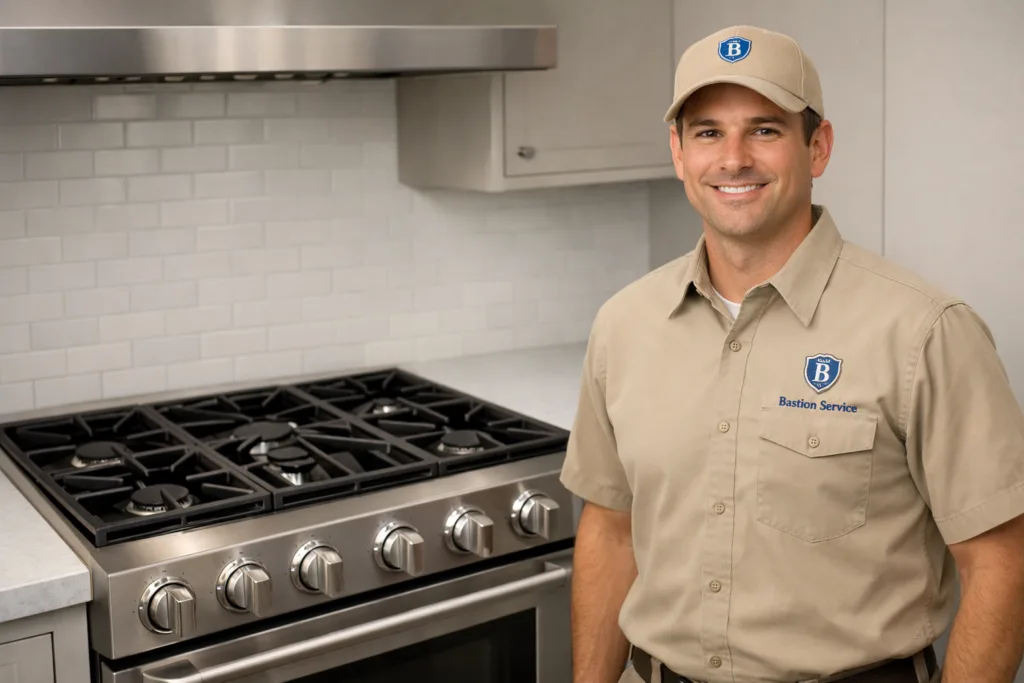
Cooking problems tend to show up in patterns. A burner may click several times before it lights, one zone may heat slower than the others, or the controls may behave normally one day and inconsistently the next. With a Thermador cooktop, those details matter because similar symptoms can come from very different failures.
What different cooktop symptoms usually point to
A cooktop rarely goes from perfect to completely dead without warning. Paying attention to the exact behavior helps narrow down whether the issue is related to the burner assembly, ignition parts, controls, internal wiring, or the power supply feeding the appliance.
Burner not lighting on a gas cooktop
If you hear clicking but the burner does not ignite, the cause may be as simple as moisture or debris around the burner cap. It can also point to a worn igniter, a spark module problem, poor burner alignment, or an issue affecting gas flow. When one burner struggles but the others work normally, the fault is often more localized. When several burners misfire at once, the diagnosis may shift toward shared ignition components.
Burner keeps clicking after ignition
Continued clicking after the flame appears is a common complaint on gas models. Sometimes this happens after cleaning if moisture has collected around the ignition area. In other cases, it suggests the ignition system is not sensing normal burner operation correctly. If the clicking is frequent or persistent, it is best not to ignore it, since ongoing sparking can lead to extra wear and unreliable startup.
Weak, uneven, or unstable flame
A normal flame should look consistent and stable. If the flame is weak, uneven around the ring, or goes out unexpectedly, the burner may have clogged ports, misalignment, or a problem deeper in the gas delivery or ignition system. Uneven heating on the pan often follows, making simmering and controlled cooking harder than it should be.
Electric or induction zones not heating correctly
On electric and induction-style Thermador cooktops, a heating zone that turns on but does not reach temperature can indicate a failing element, sensor issue, control problem, or a connection fault beneath the surface. Some homeowners notice intermittent operation first, where a zone works for part of a meal and then stops responding. That pattern often suggests a component that is deteriorating rather than a simple one-time glitch.
Control problems that affect everyday use
Not every repair starts at the burner. Many service calls involve the controls themselves, especially when the appliance powers on but does not respond the way it should.
- Knobs that do not regulate heat accurately
- Touch controls that lag or fail to register input
- Settings that change unexpectedly
- A cooktop that shuts off during use
- Error behavior tied to one specific cooking zone
These symptoms can come from worn switches, damaged control interfaces, internal board issues, or unstable electrical connections. If the cooktop behaves unpredictably, continued use can be frustrating at best and unsafe at worst.
Cracked glass and visible surface damage
Surface damage should be taken seriously, especially on glass cooktops. A crack may start small and still affect safe use. Heat stress, impact damage, or underlying weakness can make the surface less stable over time. In some cases, homeowners also notice performance issues along with the damage, such as poor pan contact, erratic heating, or controls near the damaged area acting strangely.
Other visible problems, including loose grates, worn knobs, or burner parts that no longer sit flush, can also interfere with normal operation. Even when the cooktop still works, damaged parts may lead to poor ignition, uneven flame, or unreliable heating.
Signs the cooktop should not keep being used
Some problems can wait for a scheduled appointment. Others call for stopping use until the appliance is checked.
- A burner that will not turn off
- Repeated sparking or nonstop clicking
- Frequent breaker trips during cooktop use
- Burning smells or signs of overheating
- Sudden loss of control response
- Flame instability on a gas burner
If there is a persistent gas smell, stop using the cooktop immediately. Leave the area if needed and contact the gas utility or emergency service before arranging appliance repair. Safety comes first.
Repair or replacement: what usually makes sense
Many Thermador cooktop issues are worth repairing when the problem is isolated and the rest of the unit is in solid condition. Ignition components, switches, burner parts, some control-related faults, and accessible electrical issues are often straightforward repair candidates.
Replacement becomes a more realistic option when the cooktop has major glass damage, multiple failing components, recurring control problems, or wear that suggests one repair may not be the last. Age matters, but condition matters more. A well-kept cooktop with one definable failure may still be a good repair candidate, while a unit with overlapping issues may no longer be the best investment.
What homeowners in Del Rey can do before service
A few basic checks can help you describe the problem more accurately and avoid unnecessary confusion during diagnosis.
- Note whether the issue affects one burner or several
- Pay attention to when the problem started and whether it is getting worse
- Check for moisture or obvious debris around gas burner caps
- Notice whether the problem happens on every setting or only certain heat levels
- Write down any unusual sounds, smells, or power interruptions
It is best not to disassemble the appliance or keep testing a burner that is behaving unsafely. Helpful symptom details save time, but trial-and-error repairs usually do not.
What good cooktop service should clarify
Most Del Rey homeowners want practical answers: what is actually failing, whether the appliance is safe to use, and whether the repair is worth doing. A useful service visit should explain the fault in plain terms, connect it to the symptoms you have noticed, and outline the most sensible next step for your household.
Whether the issue is a burner that will not light, a zone that heats unevenly, controls that stop responding, or a cracked cooking surface, the best outcome starts with a symptom-based inspection and a repair recommendation that fits the condition of the cooktop.