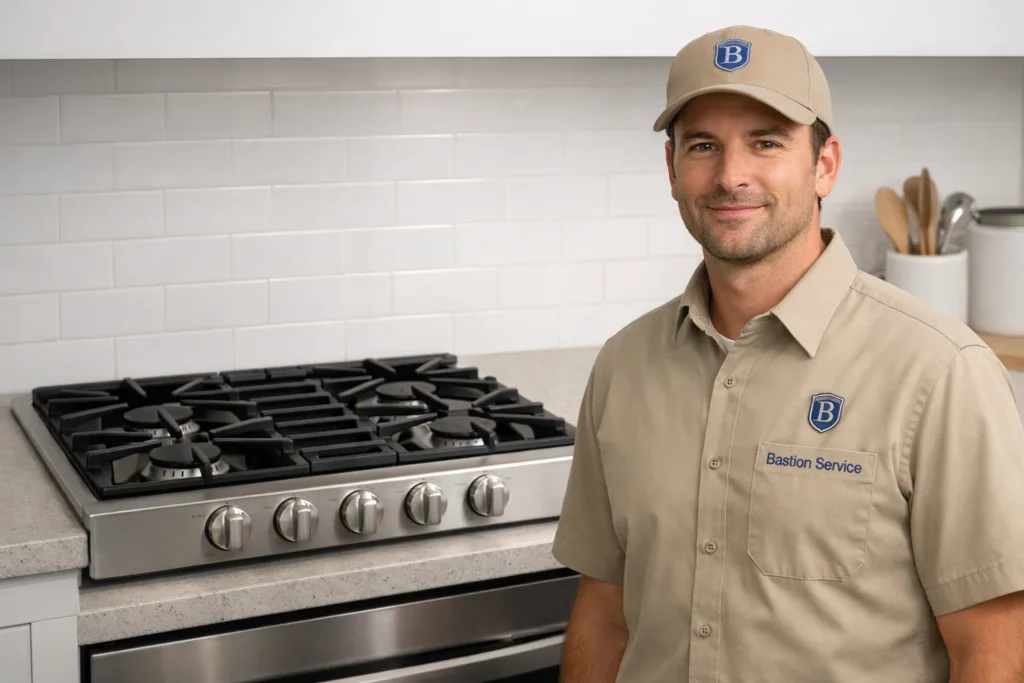
Common LG cooktop symptoms and what they usually point to

Cooktop problems rarely look the same from one home to the next. Two burners may fail in completely different ways, and a symptom that seems minor at first can come from anything from buildup around the burner to a failed control component. For Del Rey homeowners, the most useful starting point is matching the symptom to the most likely system involved.
Burners click but do not light
On gas LG cooktops, constant clicking without ignition often means the spark system is working but the flame is not catching correctly. That can happen when burner caps are out of position, ports are blocked, moisture is trapped around the igniter, or the spark switch continues firing when it should stop. If one burner is affected, the issue may be isolated to that burner assembly. If several burners act up at once, the fault may be broader.
Repeated clicking should not be ignored, especially if ignition is delayed or inconsistent. If you notice a strong gas odor, stop using the cooktop until the problem is evaluated.
A burner lights, but the flame is weak or uneven
An uneven gas flame can make pans heat poorly, leave cold spots, and slow down routine cooking. In many cases, the cause is restricted burner ports, poor cap alignment, or wear in the burner head. Sometimes the flame may look normal on low settings but become unstable as heat is increased, which can point to a deeper burner or valve-related issue.
When the flame pattern changes suddenly instead of gradually, that is usually a sign the problem is not normal wear alone and should be checked before regular use continues.
Electric elements stay cold, run too hot, or cycle strangely
On electric or radiant LG cooktops, a burner that will not heat may have a failed element, wiring problem, or control issue. A burner that overheats or does not respond to setting changes may indicate a faulty switch, sensor, or electronic control. Some owners first notice this as water taking much longer to boil, food scorching at medium settings, or a burner that seems to switch itself on and off at the wrong times.
Because surface elements and controls can produce similar symptoms, testing matters before replacing parts.
Touch controls or knobs do not respond normally
If the cooktop powers on inconsistently, does not recognize touch input, or sends the wrong heat level to a burner, the trouble may involve the interface, a switch, the main control, or incoming power to the unit. A knob that feels normal but does not change burner output can be just as important as a dead touch panel, because both can affect safe temperature control.
Error codes, intermittent shutoff, or random behavior
Intermittent faults are some of the most frustrating cooktop problems because the appliance may work during one meal and fail during the next. Sudden shutoff, flashing indicators, or an occasional refusal to start can be caused by loose connections, heat-stressed electronics, or power supply issues. These problems tend to worsen over time rather than correct themselves.
Problems that deserve prompt attention
Some cooktop issues are inconvenient. Others can create safety concerns if the appliance stays in use. It is smart to stop using the affected burner and arrange service when you notice:
- Clicking that continues after ignition or happens when the burner is off
- Delayed ignition or repeated failed ignition attempts
- Flames that are unusually weak, uneven, or unstable
- A burner that overheats and will not regulate properly
- Sparking, tripped breakers, or signs of electrical arcing
- Cracked glass or visible surface damage on a smooth-top model
- Controls that do not match the heat output being produced
These symptoms can affect both cooking performance and safe operation. Even if the cooktop still works part of the time, continued use can add stress to switches, wiring, ignition parts, and nearby components.
Cracked glass and surface damage on LG cooktops
For smooth-top LG models, visible damage to the cooking surface is more than a cosmetic issue. A crack in the glass can spread with heat, affect how cookware sits on the surface, and create risk around the burner area. In some cases, homeowners first notice the problem after a heavy pan impact; in others, the damage becomes visible only after repeated heating and cooling.
If the surface is chipped, cracked, or separating around the burner zone, it is best not to keep testing it. The correct next step depends on the location and severity of the damage, the condition of the heating system underneath, and whether replacement parts remain practical for the unit.
Why the same symptom can have different causes
Cooktops are simple to use, but the systems beneath the surface are not always simple to diagnose. A burner that will not heat might be caused by the element itself, the switch feeding it, a damaged wire, or an electronic control fault. A gas burner that keeps clicking may need cleaning, but it can also have a failed ignition-related component. That is why effective repair starts by separating the symptom you see from the part that has actually failed.
This step matters because trial-and-error repairs can waste time and money. Replacing the wrong part may leave the original problem untouched, and continued operation while guessing can create additional damage.
Repair or replacement for an LG cooktop
Many LG cooktop issues are repairable, especially when the problem is limited to one burner, one switch, one igniter, or another isolated component. Repair is often the better path when the cooktop is otherwise in good condition and the surface, controls, and main systems have been reliable.
Replacement becomes more likely when there are multiple active failures, recurring electronic problems, major surface damage, or repair costs that no longer make sense compared with the age and condition of the appliance. The most sensible decision usually comes down to three questions:
- Is the fault isolated or spread across several systems?
- Is the cooktop otherwise dependable in everyday use?
- Will the repair restore safe and consistent performance?
For homeowners in Del Rey, that decision is easier when it is based on the actual failed components rather than the symptom alone.
What to do before service
If your LG cooktop is acting up, a few basic observations can make the service process more efficient. Note whether the problem affects one burner or all of them, whether it happens all the time or only intermittently, and whether the issue began suddenly or worsened gradually. On gas models, check whether burner caps are seated correctly after cleaning. On electric models, pay attention to whether the burner gets no heat, partial heat, or too much heat.
You do not need to disassemble anything or attempt advanced troubleshooting. In fact, with ignition components, live electrical circuits, and heated surfaces involved, it is better to avoid do-it-yourself repairs that could complicate the problem.
LG cooktop repair for households in Del Rey
When a cooktop starts interrupting meal prep, the goal is not just to get a burner working again. It is to restore normal cooking with dependable heat control and safe operation. Whether the issue involves ignition failure, uneven heating, a nonresponsive control, or a damaged glass surface, the right repair path depends on how the unit is failing and whether the rest of the appliance is still in solid condition.
For homes in Del Rey, service is most worthwhile when it helps turn an unreliable cooktop into one that performs predictably again instead of forcing you to work around the same burner problem day after day.