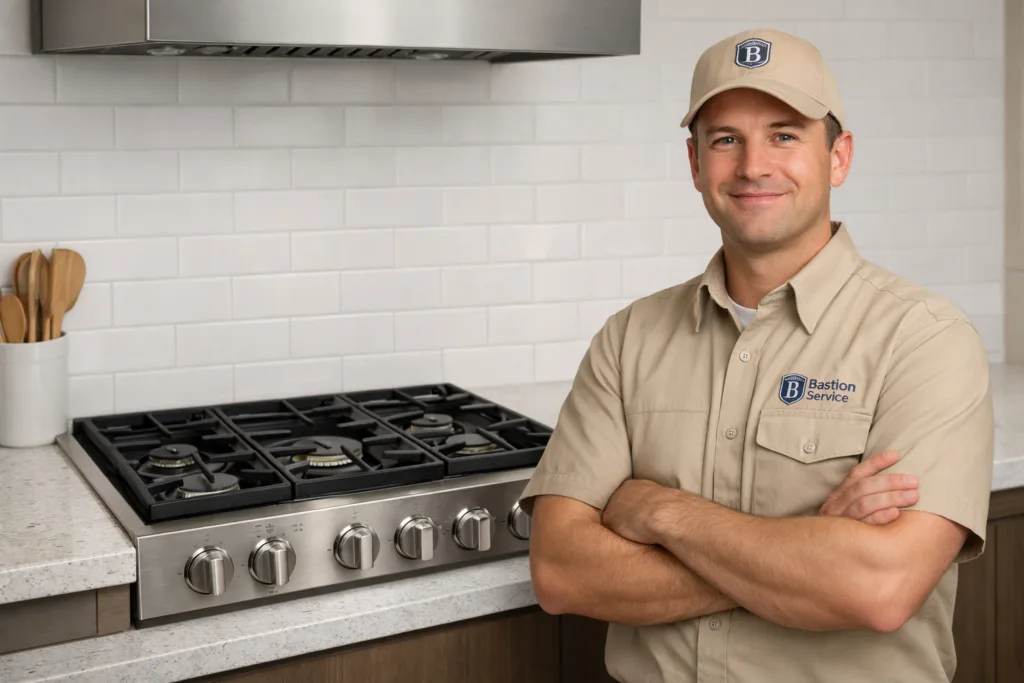
Daily cooking gets frustrating fast when a Monogram cooktop has a burner that will not light, a heating zone that runs too hot or too weak, or controls that stop responding the way they should. In many cases, the symptom looks simple on the surface, but the actual cause can involve the ignition system, burner assembly, switches, sensors, wiring, or electronic controls.
What common cooktop symptoms usually mean
Burner clicks but does not ignite
On gas models, repeated clicking without a flame often points to a burner cap alignment issue, debris in the burner ports, moisture around the igniter, or a failing spark ignition component. If only one burner is affected, the problem may be isolated to that section. If multiple burners act up at the same time, the diagnosis may need to include shared ignition parts or gas delivery issues.
If you notice a strong or persistent gas smell, stop using the cooktop and address safety first before scheduling repair.
Burner lights but heats unevenly
Uneven flame patterns, slow heating, or poor simmer control can make everyday cooking unpredictable. On gas units, this can come from restricted ports, burner assembly wear, or regulator-related problems. On electric and induction models, weak or inconsistent heating may be tied to a failing element, sensor problems, wiring damage, or a control fault.
Cooktop will not turn on
A completely unresponsive cooktop can have a power supply issue, a failed user interface, an internal fuse problem, damaged wiring, or a defective control board. With electric and induction Monogram units, this symptom often needs testing beyond what can be confirmed from the surface.
Controls behave unpredictably
If settings change on their own, touch controls lag, or a burner shuts off unexpectedly, the problem may be electronic rather than mechanical. Heat exposure, board failure, and interface issues can all produce inconsistent behavior that gets worse over time.
Cooktop keeps sparking
Continuous clicking on a gas cooktop is often related to moisture, contamination around the ignition area, or a bad spark switch. Even when the burner still lights, ongoing sparking is a sign that something is not working correctly and should be checked before related parts wear out.
Simple checks homeowners can try first
Before assuming a larger failure, a few basic checks can help rule out minor causes:
- Make sure burner caps are seated properly.
- Clean food residue and grease from burner ports and around the igniter.
- Confirm the cooktop has power if it is electric or induction.
- Let recently cleaned gas burners dry fully before testing again.
- Note whether the issue affects one burner or the entire cooktop.
If the same symptom returns after these steps, the problem is usually beyond routine cleaning or adjustment.
Why some Monogram cooktop problems should not be ignored
Intermittent problems often turn into complete failure. A burner that lights only sometimes may eventually stop igniting altogether. A heating element that cycles irregularly can affect cooking performance long before it fails completely. Control issues can also spread from occasional glitches to broader operating problems that make the appliance unreliable.
Continuing to use a malfunctioning cooktop can sometimes increase repair scope. Repeated failed ignition attempts may strain spark components. Electrical faults can affect boards, wiring, and sensors. If the appliance trips power, overheats, or behaves erratically, it is better to stop using it until the fault is identified.
Repair or replacement: what makes sense
Many Monogram cooktop issues are worth repairing when the failure is limited to a switch, igniter, element, burner component, sensor, or control-related part and the rest of the appliance is in good condition. That is often the case when the cooktop has been performing well until a single symptom appeared.
Replacement becomes more likely when there is major glass damage, multiple systems failing at once, repeated prior repair history, or severe wear that makes additional repairs hard to justify. The key is understanding whether the problem is isolated or part of broader decline.
Glass damage and surface concerns
If the cooktop has a cracked glass surface, do not continue normal use. Even a crack that seems minor can create safety concerns and may allow heat or spills to affect internal components. Surface damage should be assessed promptly, especially on smooth-top and induction models where the glass is part of normal operation.
Scratches and cosmetic wear are different from structural damage, but chips, spreading cracks, or signs of heat stress deserve immediate attention.
What to have ready before service
Homeowners in Del Rey can make the visit more efficient by noting a few details ahead of time:
- Which burner or zone is affected
- Whether the issue is constant or intermittent
- Any recent power outage, spillover, or cleaning event
- Whether there is clicking, error behavior, weak heat, or no response at all
- Whether the problem began suddenly or gradually worsened
These details can help narrow down whether the likely cause is related to ignition, heating, controls, or power.
When service is the right next step
It is time to schedule Monogram cooktop repair in Del Rey when a burner repeatedly fails, heat output becomes unreliable, controls stop responding normally, or the appliance no longer feels safe to use in regular household cooking. The same applies when basic cleaning and reset attempts do not change the symptom.
What most homeowners want is straightforward: a dependable explanation of what failed, whether the cooktop is safe to use, and whether the repair is practical. A focused diagnosis provides that answer and helps avoid replacing parts based on guesswork.