
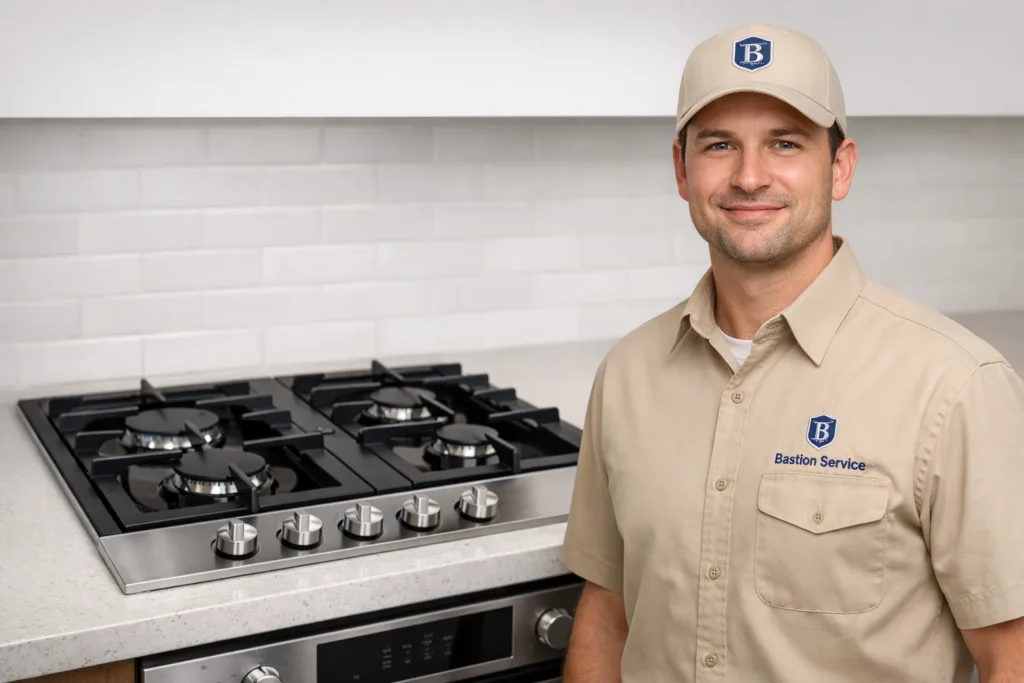





Cooktop problems often start small and then become part of the daily routine: one burner that lags, a control that only works after several tries, or clicking that seems to come and go. With Fisher & Paykel units, those symptoms are worth checking early because the same complaint can come from very different causes, including burner components, ignition parts, switches, sensors, or the control system itself.
Related Fisher & Paykel and cooktop service paths in Del Rey include Fisher & Paykel Appliance Repair in Del Rey, Cooktop Repair in Del Rey, and Fisher & Paykel Refrigerator Repair in Del Rey.
Signs your Fisher & Paykel cooktop needs repair
If the issue is repeatable, it is usually time to stop guessing and have the cooktop evaluated. A burner that intermittently fails, heat that no longer feels consistent, or a surface that responds unpredictably can affect both cooking results and everyday safety. In Del Rey homes, these problems are often most disruptive during normal meal prep, when reliable heat control matters most.
- Burners click but do not ignite
- Flame is weak, uneven, or unstable
- Electric or induction zones do not heat properly
- Touch controls or knobs do not respond correctly
- The cooktop loses power or shuts off during use
- Cracked glass or visible surface damage is present
- Heat settings do not match actual cooking performance
Common symptom patterns and what they may mean
Clicking without ignition
On gas cooktops, repeated clicking without a flame may point to an igniter issue, burner cap misalignment, moisture around the burner, or a problem in the spark ignition system. If the burner eventually lights after several attempts, that does not mean the unit is operating normally. Delayed ignition tends to worsen over time and can make the cooktop frustrating to use.
If clicking continues after the burner lights, the problem may involve the ignition switch or related electrical components. That kind of behavior should not be treated as harmless background noise, especially if it begins happening more often.
Burners not heating or heating unevenly
Uneven heat can show up in different ways. A gas burner may produce an irregular flame pattern, while an electric or induction zone may struggle to maintain temperature or heat only part of the cookware area. These symptoms can be tied to blocked burner ports, failing elements, sensor problems, or control faults.
When food cooks unevenly, pans take longer to heat, or one setting behaves like another, the cooktop is no longer giving you accurate control. That usually means the problem has moved beyond routine cleaning or normal wear.
Controls that lag, stick, or fail to respond
Fisher & Paykel cooktops with touch controls or electronic regulation can develop issues that feel inconsistent at first. You may press a setting several times before it registers, notice changes in power level without input, or find that one burner cannot be adjusted correctly. On knob-operated models, a worn switch or related internal fault may cause similar symptoms behind the scenes.
Control issues matter because they affect how precisely the cooktop can regulate heat. If you cannot trust the setting you selected, everyday cooking becomes less predictable and more difficult.
Cooktop shuts off during use
A cooktop that starts normally and then stops can indicate overheating protection, sensor trouble, unstable incoming power, or a failing control board. On induction models, some shutdowns may be related to detection or communication problems within the cooking zone. On gas or radiant electric units, the symptom may be tied to a switch, regulator-related component, or internal electrical fault.
Intermittent shutdowns are often easier to diagnose while the pattern is still recognizable. Waiting until the unit fails completely can remove useful clues and may lead to more downtime.
Cracked glass or surface damage
If the cooktop has a cracked glass surface, service should be considered before continued use. Even if the unit still powers on, surface damage can affect safe operation, heat transfer, and the condition of underlying components. With smooth-top and induction designs, visible cracks are not just cosmetic; they can change whether repair remains practical at all.
Gas, electric, and induction issues are not diagnosed the same way
Fisher & Paykel cooktops are built in several configurations, and the symptom needs to be interpreted in the context of the actual cooking system. A gas ignition complaint is not approached the same way as an induction zone that will not recognize cookware, and an electric radiant burner that overheats is different again from a burner that stays cold.
That is why symptom details matter. Helpful information includes whether the issue affects one burner or several, whether it happens every time or only occasionally, and whether the problem began suddenly or gradually. Those patterns often point toward a narrower repair path and help determine whether the fault is isolated or more system-wide.
When to stop using the cooktop
Some cooktop problems should not be worked around. It is smart to stop using the appliance and schedule service if you notice any of the following:
- Ignition delays or repeated failed ignition attempts
- A burner that will not regulate heat and runs too high or too low
- Unexpected shutdowns during normal cooking
- Tripped power connected to cooktop use
- Controls that activate incorrectly or unpredictably
- Cracked glass or damaged cooking surface
- Unusual heat around controls or surrounding areas
For gas models, extra caution is important. If there is a strong or persistent gas smell, stop using the cooktop immediately and address the safety issue first. Repair planning should come only after that concern has been handled properly.
Repair or replace?
Many Fisher & Paykel cooktop problems are worth repairing when the unit is otherwise in good condition and the issue is limited to a burner assembly, igniter, switch, sensor, or control-related component. In those cases, restoring normal operation can be more practical than replacing the entire appliance.
Replacement becomes more likely when there is major surface damage, repeated high-cost failures, or a combination of age, condition, and parts availability that no longer supports a sensible repair. The deciding factor is usually not the symptom alone, but how contained the failure really is once the unit is inspected.
What homeowners in Del Rey can expect from a service visit
A useful cooktop diagnosis should look beyond whether the appliance turns on. The real question is how it performs under normal cooking conditions. That includes checking ignition behavior, flame or element consistency, control response, power regulation, and whether the failure is isolated to one area or affects the full cooktop.
For homeowners in Del Rey, that kind of evaluation helps answer the two questions that matter most: what failed, and is the repair worth doing? Once those are clear, it is much easier to decide on the next step without spending money on guesswork.
Why early repair often helps
Cooktops rarely become more reliable on their own. A burner that only misses once in a while can turn into one that stops working entirely. A control that occasionally lags can become unresponsive. A heating issue that seems minor can start affecting cooking results every day.
Early service can prevent a smaller component problem from spreading to related parts and can reduce the inconvenience of losing the appliance at the worst time. If your Fisher & Paykel cooktop in Del Rey has started showing repeat symptoms, getting it checked before the fault becomes constant is usually the most practical move.


