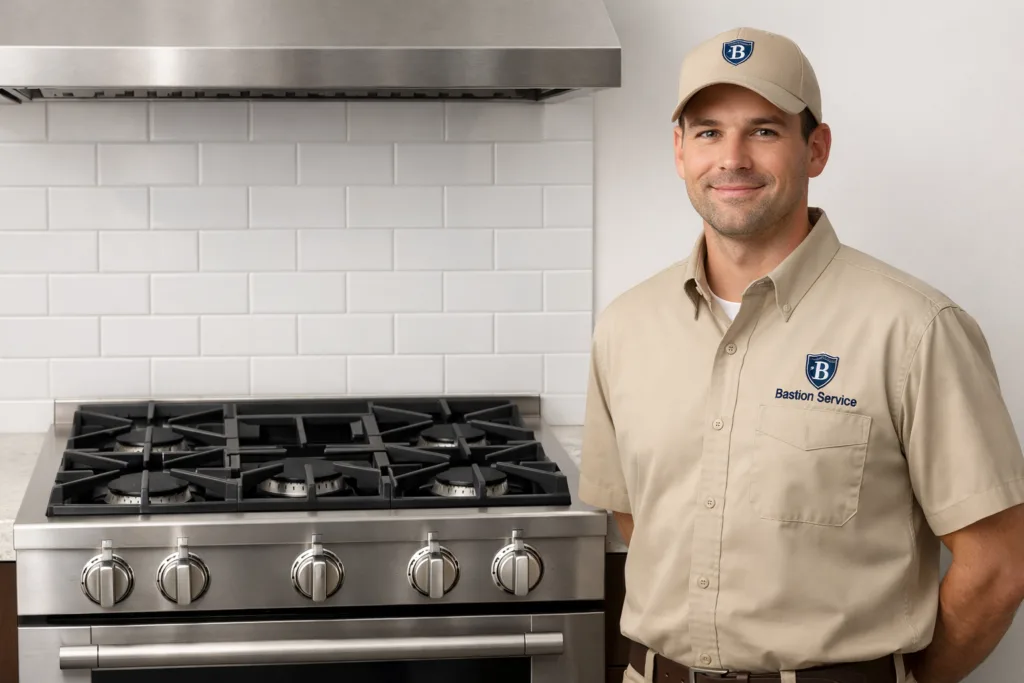
Cooktop problems rarely stay limited to a minor annoyance. A burner that clicks too long, fails to light on the first try, or heats unevenly can disrupt everyday cooking and sometimes point to wear in a shared ignition or control system. On Wolf units, the best repair decisions come from matching the symptom to the actual failed component rather than assuming every burner issue has the same cause.
What different Wolf cooktop symptoms usually mean
Many service calls start with one specific complaint, but the pattern around that complaint is what helps narrow the fault. Whether the cooktop is gas or electric, details such as how often the problem happens, whether it affects one burner or several, and whether performance changes after cleaning all help identify the likely repair path.
One burner will not ignite
If only one burner refuses to light, the issue is often isolated to that burner assembly. Common causes include clogged burner ports, a misaligned cap, a worn igniter, or a problem with the ignition switch for that position. If the burner lights with a match but not with the normal spark, that usually points more toward ignition than gas delivery.
Clicking continues after the flame appears
Persistent clicking often means the spark system is still trying to ignite a burner that is already lit. Moisture, residue around the burner head, a failing switch, or a spark module problem can all cause this. If the symptom keeps returning after the cooktop has dried and been cleaned, it usually needs further inspection rather than continued use and repeated resets.
Flame is weak, uneven, or slow to respond
A weak or irregular flame can come from blocked burner openings, burner head wear, valve problems, or regulation issues. Homeowners often notice this when water takes longer to boil, pans heat unevenly, or low and medium settings feel less predictable than before. When one burner behaves differently from the others, that points to a more localized fault. When several burners show the same issue, the diagnosis shifts toward components they share.
Electric heating is erratic or absent
On electric configurations, a burner may stay cool, overheat, cycle unpredictably, or stop responding to the control setting. That can indicate a failed element, damaged connection, control fault, or sensor-related problem depending on the model. Because the visible symptom does not confirm which part has failed, testing matters before parts are recommended.
Controls feel loose, stiff, or inaccurate
If a knob no longer adjusts heat smoothly or the output does not match the selected setting, the issue may involve the control stem, valve, switch, or a component behind the knob. This is more than a convenience issue. When burner response becomes inconsistent, everyday cooking becomes harder to manage and the problem usually does not improve on its own.
Signs the problem is getting worse
Some cooktop faults begin intermittently and then become more frequent. In Del Rey homes, that often looks like a burner that only misfires occasionally at first, then starts failing during normal meal prep several times a week. A growing delay between turning the knob and seeing ignition, louder or constant clicking, or heat that no longer matches the selected level are all signs that the condition is progressing.
- A burner lights only after multiple tries
- The same burner repeatedly goes out or struggles to stay consistent
- Several burners begin showing similar ignition behavior
- Heat output changes without any adjustment to the control
- The cooktop works one day and acts unpredictably the next
When symptoms become repeatable, repair is usually more straightforward because the fault can be traced through the exact pattern instead of a one-time interruption.
Problems that may follow spills, cleaning, or humidity
Not every Wolf cooktop issue begins with a failed part. Moisture under knobs, residue around the igniter, or buildup in burner ports can create ignition problems that feel sudden. This is especially common after a boil-over or heavy cleaning. If clicking starts right after a spill, allowing the area to dry completely may help. If the symptom returns repeatedly or affects performance even when the cooktop is clean and dry, there is often a switch or ignition component involved.
Food debris can also change how a burner lights and distributes flame. A burner cap that is slightly out of position may create delayed ignition, uneven flame spread, or no ignition at all. These simpler causes are worth ruling out early because they can mimic larger failures.
When to stop using the cooktop and schedule service
Continued use is risky when the cooktop is no longer controlling flame or heat properly. Repeated ignition attempts can add wear to spark components, and unstable burner output can make normal cooking unpredictable. Service makes sense when the problem is consistent, worsening, or affecting daily use enough that you have to work around the appliance.
Stop using the cooktop immediately if you notice a persistent gas smell, hear gas without ignition, or suspect a leak. In that situation, address the immediate safety concern first through the gas utility or emergency assistance before arranging appliance repair.
Repair vs. replacement for a Wolf cooktop
Most homeowners weigh the same factors before moving forward: the age of the cooktop, the condition of the rest of the unit, whether the failure is limited to one system, and how often other issues have appeared recently. If the problem is centered on a burner component, switch, igniter, or control part and the cooktop is otherwise in good condition, repair is often the sensible choice.
Replacement becomes more likely when multiple burners have separate faults, control problems are recurring, or overall wear suggests more repairs are close behind. The key is to base the decision on the actual condition of the appliance rather than the frustration of the moment.
What homeowners in Del Rey usually want to know
Most households are trying to answer a few practical questions: Is the problem isolated or part of something larger? Is it safe to wait briefly, or should the unit stay off? Is the repair likely to restore normal daily cooking without ongoing issues? A symptom-based evaluation is the most reliable way to answer those questions and choose the next step with confidence.
For Wolf cooktop repair in Del Rey, the most useful service visit is one that explains what is failing, what that means for continued use, and whether the unit is a good candidate for repair based on its current condition.