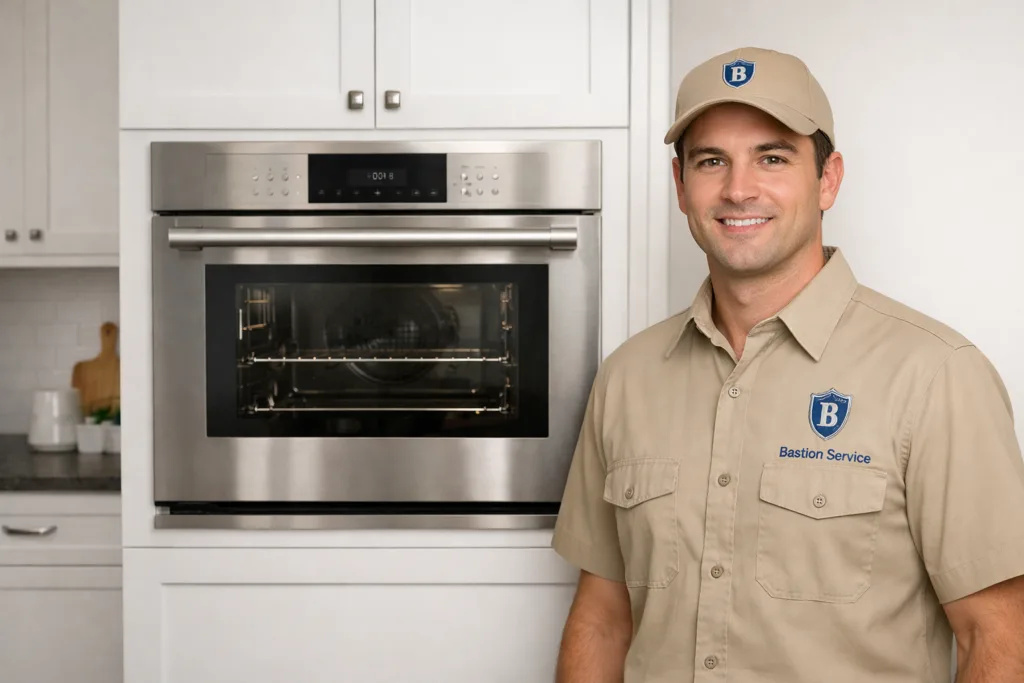
Wall oven problems tend to show up in a few frustrating ways: the oven takes too long to preheat, food bakes unevenly, the display starts acting strangely, or the unit stops mid-cycle. With Thermador models, those symptoms can come from heating components, sensors, door systems, wiring, or the electronic control. Looking at the exact pattern matters because an oven that runs cool is not diagnosed the same way as one that overheats, beeps constantly, or loses power during use.
Start with the symptom pattern
A helpful repair plan begins with what the oven is actually doing in daily use. Does it miss temperature by a little or by a lot? Does it fail in bake mode but still broil? Does it shut off only after the cavity gets hot? These details help separate a simple part failure from a broader control or power issue.
In Del Rey homes, many wall oven complaints fall into a few main categories:
- Oven not heating or heating very slowly
- Uneven baking from front to back or rack to rack
- Temperature swings during normal cooking
- Display, keypad, or error code problems
- Door, latch, or self-clean related failures
- Intermittent shutoffs or loss of power
Common Thermador wall oven problems and what they may indicate
Not heating or taking too long to preheat
If the oven stays cold, reaches temperature very slowly, or never gets hot enough for normal baking, the cause may be a failed bake element, a sensor reading incorrectly, a relay issue on the control, or a power supply problem. Some homeowners first notice this when frozen foods take far longer than usual or when recipes that normally finish on time suddenly need an extra 15 to 30 minutes.
On double wall oven units, one cavity may work normally while the other does not. That often points to a component failure isolated to that section rather than a whole-home electrical issue. If the oven is consistently underheating, it is best to stop relying on guesswork with higher temperature settings, since that can make cooking results even less predictable.
Uneven baking and hot spots
When cookies brown on one side but not the other, casseroles stay cool in the center, or the top rack cooks much faster than expected, the problem may involve weak heat output, poor temperature feedback, or convection airflow trouble. Thermador wall ovens are designed for more controlled cooking performance, so noticeable changes in bake quality usually mean something has shifted out of normal operation.
Uneven results do not always mean the entire oven is failing. In many cases, the issue is tied to a specific serviceable part such as a sensor, fan motor, element, or control-related component. What matters is whether the inconsistency is occasional or becoming the new normal with every meal.
Temperature swings and inaccurate cooking
All ovens cycle heat on and off, but wide swings are different. If the cavity runs much hotter than the set temperature, burns food on the outside, or seems unable to hold a stable bake range, the oven may be misreading temperature or responding poorly to that reading. This can show up as underdone interiors, scorched tops, or dishes that vary from one use to the next even when the recipe stays the same.
Repeated temperature inconsistency is a good reason to schedule service, especially if the appliance has become unreliable for everyday meals. Ongoing use in that condition can also put extra strain on heating and control systems.
Error codes, beeping, and unresponsive controls
A fault code can be useful, but it is only a starting point. The code may identify the system affected without proving which exact part has failed. A sensor-related code, for example, could involve the sensor itself, the wiring harness, or the control board receiving the signal.
Other control issues may include:
- Buttons that only respond sometimes
- A display that goes blank or flickers
- Repeated beeping with no clear cooking function active
- An oven that appears on but will not start a cycle
- A locked interface that will not reset normally
Because electronic parts on premium wall ovens can be costly, accurate testing is especially important before replacing anything.
Stops mid-cycle or will not power on
If a Thermador wall oven loses power during preheat or shuts off while cooking, the issue may involve incoming voltage, wiring connections, overheating protection, or the electronic control. A fully dead unit with a blank display can sometimes trace back to household power, but not always. If the breaker is not the cause, internal electrical faults become more likely.
When the shutdown only happens after the oven has been running for a while, heat-related component failure is often part of the diagnosis. That pattern is different from a unit that never powers up at all, and it usually changes the repair path.
Door, latch, and self-clean problems
A door that will not close tightly can affect both cooking performance and safety. Heat may escape, preheat times may lengthen, and temperature regulation can become less stable. If the latch does not engage or release properly, the oven may also prevent certain cycles from starting.
Self-clean issues are common service triggers because that mode puts heavy stress on door hardware, controls, and thermal protection components. If the oven started acting up after a self-clean cycle, that timing is worth noting. A door that remains locked, a control that stops responding afterward, or a new fault code after high-heat cleaning can all help narrow the source of failure.
Signs the oven should not keep being used
Some problems are inconvenient but manageable for a short time. Others are reasons to stop using the unit until it is checked. In a household kitchen, the safer choice is to pause use if you notice any of the following:
- Burning electrical smell
- Visible sparking
- Breaker trips linked to oven operation
- Door not latching or unlocking correctly
- Display failure combined with erratic heating
- Oven overheating well beyond the set temperature
These symptoms can point to problems that go beyond normal wear and may lead to more damage if the oven continues running.
When repair usually makes sense
Repair is often the better choice when the issue is isolated to a component such as a heating element, temperature sensor, fan motor, latch assembly, or a specific control-related failure and the rest of the appliance is still in good condition. That is especially true when the cavity, trim, hinges, and general operation have otherwise been solid.
For many homeowners in Del Rey, the deciding factors are consistency, age, and the scope of the problem. A single fault in an otherwise well-kept wall oven is very different from a unit with repeated electronic issues, multiple failing systems, or signs of broader wear.
When replacement becomes a more serious consideration
Replacement may be worth discussing if the oven has several expensive failures at once, suffers from repeated board problems, or has damage that goes beyond normal part replacement. The same is true if the unit has become unreliable in multiple modes rather than showing one isolated symptom.
That does not mean every non-heating Thermador wall oven should be replaced. In many cases, the problem turns out to be far more limited than it first appears. The important part is understanding whether the repair will restore stable, everyday performance or only address one symptom in a larger pattern of decline.
What a service visit should help you understand
A well-focused visit should explain which system has failed, why the oven is producing the symptoms you are seeing, and whether the recommended repair fits the condition of the appliance. That is the point where the decision becomes easier: repair the unit with confidence, or reconsider if the cost and condition no longer line up.
For households in Del Rey that depend on a wall oven for daily cooking, holidays, and weekend meal prep, a straightforward explanation is often as valuable as the repair itself. It helps set expectations on what can be fixed, what should be watched, and whether the oven is likely to return to normal baking performance after service.