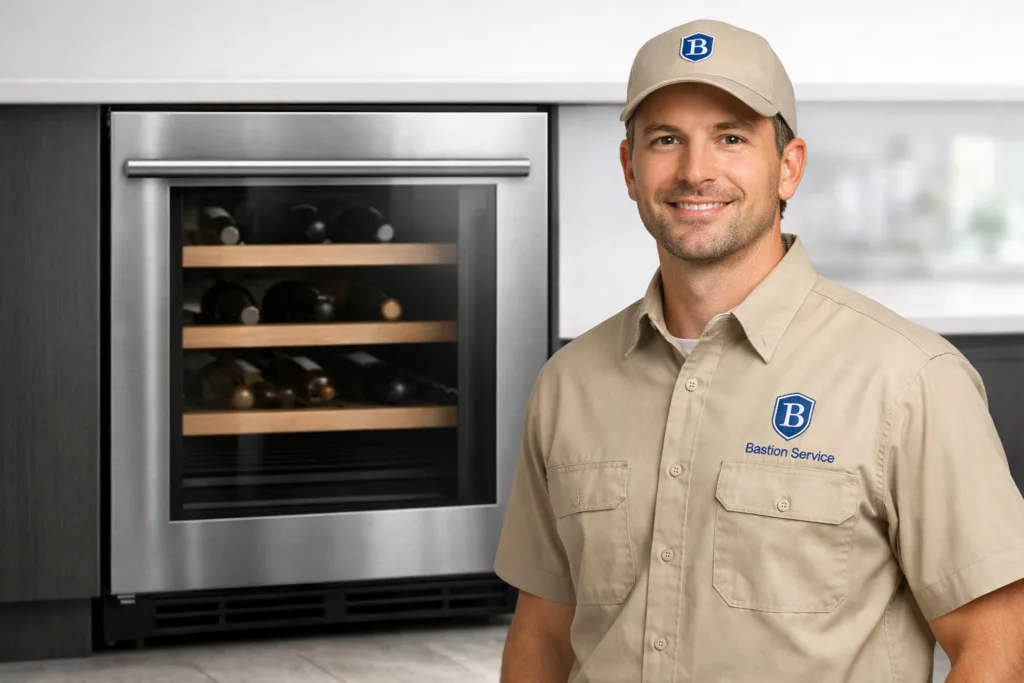
Common Perlick Wine Cooler Problems in Mar Vista Homes

Wine coolers often show subtle warning signs before they stop working altogether. A few degrees of temperature drift, a louder fan, moisture on the glass, or longer run times can all point to service needs that are easier to address early. Because Perlick wine coolers are designed for stable storage conditions, even small performance changes can matter.
Not Cooling Properly
If the cabinet is warmer than the setting, the cause may be restricted airflow, dirty condenser components, a weak evaporator or condenser fan, a faulty thermistor, or an electronic control problem. In some cases, the issue is more serious and involves the compressor or sealed system. Uneven cooling from one shelf to another often suggests airflow or circulation trouble rather than a total cooling failure.
Temperature Swings
When the temperature rises and falls without any setting change, the cooler may be struggling to read cabinet conditions correctly or respond consistently. This can happen with sensor faults, control board issues, fan problems, or a door that is allowing warm air to enter the cabinet. Repeated swings are especially important to address when bottles are being stored long term.
Condensation, Water, or Frost
Moisture on the door, water near the base, or unexpected frost inside the cabinet should not be ignored. These symptoms may come from a worn gasket, drainage issues, poor air circulation, or a control problem that is causing the unit to cool incorrectly. Continued operation in this condition can increase run time and create unstable storage conditions.
Fan Noise or New Operating Sounds
A Perlick wine cooler should not suddenly become much louder during normal use. Buzzing, rattling, clicking, or pronounced fan noise can point to a failing fan motor, vibration from mounting or leveling issues, compressor stress, or an electrical component that needs inspection. A change in sound is often one of the earliest clues that a part is wearing out.
Display or Control Issues
If the display is inconsistent, the controls do not respond correctly, or the set temperature does not match the actual cabinet temperature, the problem may be tied to the user interface, sensor readings, or main control components. These faults can create confusing symptom patterns because the unit may still power on while cooling performance becomes unreliable.
Why Symptom Patterns Matter
Two wine coolers can appear to have the same problem while needing very different repairs. One warm cabinet may be caused by a simple gasket or fan issue, while another points to a sealed-system fault. Moisture on the door might come from a sealing issue, but it can also show up when the temperature is not being regulated correctly. That is why the most useful first step is to match the symptom pattern to the system involved before replacing parts.
This approach helps determine whether the repair is likely to be straightforward, whether continued use could increase wear on major components, and whether the repair cost makes sense for the unit’s condition and age.
When to Schedule Service
It makes sense to schedule Perlick wine cooler repair in Mar Vista when the unit cannot hold a stable temperature, runs almost constantly, develops frost, leaks water, or starts making new noises. A wine cooler that still turns on but no longer cools correctly should not be assumed to have a minor problem. Ongoing operation while the cabinet is struggling can place more strain on the compressor and related components.
Early service is also a good idea when the door does not seem to seal well, shelves feel unevenly cooled, or the controls behave inconsistently. Problems that begin as a minor airflow or sensor issue can become more expensive if they are left to affect run time and internal moisture levels for too long.
Repair or Replacement: What Usually Makes Sense
Repair is often reasonable when the problem is limited to parts such as fan motors, sensors, switches, controls, or door-seal components. These issues are typically more contained and easier to evaluate. Replacement becomes a more serious consideration when the cooler has multiple failing systems, repeat breakdowns, or major sealed-system trouble that does not line up well with the appliance’s overall condition.
For homeowners in Mar Vista, the decision usually comes down to the actual fault, the unit’s age, and whether the repair restores reliable storage conditions without stacking one major expense on top of another.
What to Note Before a Service Visit
A few observations can help speed up diagnosis. Try to note:
- The set temperature and the approximate actual cabinet temperature
- Whether the cooler is evenly cold from top to bottom
- Whether the compressor seems to run constantly or cycle too often
- When condensation, frost, or water appears
- Any recent change in fan noise, buzzing, or clicking
- Whether the issue started suddenly or developed gradually
These details often help narrow the problem to airflow, controls, sealing, or cooling-system performance more quickly.
Household Conditions That Can Affect Performance
Wine coolers perform best when airflow around the unit is adequate and the door is not being opened more often than necessary. Overloading shelves, blocking internal vents, or ignoring a worn gasket can all make a cooler work harder. Even when those factors are not the root cause, they can make an existing problem show up faster. If a Perlick unit in a Mar Vista home seems to be working harder than usual, it is worth checking for visible frost, poor door contact, or warm spots inside the cabinet.
Focused Service for Stable Wine Storage
The goal of service is not just to make the appliance turn on again. It is to restore dependable temperature control, reduce unnecessary strain on major components, and protect the bottles being stored inside. When the issue is identified accurately, the next step is easier to judge: proceed with repair, monitor a minor issue, or consider replacement if the overall condition of the unit no longer supports a practical fix.