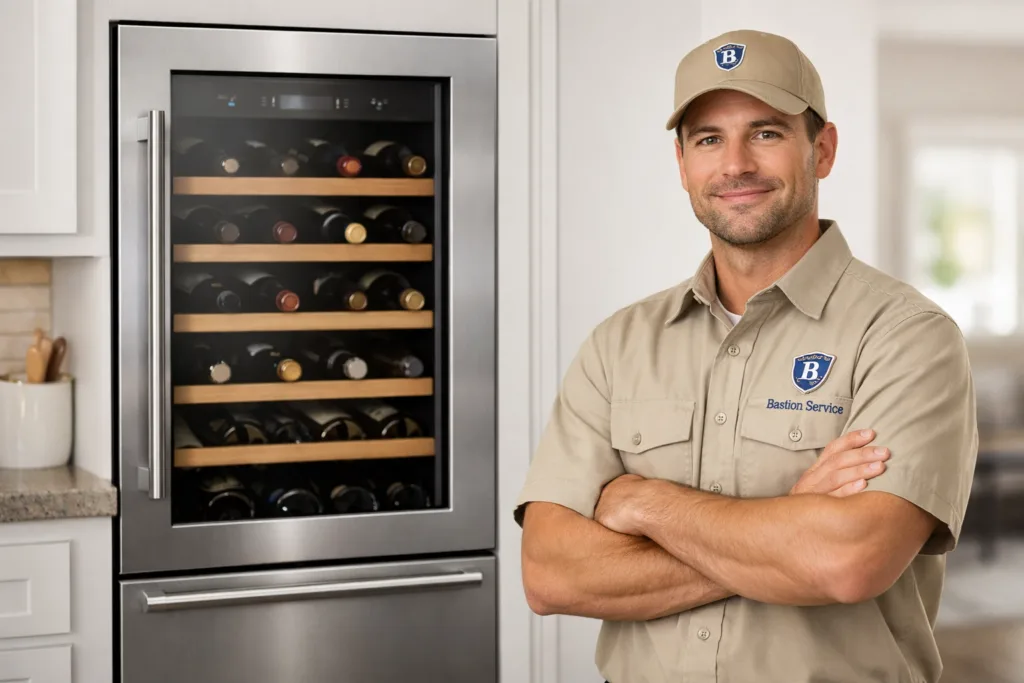
Common wine cooler problems and what they may mean

When a wine cooler starts running warm, cycling too often, or making unfamiliar noise, the underlying cause is not always obvious from the display panel alone. In Mar Vista homes, the most common complaints usually involve temperature drift, moisture buildup, vibration, or a unit that seems to run constantly without protecting the bottles inside.
Temperature instability is often the first sign something is wrong. If the cabinet feels warmer than the setting suggests, possible causes include a failing thermostat or sensor, restricted airflow, dirty condenser components, a weak fan, or a door gasket that is letting warm room air leak in. If the interior gets too cold instead, the control system may be misreading the temperature and overcooling the compartment.
Noise can also narrow down the problem. A soft hum is normal, but rattling, repeated clicking, buzzing, or a fan-like scraping sound may point to loose panels, an evaporator or condenser fan issue, compressor strain, or vibration from an uneven installation. What seems like a small annoyance can be an early warning that the unit is working harder than it should.
Condensation matters too. Fogging on the glass, damp shelves, or water collecting under the unit can mean a worn door seal, drainage trouble, frequent warm-air intrusion, or an internal temperature imbalance. Left alone, those conditions can make the cooler less efficient and less consistent over time.
Why wine coolers lose temperature control
Wine coolers depend on steady airflow and accurate temperature sensing. When either of those is disrupted, cooling performance becomes uneven. A blocked vent, weak fan motor, or heavy dust around the condenser can cause warm spots inside the cabinet even when the cooler still appears to be operating normally.
Controls are another frequent source of trouble. A bad sensor may tell the system the interior is colder or warmer than it really is, which leads to short cycling, nonstop running, or a mismatch between the display and the actual cabinet temperature. This is one reason homeowners sometimes assume they have a major sealed-system issue when the fault is actually in the control side of the appliance.
Placement can add to the problem. Built-in wine coolers need proper ventilation, and freestanding units can struggle if they are packed into tight spaces or exposed to higher room temperatures for long periods. Before deciding a cooler has failed completely, it helps to rule out installation and airflow conditions that can mimic component failure.
Symptoms that deserve prompt attention
Some wine cooler issues are inconvenient but manageable for a short time, while others can escalate quickly. If the cabinet will not hold a steady range, the compressor is clicking repeatedly, the fan is unusually loud, or moisture is collecting around the door, continued use can increase wear on other components.
Frost is especially important to interpret correctly. Light moisture can happen during normal use, but repeated frost buildup usually suggests airflow restriction, a sealing problem, or an internal cooling imbalance. If the heaviest freezing is happening in a separate freezer compartment or the cooling problem is centered there instead of the wine section, Freezer Repair in Mar Vista may be the more relevant service path.
Water-related symptoms should not be ignored either. If the unit is connected to a fill system, has a nearby dispenser feature, or the complaint includes leaking around an ice-production area, Ice Maker Repair in Mar Vista may be a better fit for that diagnosis than wine cooler service alone.
Repair versus replacement
Not every wine cooler problem calls for replacement. Many service calls come down to a failed fan motor, bad thermostat, worn gasket, drainage issue, or control fault that can be corrected without replacing the unit. In those cases, repair can be the sensible choice, especially when the cabinet and cooling system are otherwise in good condition.
Replacement becomes a more serious consideration when the wine cooler has chronic temperature problems, repeated electrical faults, or signs of sealed-system failure. Age matters, but so does the overall pattern of breakdowns. A single isolated repair is very different from a unit that has already needed multiple visits and still cannot hold the correct range.
For households trying to decide whether the problem belongs to the wine cooler itself or a larger kitchen cooling issue, symptom overlap can be confusing. If similar temperature loss, condensation, or compressor behavior is affecting the main food-storage appliance as well, Refrigerator Repair in Mar Vista may help clarify whether the issue belongs to refrigerator service instead.
What to expect from a service visit
A useful wine cooler diagnosis starts with testing, not guessing. That typically means checking actual cabinet temperature, inspecting door seals, confirming airflow, evaluating the controls and sensors, and listening for compressor or fan stress during operation. The goal is to determine whether the failure is mechanical, electrical, airflow-related, or tied to installation conditions.
That process also helps identify whether the cooler is safe to keep using while parts are ordered or whether shutting it down is the better choice. A unit that runs nonstop, trips power, develops sharp mechanical noise, or cannot recover temperature after the door is closed may need faster attention than one with a minor display or lighting issue.
Choosing the right next step in Mar Vista
For homeowners in Mar Vista, the most practical next step is to focus on the symptom pattern rather than assume the cause. Warm bottles, interior moisture, fan noise, and nonstop cycling can all come from very different faults, and the right repair decision depends on identifying that fault accurately.
Whether the issue turns out to be a seal problem, airflow restriction, failing control, or a more serious cooling-system defect, early diagnosis usually makes the decision easier. It helps avoid unnecessary parts replacement, reduces the chance of repeat problems, and gives a clearer picture of whether repair is worth it for the unit you have.