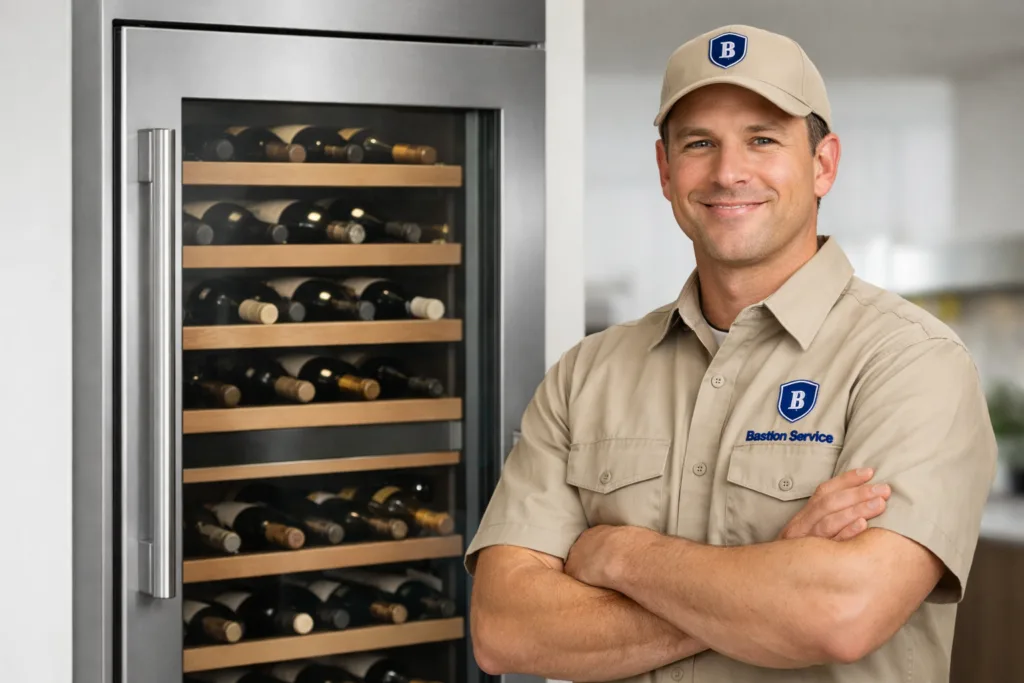
Temperature drift, excess moisture, and new noises are the warning signs most homeowners notice first. In a Sub-Zero wine cooler, those symptoms can come from very different failures, so it helps to look at what the unit is doing as a whole instead of assuming every cooling complaint has the same cause. A cabinet that feels slightly warm, runs longer than usual, or fogs near the door often needs attention before storage conditions become unreliable.
Common Sub-Zero Wine Cooler Issues in Mar Vista Homes
Wine coolers are built for consistency. When that consistency slips, the change usually shows up in day-to-day use: bottles are not as cool as expected, the interior temperature swings, the unit seems louder, or moisture starts to collect where it did not before. The pattern matters, because each symptom points toward a different repair path.
Wine Cooler Not Cooling Properly
If the cabinet is running warm, the problem may involve restricted airflow, a failing fan, dirty condenser components, sensor trouble, control failure, or a more serious sealed-system issue. Some units still cool a little during the early stage of a problem, which can make it easy to delay service. That partial cooling is not a sign that everything is fine; it often means the system is struggling to maintain the target range.
Homeowners may also notice longer run times, uneven temperatures from top to bottom, or bottles that never seem to reach a stable storage temperature. Those details help narrow down whether the issue is airflow-related, electrical, or tied to the refrigeration system itself.
Wine Cooler Running Too Cold
A Sub-Zero wine cooler that starts overcooling or freezing contents is no longer regulating normally. Faulty temperature sensing, control board issues, or an airflow imbalance inside the cabinet can all cause the unit to overshoot its set point. Overcooling is not harmless. It can affect storage conditions and may signal that the appliance is losing the ability to cycle correctly.
Condensation Around the Door or Inside the Cabinet
Moisture is often a clue that warm air is entering where it should not. A worn gasket, a door that is slightly misaligned, or poor sealing along the frame can all lead to recurring condensation. In some cases, humidity combines with a cooling problem, creating moisture on shelves, cabinet walls, or near the door opening.
If the moisture keeps returning, it is worth checking before it turns into odor, standing water, or extra strain on internal components. Door-seal problems are especially important because they can force the unit to run longer just to keep up.
Fan Noise, Buzzing, or Rattling
Wine coolers are not completely silent, but a noticeable change in sound should not be ignored. Buzzing, scraping, clicking, rattling, or a louder-than-normal hum may come from a fan motor, a blade obstruction, panel vibration, or compressor stress. The type of noise matters. A brief startup sound is different from a repeating click, and a light rattle is different from a scraping fan sound that grows worse over time.
Constant Running or Short Cycling
When the cooler runs almost nonstop, it may be trying to compensate for poor airflow, a weak seal, sensor problems, or a cooling system issue. Short cycling, where the unit starts and stops too frequently, can point to control trouble or inaccurate temperature feedback. In either case, abnormal cycling usually means the appliance is working harder than it should and may wear out parts faster.
What Symptom Patterns Often Mean
Looking at symptoms in combination is often more useful than looking at only one complaint.
- Warm interior plus constant running: often tied to airflow restrictions, dirty condenser components, fan trouble, or sealed-system performance loss.
- Moisture plus longer run times: commonly linked to door sealing problems or warm air entering the cabinet.
- Noise plus weak cooling: may suggest a fan motor issue, compressor strain, or another problem affecting circulation and temperature stability.
- Overcooling plus erratic display behavior: can point to sensor or electronic control faults.
This symptom-based approach helps separate a targeted repair from a larger reliability concern.
Why Accurate Diagnosis Matters
Two wine coolers can show the same outward symptom and need completely different repairs. A cabinet that runs warm might need a fan motor, a seal correction, a control component, or deeper refrigeration work. Replacing parts by guesswork can increase cost without fixing the underlying issue.
That is why a useful service call should confirm actual temperature behavior, airflow performance, door sealing condition, and how the unit is cycling. For a premium appliance, it is also important to determine whether the failure is isolated or part of a broader wear pattern. Bastion Service helps Mar Vista homeowners weigh repair options against the condition of the appliance so the next step makes sense for the actual problem.
When to Schedule Service
It is smart to schedule service when performance changes are consistent, not just occasional. If the cooler is no longer holding temperature, starts making new sounds, develops repeat condensation, or behaves differently from one day to the next, the issue usually will not resolve on its own.
Do not wait if you notice:
- The cabinet is clearly warmer than its setting
- The compressor seems to run constantly
- Fan noise becomes louder, irregular, or scraping
- Condensation returns even with normal door use
- The controls or display respond inconsistently
- The unit cycles on and off far more often than usual
When Continued Use Can Make Things Worse
Partial operation can be misleading. A wine cooler that still turns on but no longer regulates well may be placing extra load on the fan, compressor, or control system. A bad seal can cause longer and longer run times. A weak fan can reduce circulation until cooling performance falls off sharply. A control issue can create swings that are hard on both the appliance and the collection inside.
If the cooler is warm, noisy, or building moisture, limiting use until the problem is checked is often the safer choice. Stable storage conditions matter more in a wine cooler than simple on-or-off operation.
Repair or Replacement?
Many Sub-Zero wine cooler problems are repairable, especially when they involve fans, sensors, controls, gaskets, or drainage-related issues. Replacement becomes more likely when the unit has major sealed-system trouble, repeated expensive failures, or several age-related problems at the same time.
A practical decision usually comes down to these questions:
- What has actually failed?
- Is the issue isolated, or does it suggest broader wear?
- How well was the unit performing before this symptom appeared?
- Does the repair cost make sense for the cooler’s condition and expected remaining life?
Those questions are especially important when a premium built-in unit has been showing more than one warning sign at once.
What Homeowners in Mar Vista Should Expect From a Service Visit
A worthwhile visit should do more than confirm that the unit is not working properly. It should narrow the issue to a likely cause, explain whether the fault is electrical, airflow-related, or part of the cooling system, and clarify whether the appliance can reasonably be restored to stable operation. Homeowners should come away understanding not just what is wrong, but what the repair path looks like and whether there are signs of broader wear.
For Sub-Zero wine cooler repair in Mar Vista, the most helpful outcome is a diagnosis that connects the symptoms to a realistic next step, whether that means a targeted repair or a more careful replacement discussion.