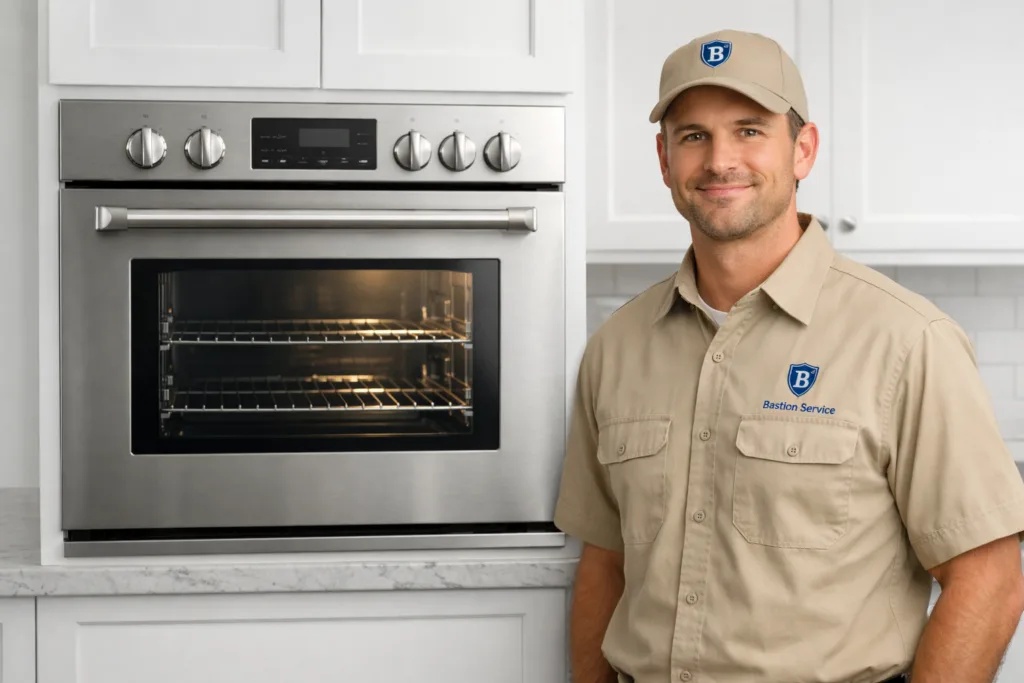
Oven problems tend to show up first in everyday cooking: cookies brown unevenly, casseroles need extra time, or dinner is delayed because preheat takes far longer than expected. With Summit models, those symptoms can come from different underlying issues, so the most useful approach is to match the repair path to what the oven is actually doing rather than replacing parts based on guesswork.
Start with the way the oven is failing
Summit oven issues are often easier to narrow down when the symptom pattern is specific. A unit that will not heat at all points to a different set of likely causes than one that heats, but cannot hold temperature. The same is true for an oven that powers on normally yet bakes unevenly or shuts off during a cycle.
In many Rancho Palos Verdes homes, the first clues are consistent and easy to describe:
- The oven will not turn on
- Preheat is unusually slow
- Food cooks unevenly from front to back or top to bottom
- The temperature seems too high or too low
- The control panel responds inconsistently
- The oven starts, then stops partway through cooking
Those details help separate heating faults, ignition problems, sensor issues, control failures, and door-related heat loss.
Common Summit oven symptoms and what they can mean
Oven not heating
If the oven does not produce heat, the cause may be a failed bake element, broil element, igniter, thermal fuse, wiring fault, or electronic control problem depending on the model. Electric ovens may still show lights or a functioning display even when a heating circuit has failed. Gas ovens may appear to begin the cycle but never actually ignite.
This is one of the clearest cases where a symptom-based diagnosis matters. A dead oven is not always a major failure, but it should be checked before repeated attempts to use it put more strain on the controls or ignition system.
Slow preheating
Slow preheat is one of the most common complaints because the oven still works just well enough to be frustrating. In gas models, a weak igniter is a frequent reason. It may glow, but not strongly enough to open the gas valve quickly and consistently. In electric models, a partially failed element or relay issue can cause the oven to climb in temperature far more slowly than normal.
If preheat times keep getting longer, that usually means the problem is progressing rather than staying stable.
Uneven baking or roasting
Uneven results can point to several different faults. A weak element, inaccurate sensor, damaged door gasket, or temperature regulation issue can all lead to hot spots and inconsistent cooking. Some homeowners notice that the top browns too fast while the center stays underdone. Others see one side of the pan finishing earlier than the other.
When the problem repeats across different dishes and rack positions, it usually means the oven itself is no longer regulating heat correctly.
Temperature swings
All ovens cycle on and off to maintain heat, but noticeable temperature swings can signal trouble. If your Summit oven overshoots the set temperature, drops too low, or seems unpredictable from one use to the next, likely causes include a failing temperature sensor, calibration drift, relay failure, or control board issue.
This kind of problem matters because it affects both cooking results and reliability. An oven that cannot maintain stable heat becomes difficult to trust for baking, roasting, or longer cook times.
Display and control problems
Sometimes the heating system is not the first thing to fail. Touch controls may stop responding, the display may flicker or go blank, or selected cycles may not start properly. In other cases, the oven works intermittently because of a control fault, loose connection, or heat-related electrical issue that appears only after the appliance warms up.
Error codes can also be useful clues. They do not always name the exact failed part, but they often help identify whether the issue is tied to sensing, temperature control, latch functions, or communication within the oven electronics.
Door and seal issues can affect performance too
A Summit oven does not need a failed element to cook poorly. If the door does not close fully, heat can escape during preheat and throughout the cooking cycle. Worn hinges, a damaged gasket, or latch trouble may lead to longer cook times, uneven browning, and extra stress on heating components that have to work harder to maintain temperature.
This is especially worth checking when the oven seems functional but never cooks quite the way it used to.
When to stop using the oven
Some problems are inconvenient but not immediately urgent. Others are a reason to stop using the appliance until it is inspected. It is smart to pause use if the oven:
- Overheats or seems far hotter than the set temperature
- Shuts off unexpectedly during a cycle
- Shows intermittent power loss
- Will not regulate temperature reliably
- Has a door that will not close securely
- Produces a strong gas odor on a gas model
If you notice a persistent gas smell, stop using the oven and follow gas safety steps first before arranging appliance service. Electrical symptoms such as flickering controls, tripped breakers, or sudden shutoffs should also be addressed promptly to avoid additional component damage.
Repair or replace: what usually makes sense
Many Summit oven repairs are worthwhile when the problem is isolated to a serviceable part such as an igniter, heating element, sensor, fuse, latch, switch, or control-related component. That is especially true when the rest of the oven is in solid condition and the repair restores normal daily use.
Replacement becomes a more serious consideration when there are multiple failures, recurring electronic problems, significant wiring damage, or limited part availability for the exact model. Age alone does not always decide the issue. What matters more is the condition of the appliance, the nature of the failure, and whether the repair resolves the problem without turning into a string of separate fixes.
What a focused service visit should cover
A useful oven service call should do more than confirm that the unit is malfunctioning. It should verify the complaint, test how the oven heats or ignites, check temperature behavior, evaluate control responses, and look for related wear that could affect reliability. That process helps show whether the issue is a single failed component or part of a broader problem.
For homeowners in Rancho Palos Verdes, that means getting a practical repair plan based on how the Summit oven is actually performing in the kitchen, not a generic recommendation. When the symptom is understood clearly, the next step is easier to decide and the repair is more likely to solve the problem the first time.