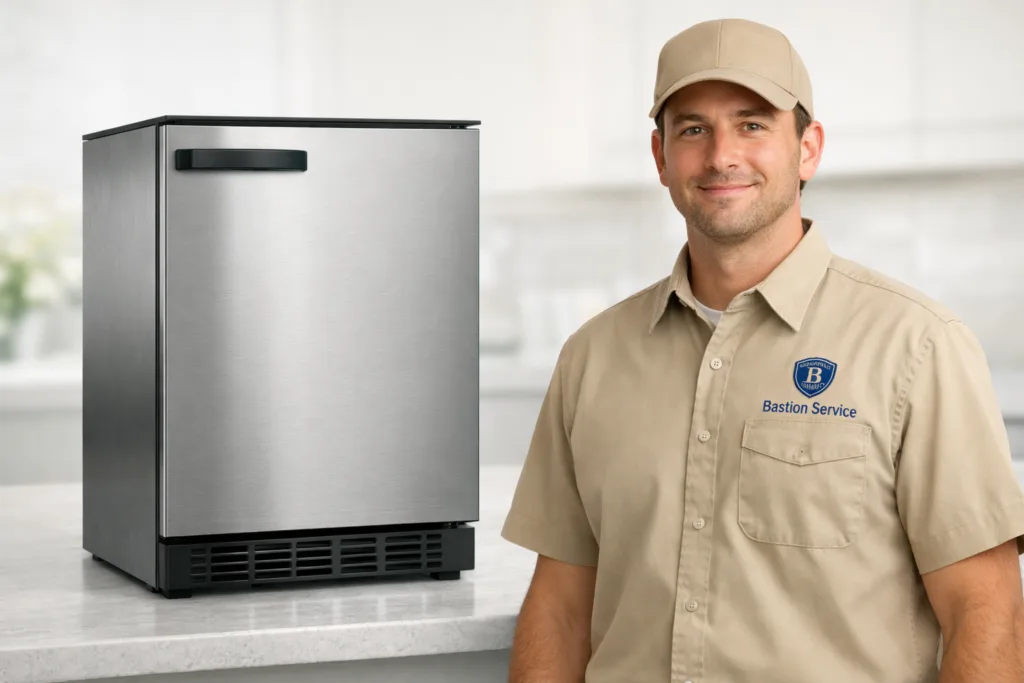
Perlick ice makers usually give warning signs before they stop working completely. A bin that never seems full, wet spots near the kick plate, louder cycling, or ice that starts sticking together can each point to a different failure path. In Hermosa Beach homes, the most useful approach is to match the symptom to the stage where the machine is struggling: filling, freezing, harvesting, draining, or holding temperature in the bin.
Common Perlick ice maker problems in Hermosa Beach homes
One of the most frequent complaints is no ice at all. When that happens, the cause may be as simple as interrupted water flow or as involved as a control, sensor, pump, or cooling problem. The same “not making ice” symptom can come from more than one system, which is why guessing at parts often leads to repeat trouble.
Slow production is another common issue. The machine may still run, but each batch takes too long, so the bin never catches up with normal household use. This can happen when airflow is restricted, temperatures are off, mineral buildup is affecting performance, or the unit is not completing its freeze-and-harvest cycle correctly.
Leaks and water around the unit should be taken seriously. A blocked drain, overfill condition, loose fitting, or partial melt inside the cabinet can all leave water where it should not be. Even a minor leak can lead to flooring damage, swelling around surrounding cabinetry, and heavier wear on the appliance if it continues unchecked.
Ice quality problems are also worth attention. Small cubes, hollow cubes, cloudy ice, clumped ice, or ice with an off taste can suggest poor fill volume, scale buildup, temperature inconsistency, or stagnant water somewhere in the system. If the ice looks different than normal, the machine is usually telling you something has changed.
What specific symptoms can indicate
Unit has power but makes no ice
If indicator lights are on but no ice is being produced, the issue may involve the water inlet side, a failed circulation component, a control board problem, or a refrigeration fault. A machine with power is not necessarily a machine that can complete a cycle. The key is confirming where the process stops.
Ice production is slow
When output drops gradually, the problem is often tied to longer freeze times or incomplete harvests. Dirty heat-transfer surfaces, restricted airflow, weak water fill, or internal temperature drift can all reduce daily production. This is especially noticeable when the appliance still makes some ice, but far less than it used to.
Ice is melting or clumping in the bin
Clumped ice usually means the storage area is warming up enough for cubes to partially melt and refreeze together. A sealing issue, temperature control problem, or inconsistent cycling can all cause this. If the bin is wet or slushy, the machine may be making ice but failing to preserve it properly.
Water leaks from the unit
Visible water can come from a drain restriction, a cracked line, a bad connection, or overfilling during the water cycle. In some cases, the leak is not from a supply problem at all, but from melting caused by weak cooling performance. Finding the source matters because the repair path is very different depending on whether the issue starts with plumbing, drainage, or temperature loss.
Unusual noises during operation
Buzzing, clicking, rattling, grinding, or repeated attempts to start can point to strain on a valve, pump, fan, or harvest component. New noises are often an early sign that a part is working harder than it should. Addressing that early may help prevent a larger failure.
Signs the issue may be getting worse
Some ice maker problems stay small for a while, then become more expensive once they affect other components. A unit that occasionally skips a cycle may begin leaking. A machine that only makes slightly smaller cubes may stop filling properly. A mild temperature issue can turn into heavy clumping, water in the bin, or complete ice loss.
- The bin level keeps dropping even with normal use
- Ice shape or size changes from batch to batch
- The machine runs longer than it used to
- Water appears under the unit after each cycle
- You hear repeated clicking, buzzing, or interrupted starts
- The unit needs frequent resets to resume operation
When those signs appear together, the appliance usually needs more than basic cleaning or a reset.
When to schedule service
It makes sense to schedule Perlick ice maker repair in Hermosa Beach when the problem lasts beyond a simple power cycle, the ice supply is no longer reliable, or water is showing up around the appliance. Service is also warranted when the machine is producing poor-quality ice, cycling erratically, or making unusual sounds during fill, freeze, or harvest.
Leaks, repeated failed cycles, and obvious temperature inconsistency are the clearest signs not to wait. Even partial operation can hide a worsening problem. A unit that still produces a little ice may still be overfilling, draining poorly, or running with a component under strain.
Repair versus replacement considerations
For many homeowners, the decision comes down to age, overall condition, repair history, and the type of failure involved. A targeted repair often makes sense when the issue is isolated and the cabinet, core cooling functions, and major components are otherwise in solid shape.
Replacement becomes more worth considering when the ice maker has recurring leaks, multiple failing systems, chronic performance issues, or repair costs that start approaching the value of the appliance. If the problem is no longer limited to one serviceable part, replacement may be the more practical long-term choice.
What a good diagnostic visit should cover
A thorough evaluation should look at the full operating sequence, not just the visible symptom. That includes checking water supply, fill response, freeze time, harvest action, drain performance, temperature behavior, and the condition of parts affected by scale or wear. That kind of practical repair guidance helps determine whether the solution is straightforward or whether the machine is showing broader signs of decline.
For Hermosa Beach homeowners, the goal is simple: identify why the Perlick ice maker is underperforming, what needs to be corrected, and whether repair is likely to restore dependable day-to-day use without repeat issues.