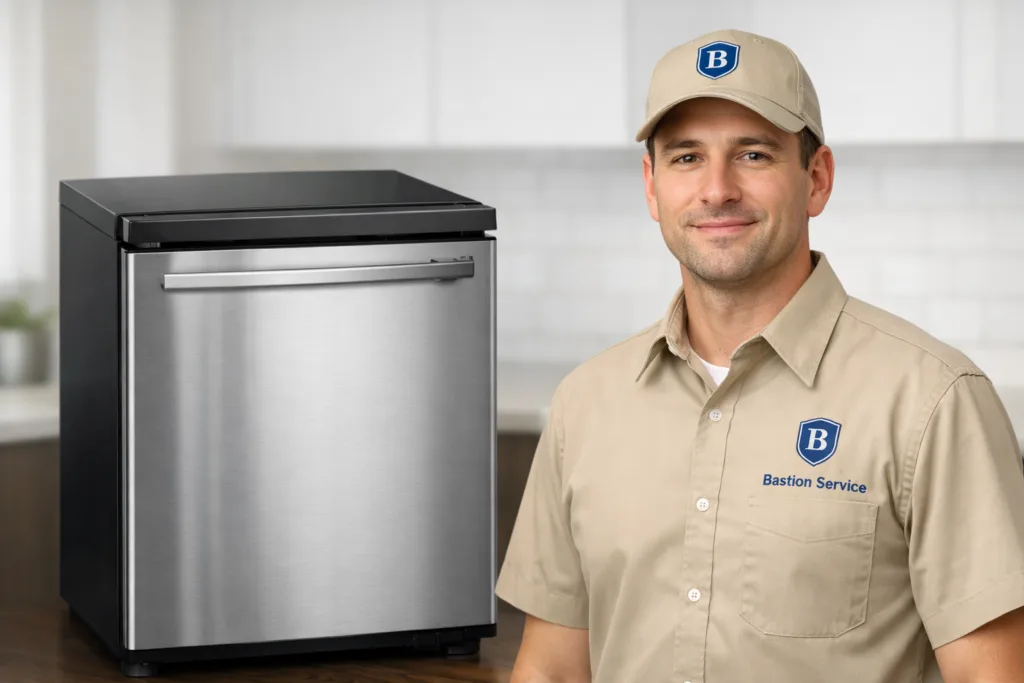
Ice maker problems tend to look simple from the outside, but the symptom usually matters more than the label. A unit that “isn’t making ice” may actually be dealing with weak water fill, poor freezing conditions, a drain problem, mineral buildup, or a control issue that interrupts the cycle halfway through. The faster the pattern is identified, the easier it is to decide whether repair makes sense.
EdgeStar ice maker symptoms that usually point to a repair need
Most household calls in Culver City fall into a few recognizable categories. Paying attention to what changed first can help narrow down the cause.
No ice at all
If the unit powers on but the bin stays empty, the problem may involve the water inlet, supply line, fill valve, control board, sensor feedback, or cooling performance inside the machine. In some cases the ice maker starts a cycle but never finishes it. In others, it never gets enough water or never reaches the temperature needed to form a proper batch.
Slow production or fewer cubes than usual
Reduced output often starts gradually. Homeowners may notice the ice bin never seems fully stocked, or the machine needs much longer to refill after use. Common causes include restricted water flow, dirty condenser areas, scale buildup, airflow problems, or a component that is still working but no longer working efficiently.
Leaking water around the unit
Leaks can come from loose fittings, overfill conditions, drain restrictions, cracked tubing, or installation issues such as poor leveling. Even a small recurring leak should be checked promptly, especially when water is reaching flooring, trim, or nearby cabinets.
Clumped ice or partial melting in the bin
When ice begins freezing together, the issue may be inconsistent harvest timing, warm air entering the cabinet, unstable internal temperatures, or cubes sitting too long because the unit is not cycling normally. Clumping can also show up when an ice maker briefly melts and refreezes batches instead of holding a steady temperature.
Small, hollow, cloudy, or bad-tasting ice
Changes in cube quality often suggest water flow restrictions, mineral deposits, cleaning needs, or water quality issues. Not every cube problem means a major mechanical failure, but it should not be ignored if the change is sudden or keeps returning after basic cleaning.
Grinding, buzzing, or repeated cycling noises
Unusual sounds may point to a struggling pump, fan trouble, ice obstruction, or a harvest problem that causes the unit to repeat the same motion without completing the cycle. A noise that appears alongside low production or leaking usually deserves service sooner rather than later.
Why the same symptom can have different causes
Ice makers are compact appliances, and several systems have to work together at the same time: water supply, freezing, sensing, draining, and harvest. That is why one symptom can be misleading. For example, a no-ice complaint can be caused by a blocked fill path, but it can also come from weak cooling or a control problem. A leak may be caused by a damaged line, but it may also result from an overfill issue or drainage failure.
This is why replacing parts based only on the most obvious symptom often leads to repeat problems. A proper repair plan starts with the actual operating pattern of the unit rather than guesswork.
Common repair causes seen in residential EdgeStar ice makers
- Restricted or interrupted water supply
- Mineral scale affecting flow, sensors, or internal passages
- Failing inlet valves, pumps, or switches
- Drain problems that interfere with normal cycling
- Dirty condenser areas that reduce cooling efficiency
- Temperature or sensor faults
- Control issues that interrupt fill, freeze, or harvest stages
- Door, seal, or alignment issues that affect temperature stability
- Leveling problems that contribute to leaks or poor drainage
When to schedule service instead of waiting
It is usually time to schedule repair when the unit has stopped making ice completely, leaks more than once, produces much less ice than before, develops new mechanical noises, or starts making poor-quality ice on a regular basis. These issues rarely improve on their own, and continued use can add strain to pumps, valves, and cooling components.
Intermittent problems also deserve attention. If the machine works for a day or two after cleaning or resetting and then slips back into the same behavior, that usually means the underlying fault is still present.
Repair versus replacement: what usually matters most
Repair is often a reasonable choice when the problem is isolated to a serviceable component such as a valve, line, pump, sensor, switch, or control-related part, and the rest of the appliance is in solid condition. If the cabinet is sound, the cooling system is stable, and the issue is limited to one main failure, repair is often straightforward.
Replacement may be the better option when the unit has a history of repeat leaks, multiple failing systems, heavy corrosion, long-term performance decline, or repair costs that begin approaching the value of the machine. Age matters, but condition matters more. An older unit with one clear issue may still be worth fixing, while a newer one with repeated water and cooling problems may not be.
Useful questions to consider
- Has the ice maker needed several repairs in a short period?
- Did the problem appear suddenly, or has performance been slowly declining?
- Is the issue limited to one symptom, or are there several at once?
- Has leaking already affected surrounding materials in the home?
- Does the unit show signs of wear inside the cabinet or around fittings and components?
What homeowners can check before service
Before scheduling a visit, it can help to note a few basics: whether the unit has power, whether the water supply appears turned on, whether the appliance is level, whether the bin contains clumped or melting ice, and whether the problem happens constantly or only at certain times of day. If the unit is leaking, it is usually best to pause use rather than let it continue cycling.
Basic cleaning can be helpful if mineral buildup is obvious, but repeated cleaning that only produces short-term improvement usually points to a part or system issue rather than routine maintenance alone.
What a service visit should focus on
A useful visit should follow the symptom from start to finish: what the machine is doing, what part of the cycle is failing, whether water is entering correctly, whether temperatures are reaching the right range, whether drainage is clear, and whether controls and sensors are responding normally. That kind of symptom-based evaluation helps Culver City homeowners make a realistic repair decision without overcommitting to unnecessary parts.
If your EdgeStar ice maker is leaking, slowing down, making clumped ice, or stopping altogether, the most important next step is identifying which part of the cycle is breaking down. Once that is clear, the repair path is usually much easier to judge.