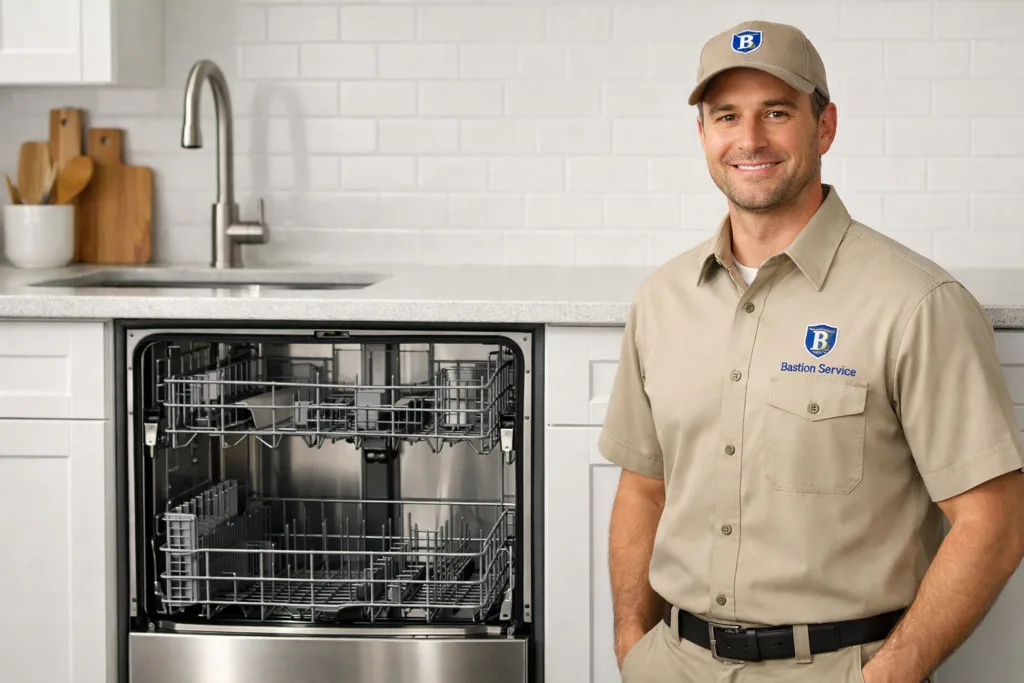
Common GE dishwasher problems homeowners notice first

Most GE dishwasher issues begin with a change in everyday performance rather than a full breakdown. You may notice glasses coming out cloudy, food still stuck to plates, water left in the bottom of the tub, or a cycle that seems to run much longer than it used to. In other homes, the first warning sign is water under the door, a burning smell, or a machine that suddenly goes silent after starting.
Those symptoms may look straightforward, but the failure behind them is not always obvious. A draining problem can be caused by a blocked path, a weak pump, or a control issue. Poor wash results may come from low water circulation, spray arm blockage, heating problems, or detergent not dispensing correctly. The best repair decisions come from matching the symptom pattern to the actual fault instead of replacing parts by guesswork.
What your dishwasher symptoms may be pointing to
Standing water after the cycle ends
If water remains in the tub after the cycle finishes, the dishwasher may be struggling to move water through the drain system. Common causes include a clogged filter area, a restricted drain hose, a failing drain pump, or debris trapped where water exits the machine. This problem often starts intermittently before becoming consistent.
Besides the inconvenience, standing water can create odor, leave residue on dishes, and put extra stress on pump components if the machine keeps being used in that condition.
Dishes are dirty, gritty, or still wet
When a GE dishwasher runs but does not clean well, the issue is often tied to circulation, spray coverage, detergent release, or wash temperature. A machine may fill with water and sound normal while still delivering weak cleaning because the spray arms are not spinning properly or the wash motor is not producing enough pressure.
Poor drying can also point to a separate issue. If items are consistently wet at the end of the cycle, the unit may have trouble reaching proper rinse temperature or may not be completing the heating portion of the program as it should.
Leaks near the door or underneath the unit
Leaks should be addressed early because even a small amount of water can affect flooring, base cabinets, and the area beneath the dishwasher. The source may be a worn door gasket, an overfill condition, a cracked hose, a loose connection, or a drain-related problem that pushes water where it should not go.
If the leak seems to appear only during certain parts of the cycle, that timing can help narrow down the cause. Water near the front may suggest a door seal or loading-related splash issue, while water underneath may point more toward hoses, valves, or pump-area components.
Dishwasher will not start or stops mid-cycle
A GE dishwasher that does nothing after you press start may have a latch problem, control fault, power issue, or user interface failure. If it begins a cycle and then shuts down partway through, the issue may involve draining, sensing, overheating protection, or an electronic control problem.
Intermittent stopping is especially worth attention because it can be difficult to predict and usually becomes more frequent over time.
Grinding, humming, or other unusual sounds
Not every dishwasher sound means a major repair, but a new noise usually means something has changed mechanically. Grinding can suggest debris in the pump area. Loud humming may point to a motor that is trying to run under strain. Repetitive rattling can come from loose spray arms, internal obstructions, or items shifting during wash.
If the sound is new, louder than normal, or happens during the same stage of every cycle, it is a useful clue and should not be ignored.
Why symptom timing matters
One of the most useful details a homeowner can provide is when the problem happens. A dishwasher that leaks only while filling suggests a different repair path than one that leaks during draining. A unit that cleans poorly on every cycle is different from one that fails only on heavier loads. A machine that trips power immediately after start is not the same as one that shuts off near the end.
These details help separate user-correctable issues from part failures and can prevent replacing a component that is not actually responsible for the problem.
Simple checks homeowners can make before service
Before assuming a major failure, it helps to rule out a few basic causes:
- Make sure dishes are not blocking spray arm movement.
- Check for heavy debris around the filter area.
- Confirm the door is closing and latching fully.
- Look for kinks in any visible drain line connection.
- Notice whether the detergent dispenser is opening during the cycle.
- Pay attention to whether the problem happens on every cycle or only occasionally.
These checks do not replace diagnosis, but they can help identify whether the issue is a simple obstruction, a loading problem, or a mechanical or electrical failure that needs repair.
When to stop using the dishwasher
Some problems can wait briefly for an appointment, but others are worth taking seriously right away. It is smart to stop using the unit if it is leaking onto the floor, producing a strong electrical or burning smell, making harsh grinding sounds, or repeatedly leaving dirty water in the tub. Continued use in those situations can make cleanup harder and may increase the damage inside or around the appliance.
For households in Pico-Robertson, this is especially important when the dishwasher is installed tightly between cabinets, since slow leaks often go unnoticed until surrounding materials have already been affected.
Repair or replacement depends on the whole picture
Many GE dishwasher problems are worth repairing when the machine is otherwise in good condition and the failure is limited to one system. A targeted repair often makes sense for issues involving pumps, latches, seals, drain components, or certain control-related faults.
Replacement becomes more likely when the dishwasher has a long history of repeat problems, shows heavy wear, or has multiple systems failing at once. The age of the unit matters, but condition and repair history matter just as much. A newer machine with a single fault may be a strong repair candidate, while an older one with leaks, wash problems, and electronic issues together may not be the best investment.
What a service visit should clarify
A useful dishwasher service call should answer a few practical questions: what has failed, whether the issue is isolated or part of broader wear, whether continued use risks more damage, and whether repair is reasonable for the condition of the machine. That kind of assessment is often more valuable than jumping straight to a part replacement based only on the symptom.
For homeowners in Pico-Robertson dealing with a GE dishwasher that is no longer performing reliably, the goal is not just to get it running for one cycle. The goal is to identify the true cause of poor washing, drain problems, leaks, low rinse temperature, pump trouble, or cycle failure so the next step makes sense for your kitchen and your household routine.