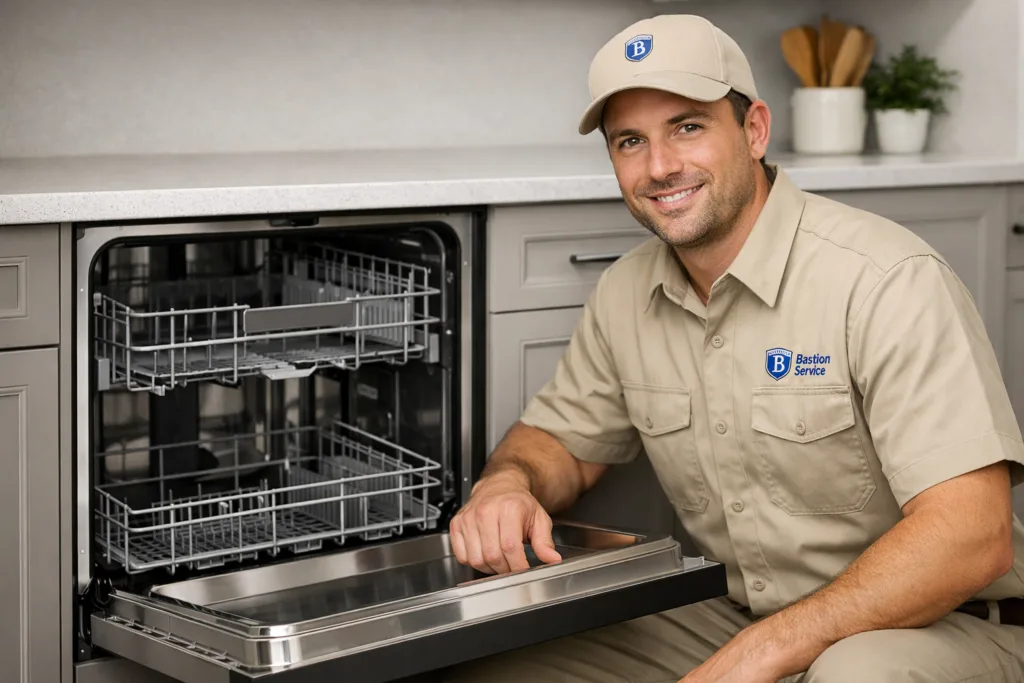
Dishwasher problems are often easier to describe than diagnose. A Samsung unit may leave dishes dirty, stop mid-cycle, hold water in the sump, or flash an error even though the underlying cause is somewhere else in the system. On one machine, poor washing can come from weak circulation. On another, the same complaint may trace back to low fill, blocked spray arms, detergent release trouble, or a sensor issue affecting the cycle.
For homeowners in Inglewood, the most useful approach is to look at the exact symptom pattern: what the dishwasher does, when it fails, and whether the problem is getting worse. That makes it easier to tell the difference between a maintenance issue, a single failed component, and a larger repair decision.
Common Samsung dishwasher symptoms and what they can mean
Most service calls start with a handful of repeat complaints. The symptom matters because dishwashers depend on several systems working in sequence: filling, washing, heating, draining, and drying. When one stage breaks down, the result can show up somewhere else.
Dishwasher runs but dishes are still dirty
If the cycle completes but dishes come out with food residue, film, or greasy spots, the problem may be related to wash performance rather than drainage. Possible causes include:
- Spray arms blocked by debris or hard-water buildup
- Low water fill that limits wash pressure
- A weak circulation pump or motor issue
- Detergent dispenser problems
- Filters that are restricted enough to affect water movement
- Loading patterns that prevent proper spray coverage
Cloudy glasses can also be mistaken for a mechanical failure when the issue is tied to detergent use, rinse aid, or mineral buildup. If the dishwasher has recently gone from acceptable cleaning to poor results, that change usually points to a specific fault instead of normal wear alone.
Standing water in the bottom of the tub
A Samsung dishwasher that will not drain fully may have a simple obstruction or a more direct drain system failure. Water left behind after the cycle can be caused by:
- A clogged filter or sump area
- A blocked or kinked drain hose
- Drain pump failure or a jammed impeller
- Air gap or sink-side drainage restrictions, where applicable
- A control issue that never sends the machine into a proper drain phase
If the tub drains occasionally but not every time, intermittent pump trouble or a control-related problem becomes more likely. If water backs up consistently, continued use can put extra strain on the motor and leave odors in the tub.
Dishwasher leaks during or after a cycle
Leaks should be addressed quickly because even a small amount of water can affect flooring, trim, and the cabinet opening around the dishwasher. Common sources include:
- A worn or misaligned door gasket
- Debris preventing the door from sealing tightly
- Loose hose connections
- Cracked internal hoses or fittings
- Overfilling caused by a water level problem
- Pump or sump seal issues
Some leaks happen only early in the cycle, while others show up near draining or drying. That timing can help narrow the source. Water appearing from one corner of the door may suggest something different from water collecting underneath the center of the machine.
Dishes come out wet or not fully sanitized
Drying complaints are not always about the heating element alone. On Samsung dishwashers, poor drying can involve temperature problems, sensor issues, venting faults, or cycle interruptions that prevent the machine from reaching the proper final stage. Homeowners may notice:
- Plastic items staying very wet
- Glassware with heavy moisture at the end of the cycle
- Steam performance that seems weaker than before
- Low rinse temperature
- Cycles ending before full drying completes
If wash performance is also poor, the root problem may be broader than drying alone.
Dishwasher powers on but does not start
When the controls respond but the cycle will not begin, the fault may involve the door latch, switch assembly, control board, or user interface. In some cases, the machine appears ready but never locks into operation because it does not sense the door as safely closed. Repeated attempts to start the unit without a proper diagnosis can make the issue seem intermittent when it is actually consistent.
Unusual noises during washing or draining
Sounds can be useful clues. Different noises often point to different components:
- Grinding may indicate debris in the pump area
- Buzzing can suggest a motor or pump struggling under load
- Rattling may come from loose items, spray arm interference, or internal vibration
- Clicking from the control area can relate to relays, latching, or interrupted cycle commands
A new noise is usually more important than a familiar operating sound. If the dishwasher becomes louder and performance drops at the same time, service is often warranted.
Why symptom-based diagnosis matters
Dishwasher systems overlap more than many homeowners expect. A drainage problem can trigger an error that looks electronic. A wash complaint can begin with a fill issue. A leak can be caused by overfilling rather than a bad gasket. That is why replacing parts based only on the visible symptom often leads to unnecessary expense.
Accurate diagnosis helps determine whether the issue is isolated to one repair, whether multiple components are involved, and whether the machine is still a good repair candidate. It also reduces the risk of overlooking a condition that can lead to bigger trouble, such as recurring leaks, pump strain, or electrical shutdowns.
When to stop using the dishwasher and schedule service
Some problems are inconvenient but manageable for a short time. Others should not be ignored. It is best to stop using the dishwasher and arrange service if you notice any of the following:
- Water leaking onto the floor
- A burning smell or signs of overheating
- The breaker trips during operation
- The tub repeatedly fails to drain
- Error codes return after a reset
- The machine stops mid-cycle on a regular basis
In Inglewood homes, the practical concern is not just the dishwasher itself. Continued use during a leak or electrical fault can create cabinet damage, flooring problems, or a larger appliance failure that costs more to correct later.
What to check before booking Samsung dishwasher repair
A few observations can make service more efficient and help narrow the fault before any repair plan is discussed. Before scheduling, it helps to note:
- Whether the dishwasher fills with water
- Whether spray action seems normal during washing
- Whether it drains completely at the end
- Whether the issue happens on every cycle or only sometimes
- Any error code shown on the display
- Whether the problem began suddenly or developed gradually
Basic homeowner steps such as cleaning the filter, checking loading patterns, and confirming the door closes fully are reasonable. Beyond that, repeated resets or partial disassembly usually do not solve the underlying issue and can make the symptom history harder to follow.
Repair or replacement: what usually makes sense?
Repair is often worthwhile when the failure is limited to one area, such as a drain pump, inlet component, latch assembly, seal, or control-related part, and the rest of the dishwasher is still in good condition. A single defined repair on a machine that has otherwise been reliable is often the more sensible path.
Replacement becomes more reasonable when the dishwasher has multiple active problems, repeated electronic issues, visible internal wear, or a history of ongoing performance complaints that never fully resolve. The decision is rarely about one symptom alone. Age, overall condition, prior repairs, and the cost of the current repair all matter.
If a Samsung dishwasher in Inglewood has generally worked well and the present issue is specific, repair may restore normal use without much disruption. If the machine has reached the point where leaks, drain failures, drying issues, and cycle faults are stacking up together, replacement may be the better long-term move.
What homeowners in Inglewood should keep in mind
Dishwasher problems tend to worsen in stages. What starts as occasional poor drainage can become a full no-drain condition. A small leak can turn into cabinet damage. Weak cleaning can become repeated cycle interruptions if the underlying cause affects pumps, sensors, or controls. Addressing the issue while the symptom is still clear usually gives the best chance of a straightforward repair.
For residential Samsung dishwasher repair in Inglewood, the goal is not simply to make the machine run once. It is to identify why the failure is happening, whether repair is practical, and what will restore consistent everyday use in the kitchen.