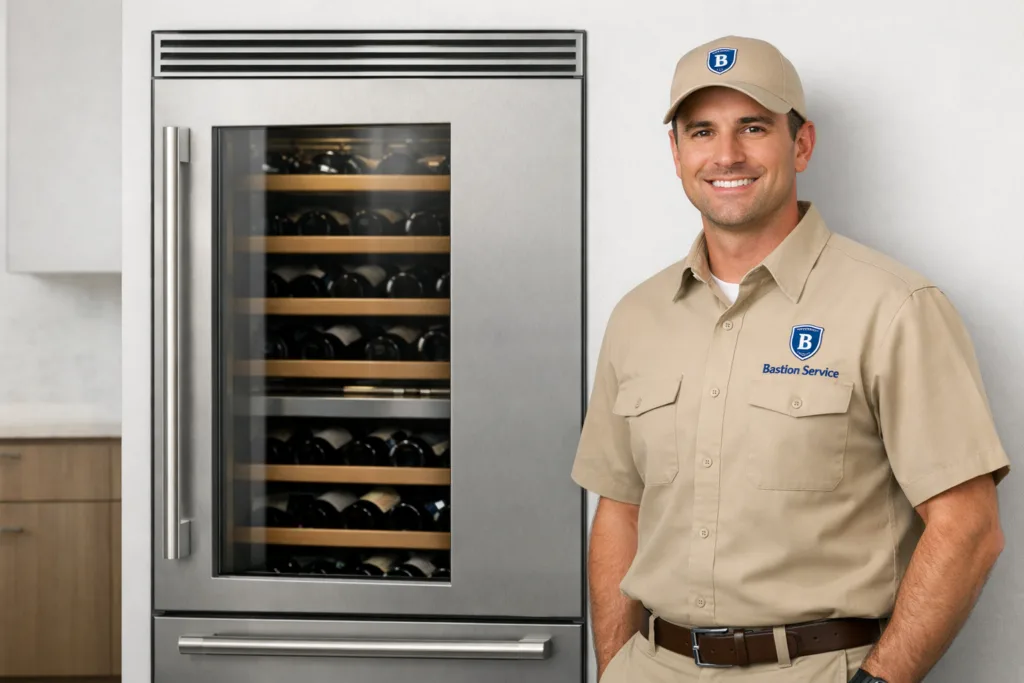
A wine cooler does not need to fail completely to cause problems. Small temperature changes, uneven cooling, excess moisture, or a new sound from the cabinet can all be signs that a Sub-Zero unit is no longer operating the way it should. Because wine storage depends on consistency, even a mild performance change is worth paying attention to before it turns into spoiled bottles, extra wear on components, or a larger cooling issue.
What Torrance Homeowners Often Notice First
In many homes, the first sign is simple: the cabinet feels warmer than usual, or bottles are not staying at the expected serving or storage temperature. Other times, the display seems normal but the cooler runs longer than before, develops condensation around the door, or starts making a fan or buzzing noise that was not there previously.
These symptoms matter because they do not all point to the same failure. A warmer cabinet can come from airflow trouble, a sensor problem, control issues, a worn gasket, or a sealed-system problem. Moisture buildup may suggest warm air entering through the door, while repeated clicking or fan noise may indicate a mechanical component struggling during operation. Looking at the full symptom pattern is usually the fastest way to tell whether the issue is minor or something more involved.
Common Sub-Zero Wine Cooler Problems and What They May Mean
Temperature swings or poor cooling
If the cabinet is drifting warmer, cooling unevenly from shelf to shelf, or taking too long to recover after the door is opened, the cause may be restricted airflow, dirty condenser areas, a bad thermistor or sensor, fan trouble, or an issue in the cooling system itself. In a wine cooler, stability matters more than in many other appliances, so repeated fluctuations are a sign to schedule service rather than keep adjusting the controls.
Condensation, fogging, or frost
Water droplets on shelves, fog on the glass, dampness near the door, or frost where it normally does not appear often points to air leaks, gasket wear, drainage issues, or cooling irregularities. Once warm room air starts entering the cabinet regularly, the unit may run harder to maintain temperature, which can increase operating strain over time.
Running constantly or cycling too often
A wine cooler that rarely seems to rest may be trying to overcome heat entering through the door, clogged airflow paths, dirty heat-exchange surfaces, or a cooling fault that prevents the unit from reaching its target temperature efficiently. On the other hand, frequent short cycling can suggest a sensor, control, or electrical issue. Neither pattern should be ignored if it is new.
Fan noise, buzzing, rattling, or clicking
Some operating sound is normal, but a noticeable change is important. Rattling can come from vibration or loose internal parts. Buzzing may point to a motor or compressor-related issue. Clicking can be tied to start components or controls trying to cycle the unit. If the sound change appears at the same time as weaker cooling or moisture problems, those symptoms should be evaluated together.
Control panel or lighting problems
If the display is inaccurate, settings will not respond, interior lights behave inconsistently, or the unit seems to lose power intermittently, the problem may involve switches, wiring, electronic controls, or failed components behind the panel. These issues can seem straightforward at first but often need proper testing before any part is replaced.
Why Symptom-Based Diagnosis Matters
Wine cooler repairs are easiest to plan correctly when the actual cause is confirmed first. The same “not cooling” complaint can come from very different sources, and replacing the wrong part does not solve the underlying issue. A useful service visit checks actual cabinet performance, airflow, fan operation, door sealing, control response, and whether the refrigeration system appears to be working normally.
That process helps answer the question most homeowners really care about: is this a repair with a defined path, or is the appliance developing a larger problem that may change the value of further work?
When to Schedule Service
It makes sense to arrange service if you notice any of the following:
- The cabinet is warmer than the set temperature
- Bottles are not staying consistently cool
- Condensation or fogging keeps returning
- The unit runs almost nonstop
- The cooler starts and stops more often than normal
- New fan noise, buzzing, or clicking appears
- The door does not close or seal firmly
- The controls seem inaccurate or unresponsive
These issues do not always mean a major failure, but they usually mean the unit is no longer operating normally.
When Continued Use Can Make Things Worse
If the cabinet is clearly too warm, if moisture is building up inside, or if the cooler is running constantly without maintaining proper temperature, continued operation may increase wear on key components. A poor door seal can make the appliance work harder. A fan problem can reduce airflow and cooling efficiency. A struggling refrigeration system may keep running longer than intended without protecting the bottles inside.
In that situation, it is usually better to limit use and have the unit inspected rather than assume the problem will stabilize on its own.
Repair or Replace?
Many Sub-Zero wine cooler issues are worth repairing when the problem is limited to a serviceable part such as a fan motor, door gasket, sensor, control component, switch, or another isolated electrical fault. Repair becomes less attractive when there are multiple major issues at once, when cooling-system failure is severe, or when the overall condition of the unit does not support the cost of extensive work.
The important part is making that decision based on confirmed findings. Some coolers that seem beyond repair turn out to have a focused, correctable issue. Others with mild symptoms may have deeper system trouble that changes the repair outlook.
Sub-Zero Wine Cooler Service for Torrance Homes
In Torrance homes, wine coolers are often built into kitchens, bars, or dedicated entertaining spaces, so a repair is about more than temperature alone. It is also about restoring stable storage conditions, reducing unnecessary cycling, and protecting the appliance’s fit within the home. Whether the problem shows up as poor cooling, recurring condensation, control trouble, or unusual sound, the best next step is a careful inspection tied to the exact way the unit is behaving.