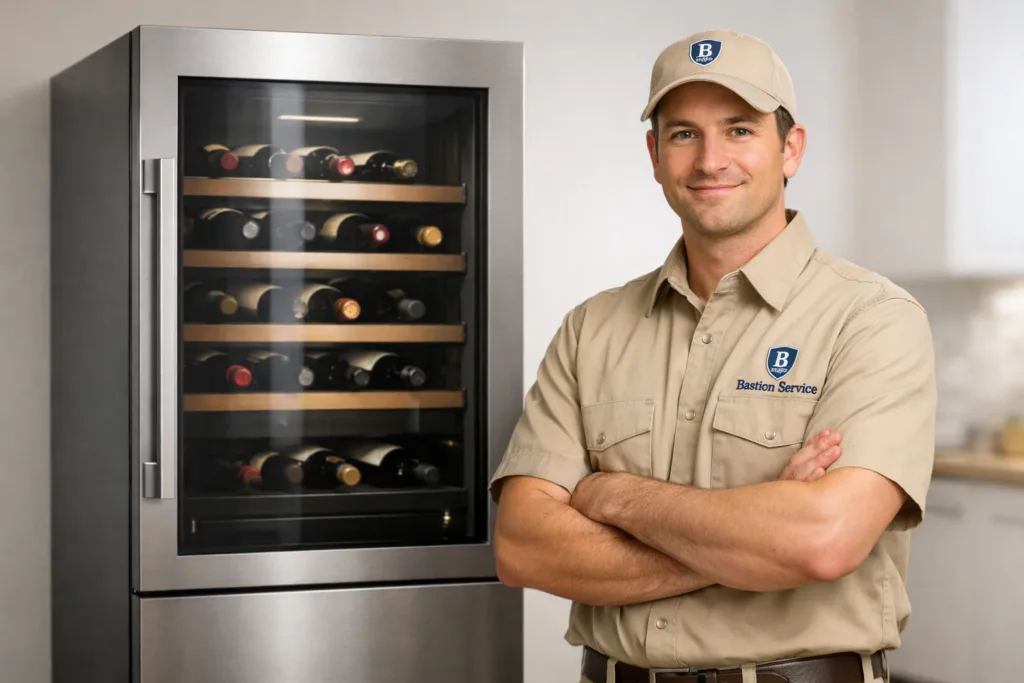
A Miele wine cooler that runs warm, cycles oddly, or starts building moisture can put a collection at risk quickly. In Torrance homes, the best next step is to pinpoint the source of the problem before deciding on repair, because temperature drift, fan noise, leaks, and control issues can come from very different causes.
How wine cooler problems usually start
Many failures do not begin with a complete shutdown. Instead, the cooler may take longer to reach temperature, feel slightly warmer near the door, show light condensation, or make a new sound during normal operation. Those early changes matter because wine storage depends on steady conditions, not just whether the cabinet feels somewhat cool.
With Miele units, small performance changes can be tied to airflow, sensors, door sealing, controls, fan operation, drainage, or the refrigeration system itself. Looking at the full symptom pattern helps separate a manageable component issue from a more serious cooling failure.
Common symptoms and what they may mean
Not cooling enough
If the cabinet is running but bottles are not staying at the set temperature, several issues may be involved:
- Airflow restriction inside the cabinet
- Circulation fan problems
- Temperature sensor inaccuracy
- Door gasket wear or poor door alignment
- Control malfunction
- Sealed-system or compressor-related trouble
A unit that is only a few degrees off can still be signaling a real fault. If it keeps running longer than usual without recovering, service is usually warranted.
Temperature swings or uneven cooling
Some Miele wine coolers do not stop cooling entirely, but they struggle to hold a stable range. You might notice the display reading one number while the interior feels different, or one shelf area warming faster than another. That often points to sensor drift, inconsistent air circulation, or a control issue affecting how the cooler regulates temperature.
Intermittent temperature swings are easy to dismiss at first, but they tend to become more noticeable over time. Catching them early may prevent additional strain on cooling components.
Condensation, water, or excess interior moisture
Moisture on shelves, around the door, or under the appliance usually means something is off with sealing, drainage, or cooling balance. Common causes include:
- A door gasket that no longer seals tightly
- A door that is not closing fully
- Drain blockage or drainage-related buildup
- Internal temperature instability creating excess humidity
In a home kitchen, bar area, or built-in cabinet, this can go from a small annoyance to a bigger issue if water begins affecting surrounding surfaces.
Buzzing, rattling, clicking, or fan noise
Not every sound means a major repair is coming, but a noticeable change in noise should be taken seriously. Rattling may come from vibration or mounting issues. Buzzing can be tied to compressor effort or fan operation. Clicking may relate to controls or startup behavior. If frost or moisture begins interfering with moving parts, fan noise can become sharper or more constant.
The most useful clue is often not the type of sound alone, but when it happens: during startup, throughout the cycle, or only after the unit has been running for a while.
Display or control issues
If the control panel becomes unresponsive, shows unusual readings, or triggers recurring alerts, the problem may involve electronics, wiring, sensors, or the control board. A display problem can sometimes look cosmetic at first, but it may also affect how the wine cooler manages temperature and cycling.
Signs the problem is getting worse
Some symptom patterns suggest the cooler should not be left to “work itself out.” Watch for these warning signs:
- The compressor seems to run almost constantly
- The set temperature is never reached
- Condensation keeps returning after wiping it away
- The cabinet warms up between cycles more than before
- New noises become louder or more frequent
- Alarm or error behavior starts repeating
When these signs show up together, continued use can place added stress on fans, controls, and cooling components.
When to schedule Miele wine cooler repair in Torrance
It makes sense to schedule service when the unit is no longer holding temperature, when moisture keeps collecting, when the door does not appear to seal properly, or when noise and alerts begin appearing without a clear reason. Even if the issue seems intermittent, periodic instability is often the start of a larger failure rather than a harmless glitch.
This is especially true when the wine cooler is built in, heavily used, or storing bottles that depend on consistent temperature conditions over time.
Repair versus replacement
Repair is often worth considering when the problem is isolated to a fan motor, sensor, gasket, drain-related issue, control component, or another specific part failure. In those cases, restoring normal operation may be straightforward once the exact cause is confirmed.
Replacement becomes a more serious consideration when the unit has major sealed-system trouble, repeated expensive failures, or overall wear that makes dependable performance unlikely after repair. The right decision depends less on the symptom name and more on the actual condition of the appliance, the scope of the failure, and whether stable cooling can be restored with confidence.
What homeowners can note before service
Before an appointment, it helps to pay attention to a few details:
- Whether the display matches how the cabinet feels
- If the problem is constant or comes and goes
- Whether moisture is inside the cabinet, around the door, or on the floor
- What kind of noise is present and when it occurs
- If the door closes normally or needs extra pressure
Those observations can make diagnosis faster and help connect the visible symptom to the underlying fault.
What practical service should accomplish
For a Torrance homeowner, useful service should answer a few basic questions clearly: what is failing, whether the repair is likely to restore stable operation, and whether the cost makes sense for the condition of the unit. When a Miele wine cooler is protecting a collection, the goal is not just to make it run again, but to bring it back to consistent and reliable storage performance.