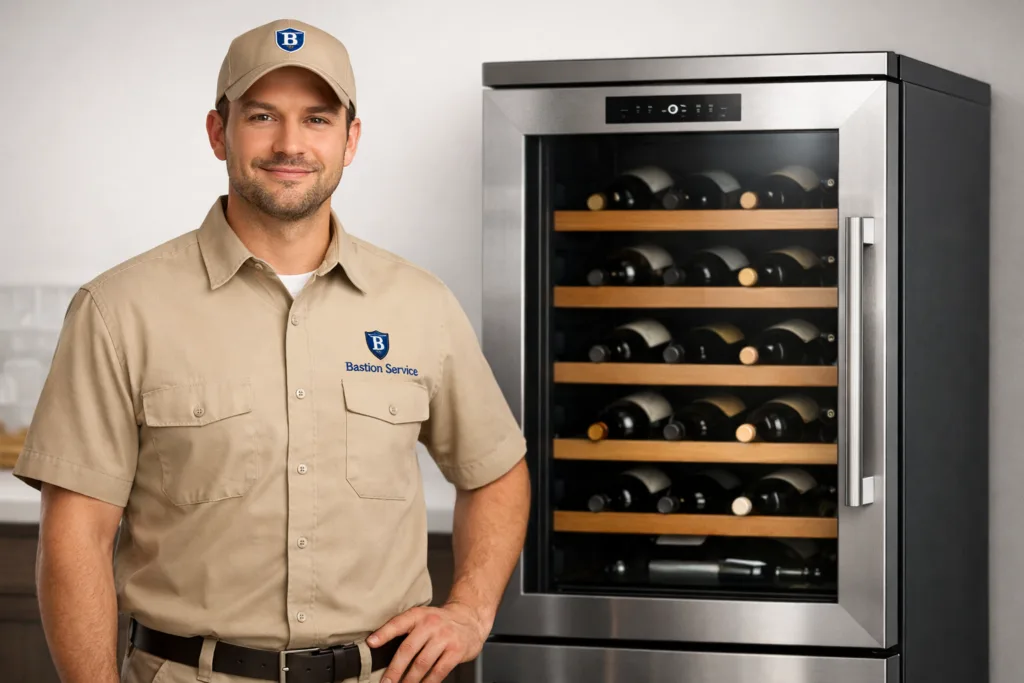
An EdgeStar wine cooler that starts warming up, cycling strangely, or collecting moisture around the door can put stored bottles at risk faster than many homeowners expect. The main issue is that similar symptoms can come from very different faults, so identifying the real cause matters before any repair decision is made.
Common EdgeStar wine cooler symptoms and what they may mean
Temperature problems are usually the first sign that something is wrong. If the cabinet feels warmer than the setting, the cause may involve restricted airflow, a failing evaporator or condenser fan, dirty condenser areas, sensor trouble, control failure, or a more serious cooling-system problem. If the unit is getting too cold or freezing certain sections, that can point to sensor drift, thermostat problems, or uneven air circulation inside the cabinet.
Noise changes are also important. A normal wine cooler will make some fan and compressor sound, but a new rattle, buzz, clicking pattern, or unusually loud hum can suggest a loose panel, fan blade obstruction, worn motor, or a sealed cooling system working harder than it should. When noise appears together with poor cooling, that combination usually deserves quicker attention.
Condensation, fogging on the glass, or moisture around the door often indicates warm air entering where it should not. Common causes include a worn gasket, a door that is not aligning properly, a drainage issue, or repeated temperature loss from air leaks. In Torrance homes, room conditions and frequent door openings can also make these symptoms worse, so the appliance and its operating environment should both be considered.
Signs the problem should not be ignored
The cooler runs almost constantly
If the unit rarely seems to shut off, that usually means it is struggling to reach or maintain the selected temperature. Constant operation can increase wear on the compressor, fans, and control components.
The display or light works, but cooling does not
A powered-on panel can make the cooler appear functional even when the refrigeration side is not working correctly. This symptom may involve controls, fans, starting components, or the sealed cooling system.
The door does not close or seal normally
If the door needs an extra push, sits unevenly, or springs open slightly, warm air can enter over and over again. That often leads to temperature swings, excess condensation, and longer run times.
There is recurring frost, sweating, or puddling
Moisture issues are rarely just cosmetic. Repeated fogging, heavy condensation, or isolated frost buildup often indicates an airflow problem, a seal problem, or a drainage issue that can affect storage stability.
Why wine cooler diagnosis is different from a basic cooling complaint
Wine coolers are compact refrigeration appliances, and the symptom seen from the outside does not always match the failed part inside. A warmer cabinet could be caused by a fan motor that no longer circulates air, but it could also come from a sensor giving incorrect readings or from a sealed-system issue that changes the repair outlook entirely.
That is why proper testing matters before replacing parts. Guessing at a thermostat, control board, or fan can lead to unnecessary expense without solving the original problem. For homeowners in Torrance, the better approach is to determine whether the fault is isolated and repairable or whether it points to a larger cooling-system concern.
What can affect performance besides a failed part
Not every complaint starts with an internal component failure. A wine cooler may struggle because of blocked ventilation, heavy dust around cooling areas, poor door sealing, overloading that restricts airflow, or installation conditions that trap heat around the unit. In some cases, these factors create symptoms that look like part failure even when the main problem is operating stress.
That does not mean every issue has a simple fix, but it does mean the inspection should look beyond the control panel alone. A useful service visit should account for cabinet condition, door alignment, airflow path, and how the cooler is performing under normal household use.
When repair is usually worth considering
Repair often makes sense when the issue is limited to accessible and commonly serviceable parts such as a fan motor, temperature sensor, control component, door gasket, hinge alignment issue, or drainage-related problem. These faults can affect performance significantly, but they do not always mean the entire appliance is near the end of its useful life.
If the cabinet is otherwise in good condition and the cooling system is sound, fixing a targeted component can restore stable operation without the disruption of replacement.
When replacement may become the more practical choice
Replacement becomes more likely when the wine cooler has major sealed-system trouble, repeated breakdown history, or several age-related issues happening at the same time. If the unit cannot maintain temperature because of deeper refrigeration failure, the decision is usually based on repair cost, expected reliability afterward, and overall appliance condition.
For many households, the question is not simply whether the cooler can be repaired, but whether the repair supports dependable long-term use.
What homeowners can check before scheduling service
- Confirm the outlet is providing steady power.
- Make sure the temperature setting was not changed accidentally.
- Check that the door closes evenly and the gasket is not visibly twisted or torn.
- Look for obvious dust buildup around ventilation areas if they are safely accessible.
- Note whether the problem is constant or happens only at certain times of day.
It also helps to pay attention to patterns. For example, if the cooler is warm at the top but colder at the bottom, or if condensation appears mostly after the door has been closed for a while, those details can help narrow down whether the issue involves airflow, sealing, or controls.
When to book EdgeStar wine cooler service in Torrance
Service is usually warranted when the unit cannot hold a stable temperature, runs nonstop, makes new mechanical noises, develops recurring moisture, stops responding properly to settings, or appears to be on without actually cooling. If multiple symptoms show up together, waiting can reduce the chance of a simpler repair.
For households trying to protect a wine collection from repeated temperature swings, early attention is often the safest approach. A fault that starts as a fan, seal, or control issue can create additional strain on the rest of the system if it is left unresolved.