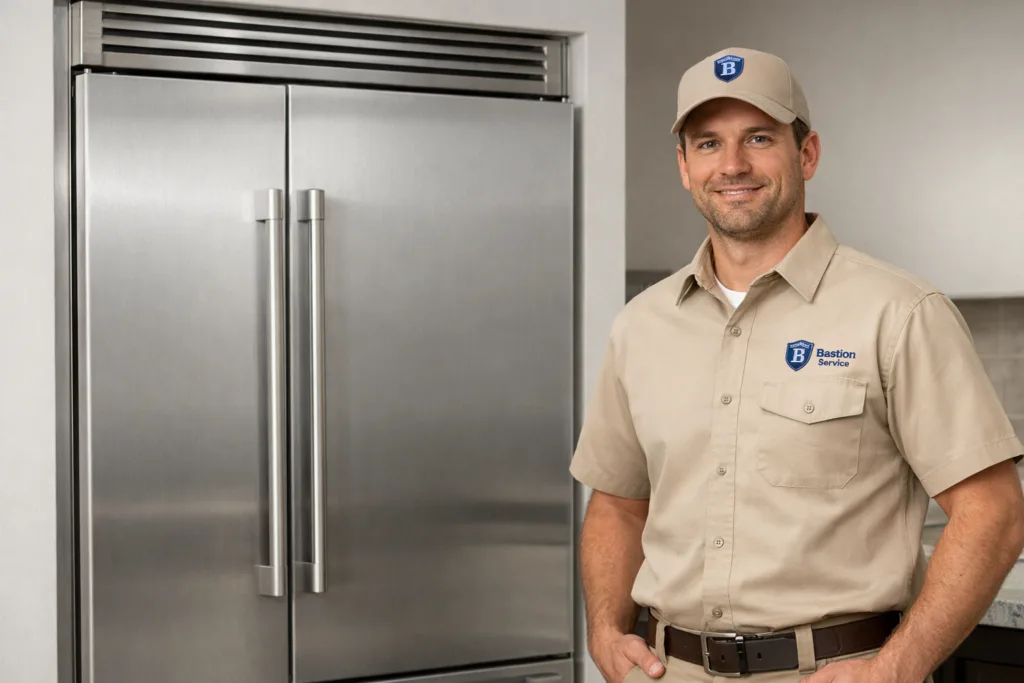
Sub-Zero refrigerators often show early warning signs before a full cooling failure. A slight fresh-food temperature increase, new frost behind an interior panel, water near the base, or a fan sound that was not there before can all point to a developing problem. The most effective repair path starts by matching the symptom pattern to the part of the system that is likely failing.
Common Sub-Zero Refrigerator Problems in Torrance Homes
Households in Torrance usually notice refrigerator trouble in everyday ways: food spoils faster, drinks are not as cold, produce freezes unexpectedly, drawers collect moisture, or the unit seems to run much longer than normal. With a Sub-Zero refrigerator, those symptoms can relate to airflow, defrost function, temperature sensing, door sealing, drainage, fan operation, or the cooling system itself.
One complaint can also lead to another. For example, restricted airflow may first cause uneven temperatures, then frost buildup, then extended run time. A drain issue may begin as hidden moisture and later become a visible floor leak. Looking at the full pattern helps separate a straightforward repair from a more serious performance issue.
Symptom-Based Troubleshooting
Fresh-Food Section Is Warming Up
If the refrigerator compartment is not staying cold enough, the cause is not always a complete cooling-system failure. Common possibilities include blocked airflow, evaporator frost, a failing fan motor, sensor problems, or a control issue. In some cases, the unit still cools, but it cannot distribute cold air evenly enough to protect food throughout the compartment.
Watch for signs such as:
- Milk or leftovers warming before frozen items are affected
- Back areas feeling colder than front shelves
- Some drawers freezing while upper shelves warm up
- Long run cycles with only partial cooling improvement
Freezer Seems Fine but Refrigerator Is Warm
This is one of the more telling symptom patterns. It often means cold air is not reaching the fresh-food section properly. Ice buildup behind panels, a weak evaporator fan, blocked vents, or a damper or control problem can all create that result. It is important not to assume the refrigerator is “mostly okay” just because the freezer still appears cold.
Frost Buildup, Ice Sheets, or Frozen Interior Panels
Sub-Zero refrigerators should not regularly develop heavy frost in normal operation. When they do, likely causes include defrost failure, air leaks around the door, drainage issues, or circulation problems. Frost can reduce airflow and push temperatures out of range in both compartments, even before the display shows an obvious fault.
Pay attention to where the frost appears:
- On food packages: possible moisture intrusion or poor sealing
- On a rear interior panel: possible airflow or defrost issue
- Near drawers or vents: possible circulation restriction
- At the bottom of the compartment: possible drain or meltwater problem
Water Leaks or Moisture Inside the Cabinet
Leaks can come from a clogged defrost drain, excess condensation, door alignment issues, or frost melting in the wrong place. Water under a built-in refrigerator should never be ignored, especially if flooring is nearby. Moisture inside the unit also matters because it often appears alongside cooling or sealing problems.
New Noises or Constant Running
A Sub-Zero refrigerator will make normal operating sounds, but a change in sound is worth attention. Buzzing, clicking, fan rubbing, rattling, or nonstop operation can point to fan wear, airflow restriction, dirty heat-removal components, control issues, or compressor stress. Noise by itself does not always mean a major repair, but noise combined with warming or frost usually indicates a fault that should be checked soon.
Why Diagnosis Matters More Than Guessing
Several very different failures can create nearly identical symptoms. A warm refrigerator section, for example, might come from frost blocking airflow, a fan that is no longer moving enough air, or a deeper cooling problem. Replacing a part based on guesswork can delay the real fix and increase the risk of food loss.
That is also why symptom history is useful. If the unit first started running longer, then developed moisture, then stopped holding temperature, that progression tells a different story than a refrigerator that suddenly stopped cooling overnight. A practical repair recommendation depends on what is failing, how far the issue has progressed, and how the appliance is performing overall.
When to Schedule Service
It is time to arrange Sub-Zero refrigerator repair in Torrance when temperature control is no longer consistent, frost keeps returning, leaks reappear, or the appliance is working much harder than usual. Intermittent issues count too. A refrigerator that “fixes itself” for a day and then warms again often has a component problem that is getting worse.
Prompt attention is especially important when:
- Food temperatures feel unsafe or spoil unexpectedly
- The fresh-food section warms while the freezer still works
- You hear a fan noise, clicking, or a new buzzing sound
- Water collects under or inside the unit
- Frost returns after being cleared
- Doors no longer close or seal the way they should
When Continued Use Can Make the Problem Worse
Some refrigerator issues become more expensive when the unit keeps running without service. Restricted airflow can lead to heavier frost and less stable temperatures. A drainage problem can turn into cabinet moisture or floor damage. A refrigerator that never cycles off may place unnecessary strain on other components.
If the appliance cannot hold a safe temperature, continued use also increases the chance of losing food. In Torrance homes, the best approach is to act early when a Sub-Zero begins showing repeated warming, persistent moisture, or obvious frosting rather than waiting for a complete no-cooling failure.
Repair or Replace?
Many Sub-Zero refrigerator problems are repairable, especially when the issue involves fans, sensors, controls, seals, defrost components, airflow, or drainage. A replacement discussion becomes more realistic when the unit has a major sealed-system failure, repeated high-cost repairs, or broader condition issues that make dependable performance unlikely after service.
The key is not the symptom alone, but the confirmed cause. Two refrigerators with the same “not cooling” complaint may lead to very different recommendations depending on testing results, age, repair history, and overall condition.
What You Can Check Before the Appointment
Before service, it helps to note exactly what the refrigerator is doing. Useful observations include whether one section is warmer than the other, whether frost is visible in a specific area, whether water is appearing inside or below the cabinet, and whether the noise changes when doors are opened or closed.
You can also check for:
- Doors that do not close evenly
- Packages or bins blocking interior vents
- Condensation around the door opening
- Unusual softness in frozen food
- A difference between displayed temperature and actual food temperature
Avoid forcing doors against ice buildup, making repeated temperature-setting changes, or turning the unit off for long periods if food safety is already a concern. A simple record of when the issue began and how it has changed can make the visit more productive and help narrow the fault faster.
Support for Related Sub-Zero Cooling Appliances
Some households in Torrance also have connected cooling issues beyond the main refrigerator, especially when a matching freezer or wine storage unit is part of the kitchen setup. In those cases, it helps to compare symptoms across each appliance, since temperature swings, moisture, or airflow complaints may affect one unit differently than another. Bastion Service also works with Sub-Zero freezer repair and Sub-Zero wine cooler repair when the problem is not limited to the main refrigerator.