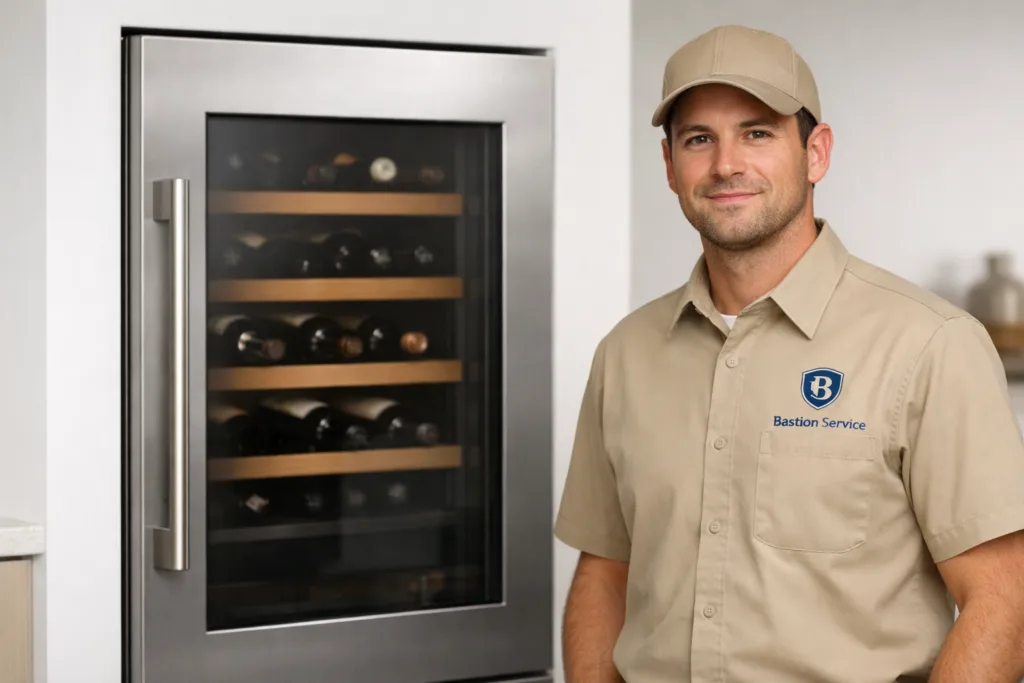
Temperature problems in a Monogram wine cooler rarely start as a total failure. More often, the early signs are subtle: bottles are not as cool as usual, the cabinet takes longer to recover after the door opens, or moisture starts showing up where it did not before. Catching those changes early can help prevent spoiled storage conditions and reduce stress on the cooling system.
What the symptom pattern usually reveals
Wine coolers are built to maintain a narrow temperature range, so even small changes matter. The most useful clues usually come from the way the unit behaves over several days rather than from one isolated moment.
Running warm or drifting above the set temperature
If the display appears normal but the interior feels warmer, the issue may involve temperature sensing, weak airflow, condenser buildup, or a problem in the cooling system itself. In some cases, the cooler still runs and lights up normally, which can make the problem seem minor when storage conditions are already becoming unreliable.
Common signs include:
- Wine not feeling as cool as expected
- Long recovery time after opening the door
- Uneven temperatures from top to bottom
- A display reading that does not match the actual interior condition
Constant running or frequent cycling
A Monogram wine cooler that runs too long may be struggling to shed heat or maintain airflow. Dust around the condenser area, a worn door gasket, a fan issue, or a control fault can all increase run time. Frequent on-and-off cycling may point to a sensor or control problem, and sometimes it can also be an early sign of compressor strain.
When a unit operates this way for too long, it can create a chain reaction: higher energy use, more wear on components, and less stable cooling for the bottles inside.
Condensation, interior moisture, or frost buildup
Moisture inside a wine cooler is often a sign that warm air is entering the cabinet or that internal air circulation is no longer working properly. If condensation forms on the glass, around the door, or on shelves, the door seal may not be closing tightly, or the unit may be having trouble controlling humidity and temperature together.
Frost is a different warning sign. It can suggest poor airflow, a defrost-related issue, or a cooling imbalance that should be checked before ice buildup starts interfering with normal operation.
New buzzing, rattling, clicking, or fan noise
Noises matter most when they are new, louder than before, or tied to a specific part of the cooling cycle. A light vibration may come from bottle contact or cabinet position, but repeated clicking, stronger humming, or obvious fan noise can point to a component that is beginning to fail.
Useful details to notice before service include:
- Whether the sound starts when cooling begins
- Whether it comes from the rear, interior, or near the compressor area
- Whether the noise is constant or intermittent
- Whether cooling performance changed at the same time
Common causes behind Monogram wine cooler problems
Several different faults can create similar symptoms, which is why guessing often leads to wasted time and unnecessary parts replacement. On residential Monogram wine coolers, service often focuses on a few main categories of failure.
Airflow restrictions
Restricted airflow can make a cooler run warm, run longer, or develop uneven temperatures. This may be caused by dust accumulation, blocked ventilation, or an evaporator fan that is not moving air correctly through the cabinet.
Door seal and closure issues
If the gasket is worn, torn, or no longer sealing evenly, warm household air can enter the cooler and create condensation, temperature drift, and longer run cycles. Sometimes the problem is not the gasket itself but a door that is slightly out of alignment or not closing fully.
Sensor or control problems
When a temperature sensor or electronic control is inaccurate, the cooler may appear to be functioning while maintaining the wrong conditions. That can show up as false display readings, inconsistent cycling, or an interior that does not match the selected setting.
Fan and compressor-related issues
Fans are essential for moving cold air where it needs to go. If a fan motor weakens or becomes noisy, the result can be warm spots, frost, or unstable cooling. Compressor-related issues can be more serious and may show up as poor cooling, overheating, repeated clicking, or near-constant operation.
When the problem needs prompt attention
Some symptoms can wait a day or two for scheduling, while others should be checked sooner. A wine cooler deserves faster attention when the interior is clearly warming, moisture keeps returning, or the unit is running almost nonstop just to maintain a rough temperature range.
It is especially wise to stop assuming the issue will correct itself if you notice:
- Rapid loss of cooling
- Hot cabinet walls or an unusually hot compressor area
- Persistent condensation despite normal door use
- Heavy frost buildup
- Mechanical noises paired with weaker cooling
Those signs can indicate a problem that is spreading beyond one small part.
Repair or replacement: how homeowners in Torrance usually decide
Not every wine cooler problem leads to the same recommendation. A fan issue, sensor fault, control problem, or door seal failure may make repair worthwhile when the unit is otherwise in solid condition. On the other hand, a major sealed-system problem or multiple aging components can change the math.
A sensible decision usually depends on:
- The age and overall condition of the cooler
- Whether the problem is isolated or part of a broader decline
- The likelihood of restoring stable temperature control after repair
- Whether repeated cooling problems have already occurred
For many households in Torrance, the goal is not just getting the unit running again. It is making sure the repair solves the reason the temperature became unreliable in the first place.
What a service visit should help you understand
A useful appointment should do more than confirm that the cooler is not working normally. It should identify the failing component or system, explain how that fault matches the symptoms you have been seeing, and clarify whether continued use could make the issue worse.
That matters with wine coolers because reduced performance can continue for a while before complete failure. By the time the cabinet is obviously warm, the underlying issue may have been developing for some time.
Helpful checks before scheduling repair
Before service, it can help to note a few details about the way the wine cooler is behaving. This does not replace diagnosis, but it can make the problem easier to trace.
- Check whether the interior feels evenly cooled
- Notice if condensation appears at certain times of day or all the time
- Listen for changes in fan or compressor sound
- See whether the door closes firmly without resistance
- Pay attention to how long the unit runs between shutoffs
If your Monogram wine cooler in Torrance is no longer maintaining stable conditions, a symptom-based evaluation is the best next step for deciding whether the issue is minor, developing, or likely to require a larger repair.