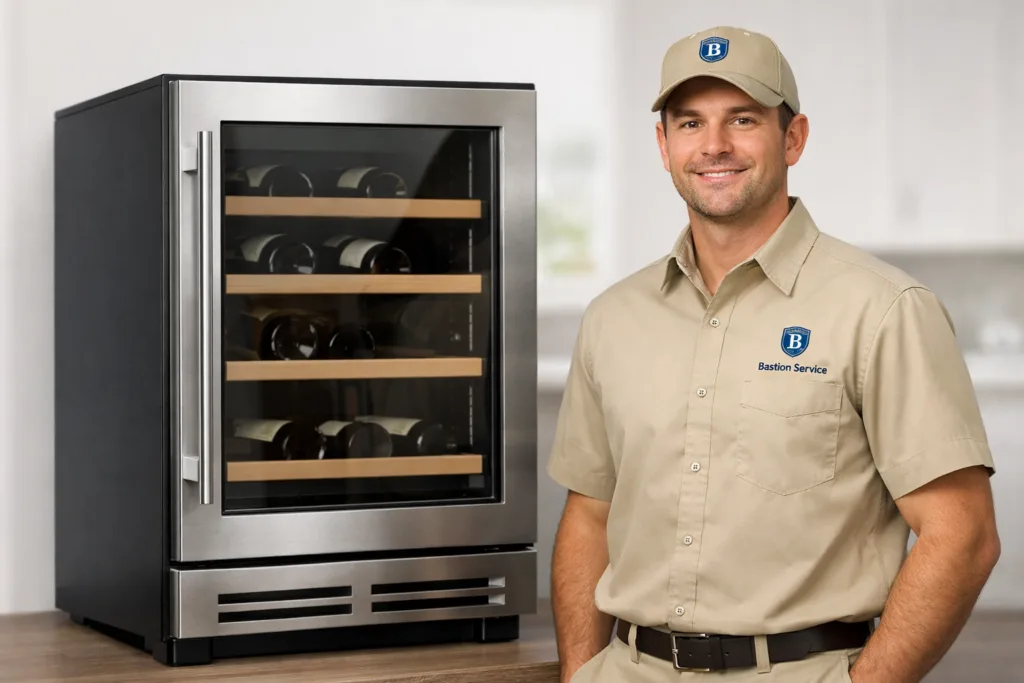
Stable storage depends on more than whether the interior feels cool. A Perlick wine cooler can appear to be running normally while still drifting outside the temperature range needed for reliable wine storage. That is why symptom patterns matter: the sound of the fan, how often the compressor cycles, where moisture appears, and whether the display matches the actual cabinet temperature all help point to the real fault.
Common Perlick Wine Cooler Problems in Torrance Homes
Most household wine cooler problems start gradually. You may notice bottles feeling a little warmer than usual, a new hum or rattle, or condensation that keeps returning. Small changes are worth paying attention to because refrigeration issues often worsen over time instead of correcting themselves.
Not Cooling Enough
If the cabinet is too warm, the cause may be as simple as restricted airflow or as involved as a compressor or sealed-system problem. Common possibilities include dirty condenser coils, a weak fan motor, a bad sensor, a thermostat issue, or a control board that is not responding correctly. In some units, the display setting looks normal even though the actual storage temperature is off.
Homeowners often first notice this problem when white wines no longer feel properly chilled or when stored bottles vary noticeably from one shelf to another.
Overcooling or Freezing
A wine cooler that drops too cold can be just as concerning as one that runs warm. This often points to sensor trouble, thermostat failure, or an electronic control issue that keeps the system running longer than it should. Freezing conditions can affect labels, corks, and long-term storage quality, especially if the problem happens repeatedly.
Condensation, Moisture, or Water Leaks
Excess moisture inside the cabinet, water near the base, or fogging that does not clear can indicate a blocked drain, poor door sealing, or airflow imbalance. In some cases, warm room air is entering the cabinet through a worn gasket. In others, the unit is not moving cold air properly, causing uneven humidity and condensation.
Moisture problems should not be ignored. They can lead to odors, shelf damage, cabinet wear, and extra strain on the cooling system.
Fan Noise, Buzzing, or Constant Running
New sounds usually mean something changed mechanically or electrically. A rattling panel may be minor, but buzzing, clicking, or a fan that sounds rough can point to worn components or poor airflow. If the compressor seems to run almost nonstop, the unit may be struggling to maintain temperature because of a sensor fault, dirty coils, a gasket leak, or a larger refrigeration issue.
Display or Control Problems
When buttons stop responding, temperature settings do not hold, or the displayed temperature does not match actual performance, the issue may involve the control board, user interface, or temperature sensing components. These faults can create confusing symptoms because the cooler may still power on while operating incorrectly.
What Different Symptoms Usually Mean
Two wine coolers can show the same basic complaint and still need very different repairs. “Not cooling” is only a starting point. The details narrow the cause.
- Warm cabinet with normal fan sound: possible sensor, airflow, or sealed-system issue
- Warm cabinet and nonstop running: possible gasket leak, dirty coils, weak compressor, or refrigerant-related problem
- Intermittent cooling: possible control board fault, thermostat issue, or failing fan motor
- Clicking on startup: possible compressor start component problem or compressor stress
- Heavy condensation near the door: possible gasket failure or frequent warm-air intrusion
- One area colder than another: possible airflow obstruction or evaporator fan trouble
Looking at the full pattern helps avoid replacing the wrong part.
Why Diagnosis Matters Before Any Repair Decision
Wine coolers use a compact refrigeration system, controls, sensors, and airflow components that work closely together. A single symptom can overlap with several failures. Replacing a thermostat will not solve a weak compressor. Installing a fan motor will not fix a control board that is misreading temperature. A useful service visit identifies whether the problem is mechanical, electrical, airflow-related, or tied to the sealed system before repair costs are weighed.
When to Schedule Service
It is smart to schedule service when the unit cannot maintain its set temperature, begins cycling erratically, develops recurring condensation, makes new noises, or shows inconsistent control behavior. Waiting too long can turn a manageable issue into a more expensive one, especially if the compressor is forced to run harder for extended periods.
You should also stop using the cooler as if it were storing properly if bottles repeatedly feel too warm, if temperatures swing widely during the day, or if the unit starts and stops with repeated clicking.
Simple Checks Homeowners Can Make First
Before service, a few basic observations can help clarify the problem:
- Confirm the temperature setting has not changed accidentally
- Check whether the door is closing fully and sealing evenly
- Look for visible condensation around the gasket
- Listen for fan operation and note any rattling or scraping sounds
- Make sure exterior vents are not blocked
- Notice whether the unit runs constantly or cycles normally
These checks do not replace repair, but they can help describe the issue more accurately and speed up troubleshooting.
When Continued Use Can Make Things Worse
A wine cooler that runs nonstop, leaks water, or struggles to restart should not be brushed off as a minor inconvenience. Ongoing operation under those conditions can increase wear on the compressor, fan motors, and controls. Moisture around the door or inside the cabinet can also lead to persistent odor and interior damage if left uncorrected.
Repair or Replace?
Repair is often worthwhile when the fault is tied to parts such as fans, sensors, controls, drains, or door seals and the cabinet remains structurally sound. Replacement becomes more likely when the unit has major sealed-system trouble, repeated expensive failures, or age-related decline that makes reliable temperature control harder to restore.
For many households in Torrance, the most important question is not whether the cooler can technically be fixed, but whether the repair is likely to restore stable storage without leading to another major issue soon after.
What Torrance Homeowners Usually Want From a Service Visit
Most people are not looking for a vague answer. They want to know why the cooler is drifting off temperature, whether the problem is urgent, and whether repair makes financial sense. That is especially true when the appliance still powers on but no longer protects what is stored inside the way it should.
Perlick Wine Cooler Repair in Torrance is most helpful when the symptom is traced to its actual cause and the next step is based on the condition of the appliance, not guesswork. For a household wine cooler, that kind of clear direction is what helps prevent spoiled storage conditions and repeated service calls.