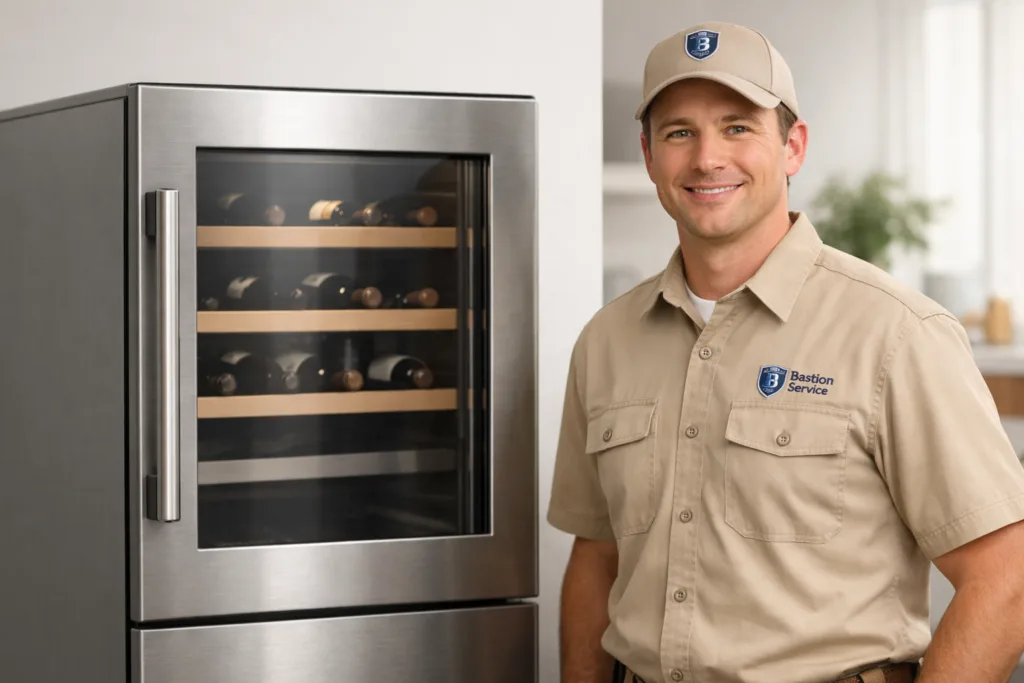
Temperature stability is the whole point of a wine cooler, so even a modest change in performance can affect storage conditions in a Torrance home. If a KitchenAid unit starts running longer than usual, develops moisture, or no longer holds the selected setting, the underlying cause may be mechanical, electrical, airflow-related, or tied to the door seal. The most effective repair path starts with the symptom pattern rather than guesswork.
What common KitchenAid wine cooler symptoms usually mean
Wine cooler problems rarely appear all at once. More often, homeowners notice one early sign, such as bottles feeling less chilled, a louder fan, or condensation near the door. Those details help narrow down whether the issue is related to circulation, sensing, control operation, or cooling performance.
Cabinet is not cooling enough
If the interior feels warmer than the display setting, several faults are possible. A weak evaporator or condenser fan can reduce airflow, causing uneven temperatures from shelf to shelf. A thermistor or temperature control issue can make the unit misread conditions and cool inaccurately. In other cases, dirty condenser components or sealed system trouble can reduce the cooler’s ability to remove heat efficiently.
Homeowners sometimes notice that the lower shelves stay colder while upper bottles remain too warm, or that the unit cools better at night than during the day. Those patterns often point toward airflow or performance loss rather than a simple settings issue.
Wine cooler is too cold or freezing contents
A KitchenAid wine cooler that drops below the selected temperature may have a faulty sensor, thermostat, or electronic control. When the compressor runs longer than it should, the unit can overshoot the target temperature and create storage conditions that are too cold for wine. Overcooling is not harmless just because the appliance still seems to be working; it often indicates that regulation has become unreliable.
Water droplets, interior moisture, or leaking
Condensation can develop when warm air repeatedly enters the cabinet or when moisture is not being managed correctly. A worn door gasket, blocked drain path, or sealing issue around the door can all lead to water on shelves, damp labels, or moisture near the base of the appliance. If this continues, it can contribute to odor, staining, and added strain on internal components.
Buzzing, rattling, clicking, or fan noise
Not every sound means a major failure, but a new sound usually means something has changed. Rattling may come from vibration or mounting issues. Buzzing can be tied to the compressor or fan motor. Clicking may be related to normal cycling, but repeated clicking without proper cooling can point to a start or control problem. A louder fan sound often suggests that a blade is obstructed, a motor is wearing out, or airflow is restricted.
Unit runs constantly or cycles too often
If the cooler seems to run nearly nonstop, struggles to reach temperature, or starts and stops more often than before, the cause could be restricted ventilation, dust buildup, weak cooling performance, a sensor fault, or an electronic control issue. This symptom matters because extended run time increases wear on key components and can turn a manageable repair into a more expensive one if ignored.
Why symptom-based diagnosis matters
Two wine coolers can have the same complaint and need completely different repairs. A warm interior might be caused by poor airflow, a failing fan motor, a control issue, a sensor problem, or a sealed cooling fault. Water inside the unit might come from gasket leakage or drainage trouble. Good service means testing temperatures, checking fan operation, inspecting the seal, reviewing control behavior, and confirming how the cooling system responds under load.
That approach helps homeowners avoid replacing parts based only on the most obvious symptom. It also makes it easier to decide whether the appliance is a strong repair candidate or whether the repair scope is becoming too large to make sense.
Signs the problem should not be ignored
Some wine cooler issues start small but get worse quickly. If the unit is still cooling a little, it may be tempting to wait, but partial cooling often means a component is struggling rather than operating normally. Scheduling service is usually the better choice when performance has clearly changed for more than a brief adjustment period.
- The interior temperature no longer matches the setting
- The compressor seems to run most of the time
- Moisture or leaking keeps returning
- The fan is noisy or airflow feels weak
- The display or controls behave inconsistently
- The door does not close or seal evenly
These symptoms are especially worth addressing early because wine coolers depend on narrow temperature control. Once that control becomes erratic, the issue rarely corrects itself.
Repair issues that are often practical to fix
Many KitchenAid wine cooler problems are still reasonable to repair when the rest of the appliance is in good condition. Faults involving fans, sensors, controls, door gaskets, drainage components, and some electrical parts are often more straightforward than homeowners expect. When the cabinet structure is sound and the cooler can be restored to stable operation without signs of broader failure, repair is often the sensible next step.
When replacement may be the better choice
Replacement becomes more realistic when diagnosis points to major sealed system trouble, repeated compressor stress, or multiple failing components in an older appliance. The decision is not based on age alone. What matters is whether the cooler can return to reliable temperature control without creating a chain of additional repairs. For a household unit used regularly, consistent performance is usually more important than simply getting it to run again temporarily.
Installation conditions that can affect performance
In Torrance homes, wine coolers are often placed under counters, in built-in openings, or in entertainment spaces where ventilation can be limited. Restricted airflow around the cabinet, frequent door openings, or dust accumulation near the condenser area can all affect cooling behavior. These conditions can mimic larger failures or make a smaller problem show up faster.
That is why inspection should include more than the internal temperature alone. Placement, airflow clearance, door alignment, and operating patterns can all influence how the appliance behaves from day to day.
What homeowners can note before service
A few observations can make diagnosis faster and more accurate. It helps to note whether the cooler is warm all the time or only at certain times of day, whether noise starts at the beginning of a cycle or continues throughout operation, and whether moisture appears inside the cabinet, around the door, or underneath the unit. If the controls have been changed recently, or if the appliance was loaded more heavily than usual, that information can also help separate a settings issue from a component failure.
For many households, the key question is not just whether the wine cooler turns on, but whether it can maintain a stable, usable environment without excess noise, water, or constant cycling. When it cannot, a focused diagnosis and practical repair plan usually provide the clearest next step.