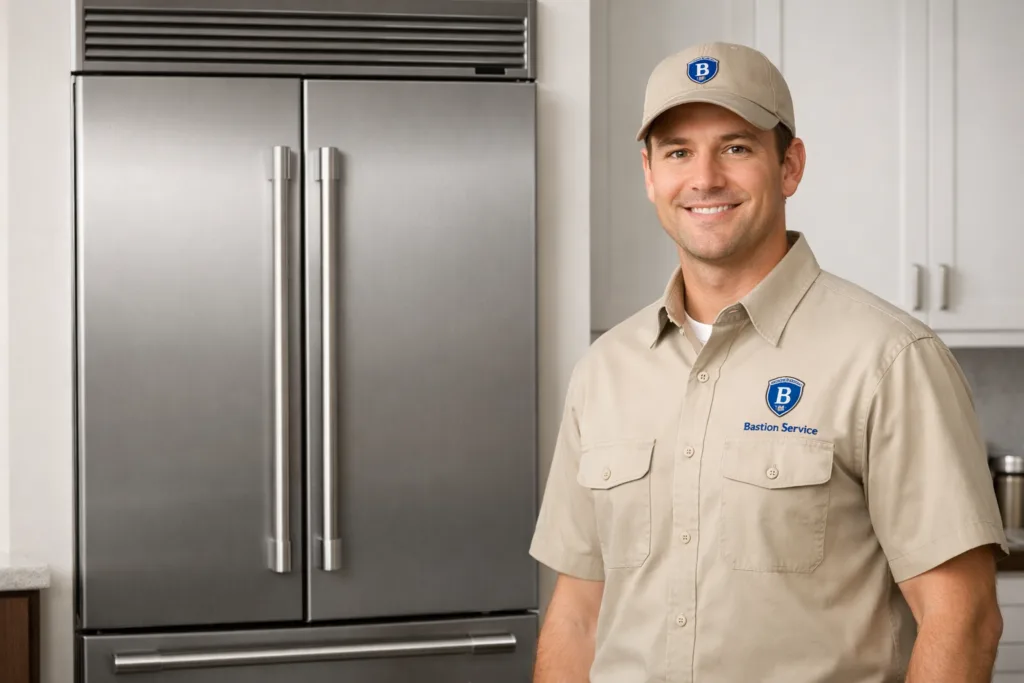
Sub-Zero refrigerators are designed to hold steady temperatures, so a small change in performance usually means something inside the system is no longer working the way it should. A warm shelf, fresh food that spoils too quickly, frost where it did not appear before, or a new grinding or buzzing sound can each point to different causes. The most useful first step is to match the symptom pattern to the likely fault before deciding on repair.
Common Sub-Zero refrigerator problems in Rancho Palos Verdes homes
Households in Rancho Palos Verdes often notice refrigerator trouble first through food quality. Produce may wilt faster, dairy may not stay cold enough, or drinks may feel only mildly chilled even when the display looks normal. In other cases, the freezer appears fine while the fresh food side starts warming up. That usually suggests an airflow, fan, sensor, or control problem rather than a total loss of cooling.
Other common complaints include moisture under the unit, frost around drawers or back panels, longer run times, repeated clicking, or a refrigerator that seems to run all day without fully recovering. Because built-in Sub-Zero units depend on balanced airflow and accurate temperature control, one failing part can affect the way the entire appliance behaves.
Fresh food section warming up
If the refrigerator side is getting warm while the freezer still seems cold, the issue is often related to circulation. Cold air may not be moving correctly between compartments, or a fan may be weak or intermittent. A control issue, sensor problem, or ice obstruction can create the same symptom. This is one of the most common patterns in built-in refrigeration and one of the easiest to misread without testing.
Freezer temperature swings
When frozen items soften and then refreeze, the appliance may be cycling unevenly. Temperature swings can be tied to fan operation, defrost issues, door sealing problems, or a developing cooling-system fault. Even if the unit still cools part of the time, inconsistent freezing should be taken seriously because it can lead to food safety concerns and added strain on major components.
Frost buildup and moisture inside
Frost on drawers, shelves, or interior panels often means warm air is entering where it should not, or defrost performance is off. A worn gasket, a door that is not closing evenly, blocked airflow, or a drainage problem can all lead to moisture and ice buildup. If the frost keeps returning after being wiped away, the source usually needs correction rather than cleanup alone.
Leaks under or around the refrigerator
Water on the floor does not always come from the same cause. A blocked defrost drain, condensation from poor sealing, or melting ice from an airflow problem can all show up as a leak. If the floor around the appliance is getting wet repeatedly, it is worth addressing quickly to avoid cabinet or flooring damage in addition to the refrigerator problem itself.
Noise, clicking, or constant running
A Sub-Zero refrigerator should have some normal operating sound, but a sudden increase in noise usually means something has changed. Fan blades can become obstructed by ice, motors can wear down, and cooling components can begin running longer as the unit struggles to maintain temperature. Repeated clicking, loud buzzing, or near-constant operation are all signs that the appliance should be evaluated.
Why symptom-based diagnosis matters
The same complaint can come from several very different failures. “Not cold enough” might be caused by restricted airflow, dirty condenser conditions, a failing evaporator fan, a thermistor issue, door seal leakage, or a larger sealed-system problem. Replacing a part based on guesswork can delay the real fix and allow temperatures to drift further out of range.
Diagnosis also helps homeowners decide how urgent the situation is. A minor gasket issue and a major cooling-system issue can both begin with uneven temperatures, but they do not carry the same repair path or cost. Identifying the actual fault makes it easier to judge whether repair is straightforward, whether continued use may worsen the problem, and whether the appliance is still a practical candidate for repair.
Signs you should schedule service soon
- Food is spoiling faster than usual in the fresh food section.
- The freezer is no longer holding a stable temperature.
- You see recurring frost on drawers, walls, or interior panels.
- Water is collecting under the unit or inside compartments.
- The refrigerator runs constantly or sounds much louder than before.
- The unit clicks repeatedly, struggles to start, or cools only intermittently.
- The doors are not sealing tightly or seem misaligned.
- Interior temperatures feel wrong even when settings have not changed.
If both compartments are warming, if the compressor area feels unusually hot, or if the refrigerator has stopped cooling entirely, service should not be delayed. Those symptoms usually point to a more serious operating problem.
What may be behind the symptoms
Sub-Zero refrigerator issues often trace back to a handful of core systems. Airflow problems can come from fan failures, ice buildup, or blocked internal passages. Defrost-related problems can cause frost, moisture, and reduced circulation. Door and gasket issues can let warm air enter continuously, forcing the unit to run longer while still struggling to hold temperature.
Control-related faults can create erratic behavior, including intermittent cooling, false temperature readings, or poor coordination between compartments. In other cases, the concern is deeper in the cooling system itself. That is why a practical repair plan depends on more than the visible symptom alone.
Repair or replacement: how the decision is usually made
Not every Sub-Zero problem points toward replacement. Many issues involve serviceable components such as fans, sensors, drains, controls, or sealing parts. When the appliance is otherwise in solid condition and the failure is limited to one of those areas, repair is often the better choice.
Replacement becomes a more realistic discussion when the refrigerator has a major cooling-system failure, a history of repeated expensive breakdowns, or overall wear that makes long-term reliability uncertain. For most homeowners, the key question is not simply the unit’s age. It is whether the specific failure can be corrected in a way that restores stable performance without leading to another major issue soon after.
Helpful observations to make before the appointment
You do not need to diagnose the refrigerator yourself, but a few details can make the service visit more efficient. Try to note which compartment is affected, whether the issue is constant or comes and goes, and where frost or water is showing up. If the noise changes throughout the day, notice whether it happens when the doors are closed, after a door opens, or during longer cooling cycles.
- Check whether the refrigerator side, freezer side, or both are warming.
- Look for visible frost near vents, drawers, or rear panels.
- Notice whether doors close evenly and seal without resistance.
- Pay attention to puddles, drips, or damp spots near the front or inside the cabinet.
- Listen for clicking, fan noise, rattling, or unusually long run cycles.
If the unit is still cooling somewhat, keeping the doors closed as much as possible can help preserve temperatures until service. If food has already become unsafe, it is best not to rely on the compartment until the cause is identified.
Focused Sub-Zero refrigerator repair for Rancho Palos Verdes households
Built-in refrigeration problems are rarely solved well by assumptions. A refrigerator that leaks may actually have a defrost issue, and one that seems warm may really be dealing with circulation or sensor trouble. For homeowners in Rancho Palos Verdes, the goal is to identify the exact fault, understand the repair path, and make a sound decision based on the appliance’s condition and the likely outcome of the repair.
Whether the problem shows up as temperature swings, airflow trouble, frost buildup, leaks, or new operating noise, early attention usually gives you more options and a better chance of preventing food loss or added component damage.