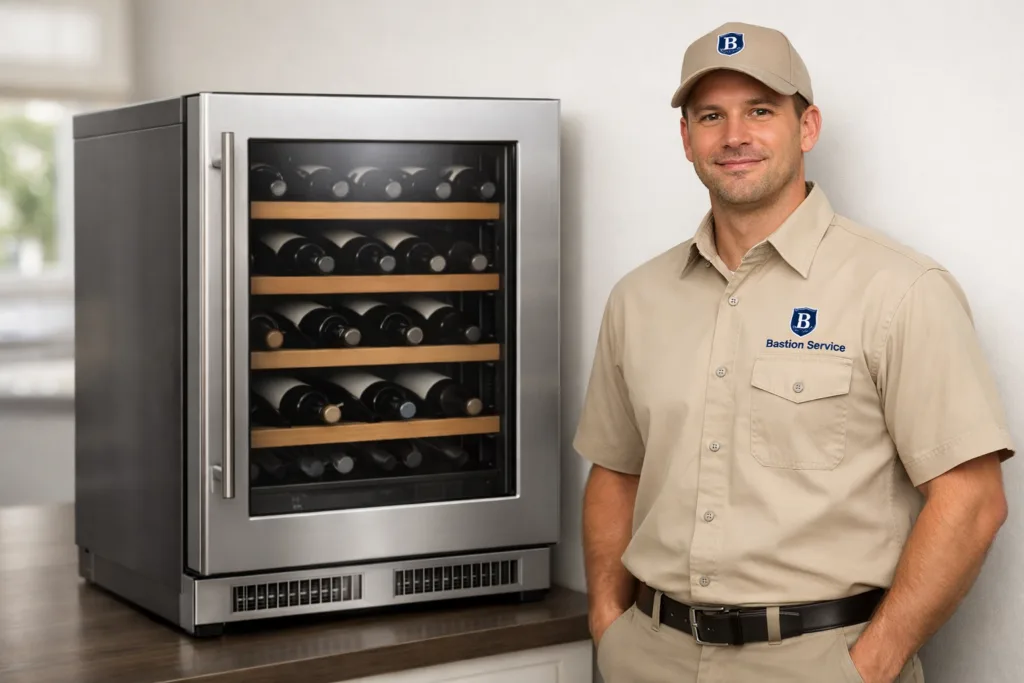
A Perlick wine cooler that runs warm, collects moisture, or starts sounding different can affect storage conditions faster than many homeowners expect. Small changes in temperature control matter with wine storage, so the most useful next step is to match the symptom pattern to the system that is actually failing.
Perlick wine cooler problems homeowners often notice
Most service calls start with one of a few recurring complaints. The cabinet may feel cool but not steady, bottles may no longer stay at the selected temperature, or the unit may seem to run much longer than before. Some homeowners notice water droplets inside, fogging on the glass, or a new buzzing or rattling sound that was not there previously.
On a Perlick wine cooler, those symptoms can come from several different causes:
- Temperature swings: sensor issues, thermostat or control faults, restricted airflow, fan problems, or condenser performance issues.
- Not cooling enough: dirty heat-exchange areas, fan failure, compressor start problems, control trouble, or sealed-system concerns.
- Condensation inside: worn door gaskets, door alignment issues, repeated warm-air intrusion, or drainage problems.
- Unusual noise: evaporator fan wear, condenser fan noise, vibration against cabinetry, loose panels, or compressor strain.
- Freezing in parts of the cabinet: airflow imbalance, sensor misreading, or control failure causing overcooling.
Why symptom-based diagnosis matters
Wine coolers are designed for stable, controlled storage rather than broad food refrigeration. That means a problem does not always show up as total failure. A unit can still power on, still feel somewhat cool, and still be underperforming enough to affect how consistently bottles are stored.
Two coolers with the same “not cooling” complaint may need completely different repairs. One may have a fan not moving air across the cabinet. Another may have a sensor feeding the wrong reading to the controls. Another may be struggling to shed heat properly because of buildup around the condenser area. Treating every warm cabinet the same way can lead to unnecessary parts replacement and repeat service calls.
Common symptoms and what they may indicate
Wine cooler is not holding the set temperature
If the temperature drifts up and down or settles above the setting, airflow is often one of the first things to consider. When air does not circulate properly, the cabinet can develop warm spots and the controls may keep calling for cooling longer than normal. Fan trouble, sensor inaccuracy, and condenser-related heat issues can all create this pattern.
If the compressor is running but the cabinet still struggles to recover, the problem may go beyond basic airflow. That is the point where proper testing becomes important, especially to distinguish between a control issue and a deeper cooling-system fault.
The cabinet is damp or the door glass fogs
Moisture usually means warm, humid air is getting in or condensation is not draining as it should. A gasket that no longer seals tightly can allow repeated air intrusion. A door that sits slightly out of alignment can do the same thing, even if it still appears to close. In some cases, recurring condensation shows up along with temperature inconsistency because the unit is constantly trying to recover from warm air entering the cabinet.
Left unaddressed, excess moisture can lead to odor, shelf wear, frost buildup in some areas, and extra operating strain.
The unit is louder than normal
A change in sound often tells you something before cooling performance drops noticeably. Rattling may be as simple as vibration against surrounding panels or an uneven surface. Buzzing or harsher humming may point to a fan motor or compressor working harder than usual. Clicking can be tied to startup components or control-related cycling problems.
Noise matters most when it appears together with weak cooling, longer run times, or moisture issues. That combination often suggests more than a cosmetic vibration problem.
The wine cooler runs constantly
When a Perlick wine cooler rarely shuts off, it is usually having trouble reaching or maintaining the target temperature. Dirty condenser areas, poor airflow, door seal leakage, fan failure, or control misreading can all keep the system running longer than it should. Constant operation not only raises energy use but can also add wear to the compressor and fans.
The wine cooler short cycles
If the unit turns on and off too often, the controls may be getting inaccurate information or the appliance may be losing cooled air faster than normal. Short cycling can also show up when startup components are weak or when the system begins cooling but cannot settle into a normal operating rhythm.
Issues that deserve prompt service
It is a good idea to schedule service when temperature drift continues for more than a brief period, when the display setting does not match actual storage conditions, or when moisture keeps returning after the door has been checked and closed properly. Service is also worth arranging when a new noise develops and does not go away after the cabinet has been leveled and obvious vibration points have been ruled out.
Prompt attention matters even more if the cooler is:
- running nearly nonstop,
- freezing bottles or overcooling sections of the cabinet,
- showing repeated condensation or leaking,
- failing to recover after the door is opened, or
- showing erratic display or control behavior.
Partial cooling is not the same as reliable wine storage. A cabinet that is “still sort of cool” may still be failing to hold consistent conditions.
Repair or replacement: how homeowners usually evaluate it
Many Perlick wine cooler issues are repairable, especially when the problem is tied to fans, controls, sensors, door gaskets, drainage, or electrical startup components. In those cases, repair often makes sense if the cabinet structure is sound and the cooling system is otherwise in good shape.
Replacement becomes more likely when a unit has major sealed-system failure, repeated expensive breakdowns, or several overlapping problems at once. Age alone does not decide the answer. What matters more is the exact failure, the expected result of the repair, and whether the cooler is likely to return to stable operation afterward.
What a useful service visit should help answer
Homeowners usually want straightforward answers to a few practical questions:
- What is actually causing the symptom?
- Is the issue likely to worsen if the cooler keeps running?
- Which repair is needed to correct the fault rather than just mask it?
- Is the repair reasonable for the condition of the unit?
That matters in Palos Verdes Estates because a built-in or undercounter wine cooler is often expected to run quietly and steadily with little attention. When that changes, the priority is not a generic explanation of refrigeration systems. It is understanding why this particular Perlick unit is no longer performing the way it should.
Focused Perlick wine cooler repair in Palos Verdes Estates
For homeowners in Palos Verdes Estates, the most effective repair approach is one that stays centered on the actual symptom pattern: unstable temperatures, condensation, fan noise, control problems, or weak cooling. Once the fault is identified, it becomes much easier to decide whether repair is the sensible next step and what should be addressed first.
Perlick wine cooler repair in Palos Verdes Estates is most helpful when it protects storage conditions, prevents added strain on the appliance, and gives the homeowner a realistic picture of what to expect from the repair.