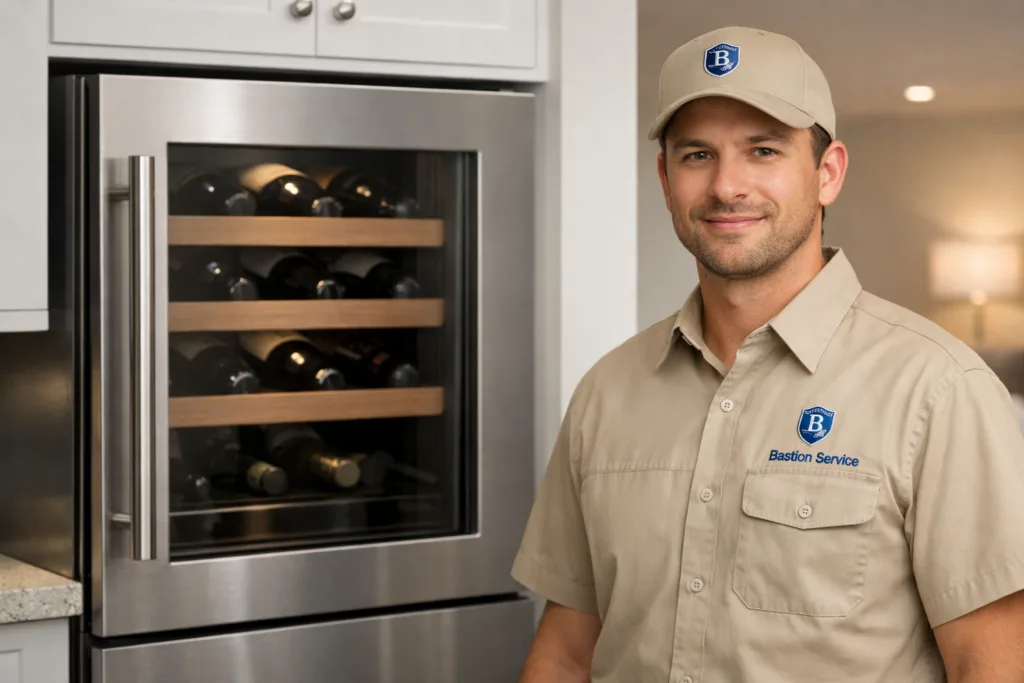
A U-Line wine cooler that starts running warm, cycling too often, leaking, or drifting away from its set temperature can put a collection at risk faster than many homeowners expect. In a home setting, even a small change in cooling performance can affect storage conditions over time, especially if the issue continues unnoticed for days.
In Palos Verdes Estates, the smartest way to approach a wine cooler problem is to match the repair plan to the exact symptom pattern. Similar complaints can come from very different causes, including airflow restrictions, sensor problems, fan failure, door seal leaks, drainage trouble, or a refrigeration issue. Identifying the source first helps determine what repair makes sense and whether the unit is worth fixing.
Common U-Line wine cooler problems in Palos Verdes Estates homes
Most wine cooler failures show up through a handful of recognizable symptoms. What matters is how the unit behaves before, during, and after the symptom appears. That pattern often tells more than the display alone.
Not cooling enough
If the cabinet feels warmer than expected, the issue may be tied to poor condenser airflow, a weak evaporator fan, inaccurate temperature sensing, control failure, or compressor-related trouble. Some units cool a little but never quite reach the set temperature, while others cool briefly and then drift warm again. Both patterns suggest the cooler is no longer regulating conditions correctly.
This is often one of the first signs homeowners notice. Bottles may not feel dramatically warm at first, but the cooler may struggle more each day, run longer, and lose consistency during warmer parts of the day or after normal door openings.
Overcooling or freezing
A wine cooler that runs too cold can be just as problematic as one that runs warm. Faulty temperature sensors, thermostat issues, or control board problems can cause the appliance to overshoot the target range. In some models, airflow problems can also create cold spots that affect part of the cabinet more than the rest.
If bottles are colder than the display suggests or certain areas of the interior feel noticeably colder, the cooler may not be reading or responding to cabinet temperature correctly.
Constant running or very long cycles
Long run times usually mean the appliance is working harder than it should to maintain temperature. That can happen because of dirty condenser sections, blocked airflow, a weak fan, poor door sealing, or a refrigeration system under strain. A unit that rarely seems to rest is not necessarily cooling well; sometimes it is running constantly because it cannot reach or hold its target.
Extended cycling increases wear on key components and often shows up before complete cooling failure.
Condensation, moisture, or leaks
Water inside the cabinet or beneath the appliance can come from a clogged drain path, repeated humid air entry, poor door sealing, or leveling issues. Condensation around the door frame may point to warm air infiltration, while pooled water under the unit may suggest drainage problems that need attention before they affect nearby flooring or cabinetry.
Moisture problems also tend to go hand in hand with unstable temperatures, since the same air leak or drainage fault can interfere with normal cooling performance.
Fan noise, buzzing, or clicking
Some operating sound is normal, but a change in sound usually means a change in function. Rattling may come from loose panels or vibration against surrounding cabinetry. Buzzing can point to compressor strain or a component working harder than normal. Repeated clicking may indicate a starting problem, control issue, or intermittent electrical fault.
When unusual noise appears at the same time as weak cooling or temperature swings, the sound becomes an important clue rather than just an annoyance.
What temperature swings usually mean
Temperature fluctuation is one of the most common complaints with wine coolers because it does not always look like full failure. The display may still appear normal while the actual cabinet temperature rises and falls more than it should. That can happen when a sensor is drifting, the control is not responding accurately, the fan is moving air unevenly, or the sealed cooling system is losing efficiency.
Homeowners often notice this problem when the cooler seems fine one day and off the next, or when the cabinet recovers too slowly after the door is closed. If the display reading does not match the feel of the bottles or the interior air, the issue should be checked rather than monitored indefinitely.
Why door seal and airflow issues matter so much
Wine coolers depend on a stable, controlled cabinet environment. If the door gasket is not sealing tightly, humid household air can enter every time the unit cycles. That leads to extra condensation, longer run times, and uneven cooling. In built-in installations, restricted ventilation can create similar symptoms by preventing the system from shedding heat properly.
These problems are easy to underestimate because the unit may still cool somewhat. But a cooler that is fighting warm air leaks or poor airflow often wears itself down while giving only partial performance.
When service is a smart next step
Homeowners in Palos Verdes Estates should schedule service when the cooler no longer holds a steady temperature, noise changes suddenly, moisture keeps returning, or the unit runs far longer than it used to. The earlier the problem is checked, the better the chance of limiting added strain on major components.
Service is especially worth considering when:
- The cabinet gradually becomes warmer over several days
- The display setting does not seem to match actual interior conditions
- Condensation keeps forming on the door, frame, or shelves
- Water appears inside or under the appliance
- The unit clicks, buzzes, or rattles in a new way
- The cooler restarts inconsistently or seems to run without settling
When continued use can make the problem worse
A struggling wine cooler often keeps trying to compensate for the underlying fault. If cooling is weak, the compressor may run longer and hotter than normal. If moisture is entering the cabinet, condensation can continue building and lead to recurring water problems. If airflow is restricted, temperatures can become less stable while internal parts work harder to keep up.
That does not mean every symptom points to a major repair, but persistent symptoms should not be treated as normal operation. Wine storage depends on consistency, and once the unit loses that consistency, delay usually does not improve the outcome.
Repair versus replacement for a U-Line wine cooler
Many U-Line wine cooler problems are repairable, especially when the issue involves fans, controls, sensors, drain components, door gaskets, or other accessible parts on an otherwise solid unit. Replacement becomes a more serious consideration when the problem involves major sealed system failure, repeated expensive breakdowns, or a cabinet that is no longer in good overall condition.
The best choice usually depends on a few practical factors:
- The exact component or system that failed
- The age and condition of the cooler
- How well it performed before the current issue
- Whether the appliance has needed repeated recent repairs
- The expected cost and value of restoring reliable operation
For many households in Palos Verdes Estates, the decision becomes much easier once the actual failure is identified instead of guessing from symptoms alone.
What homeowners can notice before an appointment
A few simple observations can help narrow down the problem. Notice whether the interior feels evenly cool from top to bottom, whether the display seems believable, and whether the noise is constant or only happens during startup. Check for moisture around the door seal, water under the unit, or signs that the cabinet is running much longer than it used to.
It also helps to note whether the problem began suddenly or developed gradually. A sudden change may suggest an electrical or control failure, while gradual loss of cooling can point more toward airflow, fan, or refrigeration performance issues.
Focused help for U-Line wine cooler issues at home
U-Line Wine Cooler Repair in Palos Verdes Estates is most useful when the service approach stays focused on the specific symptom, the condition of the appliance, and the likely repair path. Whether the problem involves unstable temperatures, fan noise, condensation, leaks, or weak cooling, the goal is to restore proper cabinet performance without unnecessary parts swapping or guesswork.
For homeowners, that means a more informed decision about timing, repair value, and whether continued use is likely to cause additional wear. When a wine cooler stops maintaining the environment it was designed to hold, prompt evaluation is the best way to protect both the appliance and what is stored inside it.