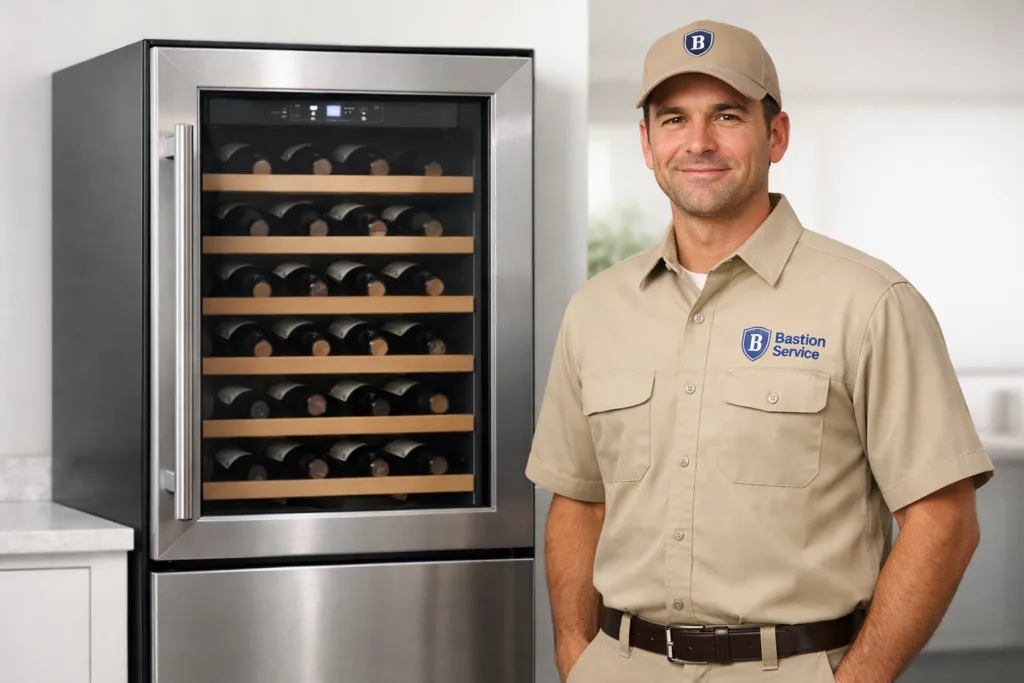
Small changes in an EdgeStar wine cooler can have outsized effects on storage conditions. A few degrees too warm may age bottles faster than intended, while overcooling can damage labels, affect corks, or even freeze contents in severe cases. When performance becomes inconsistent, it helps to look at the full symptom pattern rather than assuming every cooling complaint has the same cause.
How EdgeStar Wine Cooler Problems Usually Show Up
Most wine cooler failures start with one of a handful of warning signs: drifting temperature, constant running, fan noise, moisture buildup, or a display that no longer matches what the cabinet is actually doing. In a home setting, these issues often appear gradually. A unit may seem slightly warm one week, then struggle to recover after the door opens, then begin cycling longer than normal.
That pattern matters because the underlying fault may be mechanical, electrical, airflow-related, or control-related. A wine cooler that is warm because of restricted condenser airflow needs a different fix than one with a failing sensor, damaged door gasket, or compressor problem.
Common EdgeStar Wine Cooler Symptoms
Not Cooling Enough
If the cabinet temperature rises above the set point and stays there, possible causes include weak airflow, a faulty evaporator fan, thermostat or sensor issues, failed start components, or trouble in the sealed system. Sometimes the cooler still runs and sounds active, but it cannot pull the compartment down to the selected temperature. That difference is important, because “running but not cooling enough” often points to a different repair path than “not cooling at all.”
Homeowners may also notice that top and bottom shelves feel noticeably different, or that the cooler takes much longer than normal to recover after opening the door. Those are useful clues during diagnosis.
Too Cold or Freezing Bottles
Overcooling usually means the unit is not regulating properly. A temperature sensor may be misreading cabinet conditions, the control may not be cycling correctly, or airflow inside the compartment may be uneven enough to create cold spots. If bottles are freezing near one section while another area seems normal, that often suggests circulation or sensor-related trouble rather than a simple setting issue.
Fan Noise, Buzzing, or Clicking
Unusual sound does not always mean the same thing. A rattling or scraping noise may come from a fan blade hitting ice or a loose mounting point. Buzzing can point to compressor strain or electrical start issues. Repeated clicking without proper cooling can be a sign the compressor is attempting to start and failing. Noise becomes more concerning when it appears together with temperature swings.
Condensation or Water Leaks
Moisture on shelves, around the door, or under the cabinet can result from a weak seal, warm air entering the compartment, a blocked drain path, or frost that has formed and then melted. In a wine cooler, repeated condensation should not be dismissed as cosmetic. It can lead to cabinet wear, odor, and surrounding floor or trim damage if it continues.
Frost Buildup Inside
Frost often means humid air is getting in or the unit is not managing defrost and airflow properly. Once frost starts to accumulate, cooling performance may decline further because air can no longer move the way it should across internal components. What begins as a minor ice patch can turn into poor circulation, uneven shelf temperatures, and longer run times.
Controls or Display Problems
If the panel is unresponsive, settings change unexpectedly, or the displayed temperature does not line up with actual storage conditions, the fault may involve the control board, user interface, wiring, or a sensor feeding bad information to the control system. A cooler with working lights and a live display can still have a cooling failure behind the scenes.
Why Symptom Overlap Can Be Misleading
Several very different failures can produce the same complaint. For example, “running warm” may be caused by dirty airflow passages, a worn gasket, a slow fan, a bad thermistor, or a more serious compressor issue. “Too much moisture” may come from door sealing problems, frequent warm-air intrusion, or frost melting after an airflow disruption. That is why a clear diagnosis and a practical repair plan matter before parts are replaced.
What to Check Before Scheduling Repair
There are a few household-level observations that can help narrow down what is happening:
- Whether the temperature is consistently off or only fluctuates at certain times
- Whether the fan can be heard running normally or sounds obstructed
- Whether the door closes firmly and the gasket sits flush all the way around
- Whether condensation appears near the seal, on shelves, or beneath the cabinet
- Whether one shelf area is much colder or warmer than another
- Whether the unit runs almost constantly without reaching the set point
These observations do not replace service, but they do help distinguish between a simple operational issue and a component failure.
When Service Should Not Be Delayed
Prompt attention is usually wise when the cooler no longer holds a stable temperature, bottles are getting noticeably warm, freezing is occurring, or the compressor appears to be struggling. The same applies when new noise starts suddenly, frost spreads, or water begins collecting under the unit.
For households in Palos Verdes Estates, early repair is often the difference between correcting a single failed part and dealing with added wear from extended operation under stress. A wine cooler that runs continuously while missing its target temperature is not just inefficient; it may be forcing other components to work harder than designed.
When Continued Use Can Make Damage Worse
Letting a malfunctioning wine cooler keep running can create secondary problems. Constant cycling may increase compressor wear. Poor airflow can allow frost to expand and choke circulation further. Persistent leaks can affect nearby flooring or cabinetry. If the cabinet is clearly outside its intended range or bottles are freezing, limiting use until the issue is inspected is usually the safer choice.
Repair or Replace: How the Decision Usually Comes Together
Repair is often reasonable when the issue involves a fan motor, control component, sensor, gasket, drain problem, or other isolated part that can restore stable performance. Replacement becomes a more serious consideration when the cooler has major sealed-system trouble, repeated cooling failures, heavy corrosion, or multiple failing systems at once.
The better question is not simply whether the unit can be repaired, but whether the repair is likely to return reliable temperature control without turning into a cycle of recurring problems.
What a Service Visit Should Clarify
A productive service appointment should identify which system is actually failing rather than treating every warm cabinet the same way. That usually includes verifying actual cabinet temperature, checking fan operation and airflow, looking for seal failure or moisture intrusion, reviewing control response, and evaluating compressor behavior. Once that is done, the next step is much clearer: proceed with repair, pause use until parts are replaced, or compare the repair scope with replacement value.
Home-Focused Wine Cooler Repair in Palos Verdes Estates
In residential kitchens, bar areas, and entertainment spaces, wine cooler issues are rarely just about convenience. Stable storage is the point of the appliance, so recurring swings, moisture, or noise should be taken seriously. For EdgeStar units in Palos Verdes Estates, symptom-based troubleshooting is the most reliable way to determine whether the problem is relatively contained or part of a larger refrigeration failure.