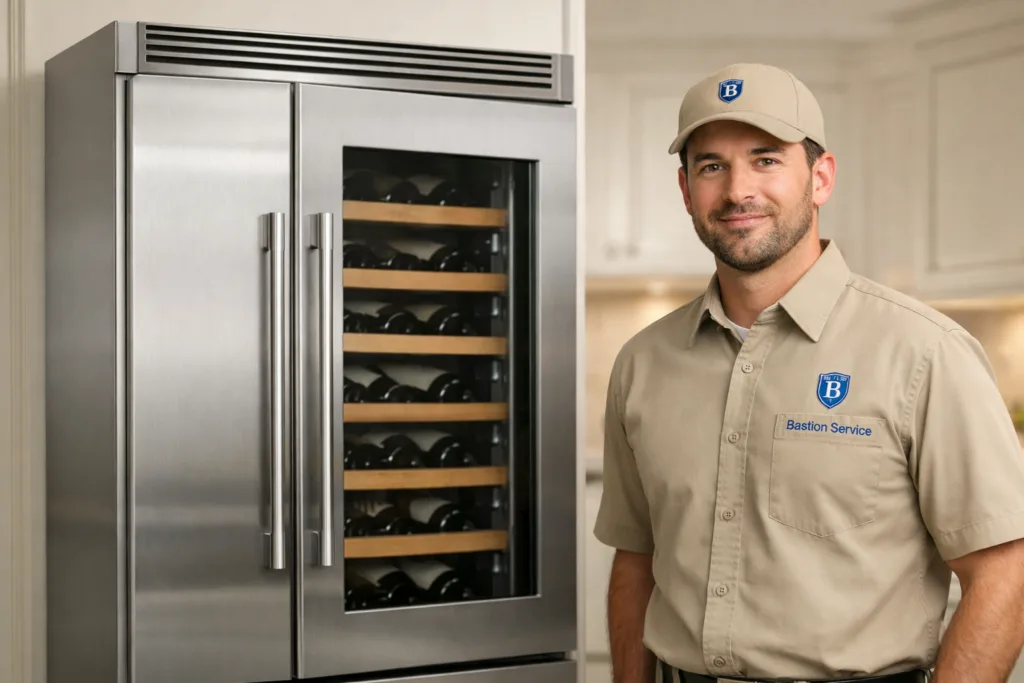
Wine coolers tend to show problems in recognizable ways, but the same symptom can come from more than one failed component. With a Sub-Zero unit, the goal is not simply making the cabinet feel cool again. It is restoring stable storage conditions so bottles are not exposed to repeated temperature changes, excess moisture, or unnecessary vibration.
Common Sub-Zero wine cooler symptoms homeowners notice in Beverly Hills
Most service calls begin with a few repeat complaints. Looking at the symptom pattern helps narrow the issue before any repair decision is made.
Wine cooler not cooling enough
If the cabinet is warmer than the setting, the cause may be a failed fan, a sensor problem, restricted condenser airflow, a control issue, or a sealed-system fault. In some cases, the unit cools intermittently rather than failing completely, which can make the problem seem minor at first. That kind of partial cooling is still important because it can leave stored wine exposed to steady temperature drift.
Temperature swings from day to day
When the temperature rises and falls without a clear reason, attention usually turns to the thermistor, electronic controls, evaporator airflow, or a door seal that is letting room air enter the cabinet. Even if the cooler eventually reaches the set point, unstable cycling can affect storage quality and often signals a system that is compensating for another fault.
Fan noise, buzzing, or rattling
A new noise is often one of the first signs that repair should not be delayed. Scraping or grinding may indicate an evaporator fan problem. Buzzing can point to vibration, airflow restriction, or compressor strain. Rattling may come from mounting, panel movement, or a fan assembly that is no longer running smoothly. The exact sound matters because it helps separate a small mechanical issue from a cooling problem that is getting worse.
Condensation inside the cabinet or around the door
Moisture usually means warm air is entering the cooler or interior conditions are no longer being controlled properly. Common causes include a worn gasket, poor door alignment, frequent short cycling, or uneven cooling inside the cabinet. Condensation may seem cosmetic, but if it keeps returning, it often points to a repairable problem that should be addressed before labels, shelving, or cabinet performance are affected.
Controls, lighting, or display acting erratically
If the display goes blank, settings do not hold, interior lights behave inconsistently, or the cooler responds unpredictably, the issue may involve the interface, main control, wiring, or power path. Electrical symptoms sometimes appear alongside cooling complaints, so it is important to determine whether the control problem is the main failure or a secondary result of another issue.
What usually causes these problems
Sub-Zero wine cooler repairs often trace back to one of a few systems. Understanding those systems helps explain why similar symptoms can have different causes.
- Airflow problems: Dirty coils, blocked passages, or failed fans can prevent the cabinet from maintaining stable temperature.
- Control and sensor faults: Incorrect readings or control errors can cause short cycling, overcooling, warming, or erratic operation.
- Door seal issues: A weak gasket or misaligned door lets warmer room air into the cabinet and can lead to condensation or nonstop running.
- Drainage or moisture issues: Water buildup can be related to interior humidity problems, door leakage, or cooling imbalance.
- Sealed-system concerns: In more serious cases, reduced cooling performance may involve the compressor or refrigerant-side components.
Why symptom-based diagnosis matters
Replacing parts based on guesswork is expensive and often ineffective, especially with premium refrigeration products. A cooler that runs constantly, for example, may have a gasket problem, a sensor issue, dirty condenser coils, or a deeper cooling-system fault. Those are very different repairs even though the day-to-day symptom looks similar.
For homeowners in Beverly Hills, the most useful service outcome is knowing which system failed, whether the unit can still be used safely in the short term, and whether the repair is likely to restore reliable storage conditions. That gives you a practical repair plan instead of trial-and-error part swapping.
When to stop using the wine cooler and schedule service
Some issues can worsen quickly if the appliance is left running. It is smart to arrange service when you notice any of the following:
- The cabinet stays warm for more than a short period
- The unit runs nearly all the time
- Condensation returns repeatedly after basic cleaning
- You hear clicking, scraping, grinding, or a louder-than-normal fan
- The display or controls stop responding normally
- The door does not close firmly or the gasket looks loose or damaged
Continuing to run a struggling unit can add wear to fans and cooling components. It can also defeat the reason for having a dedicated wine cooler in the first place, since unstable temperature and moisture conditions may affect the bottles you are trying to protect.
Repair or replacement: what usually makes sense
Many Sub-Zero wine cooler problems are worth repairing when the issue is limited to a fan motor, control component, sensor, gasket, or another isolated part. These repairs can often restore normal performance without changing the look or fit of a built-in installation.
Replacement becomes a more serious consideration when there is a major sealed-system failure, the unit has several age-related issues at once, or repair cost approaches the practical value of the appliance. In most homes, the decision is less about whether the cooler can be made to run and more about whether it will return to stable, dependable operation afterward.
What a service visit should help you understand
A productive appointment should answer three questions clearly: what failed, how urgent the issue is, and whether repair is worthwhile. For a Sub-Zero wine cooler, that means determining whether the problem is primarily related to airflow, controls, sealing, electrical components, moisture management, or the sealed cooling system.
That information helps you make a sensible decision for your home in Beverly Hills, especially if the cooler is built into cabinetry or part of a bar area where appearance, fit, and quiet operation matter just as much as temperature performance.
Simple checks homeowners can make before service
While major diagnosis should be left to a technician, a few basic checks can help you notice useful clues:
- Make sure the door closes fully and the gasket is not visibly torn or pulling away
- Look for heavy dust buildup around condenser areas that are accessible for routine cleaning
- Notice whether noise happens constantly or only during certain cycles
- Check whether the display matches the actual cabinet condition
- Watch for repeated moisture near the door, shelves, or interior walls
These observations can make the symptom pattern clearer, but they should not replace proper testing when the cooler is not maintaining normal operation.
Focused repair for premium wine storage equipment
Sub-Zero wine cooler issues are often manageable when the underlying fault is identified early. Whether the problem shows up as poor cooling, fan noise, condensation, or unresponsive controls, the priority is restoring steady cabinet conditions and preventing extra strain on the system. For homeowners in Beverly Hills, that means service centered on the actual symptom pattern and the repair path that best fits the condition of the unit.