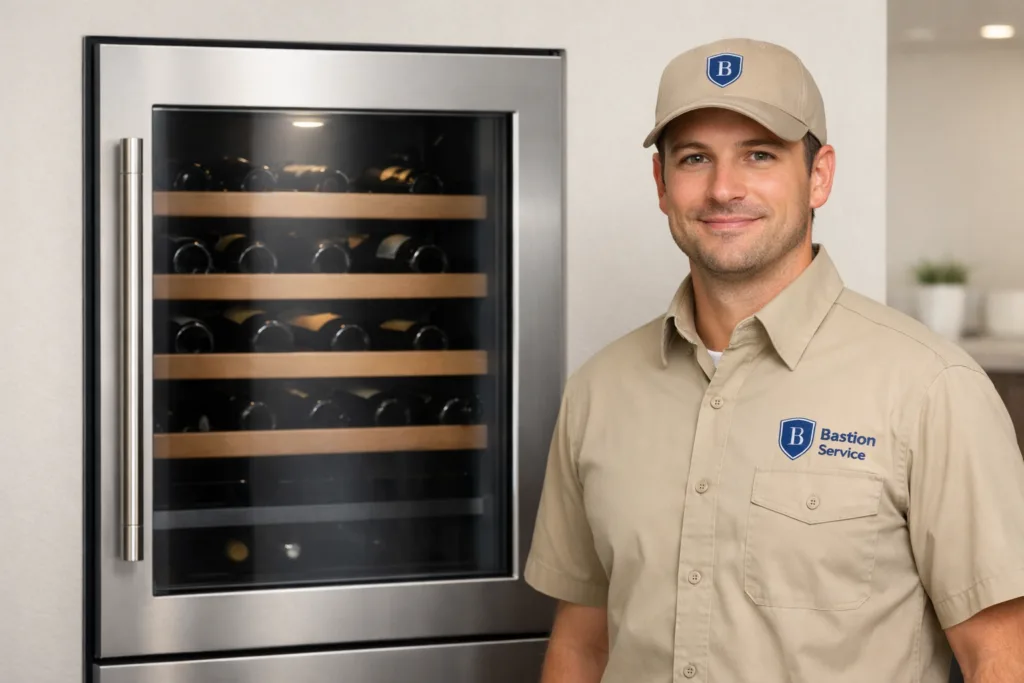
Small changes in performance usually show up before a Marvel wine cooler fully stops doing its job. You might notice bottles no longer feel as cool as expected, the cabinet runs longer than usual, moisture starts collecting on shelves, or a previously quiet unit begins making a new rattling or buzzing sound. Those early signs often point to a repairable issue, but the right fix depends on which system is actually failing.
Common Marvel wine cooler problems in Beverly Hills homes
Most residential wine cooler calls fall into a few symptom patterns: unstable temperature, lack of cooling, interior condensation, unusual noise, frost buildup, or control problems. While those symptoms may seem straightforward, they can come from very different causes. A cooling complaint may involve airflow or a sensor rather than the sealed system, while moisture near the door may be tied to a gasket problem, room conditions, or temperature instability inside the cabinet.
That is why symptom-based inspection matters. A unit that is too warm, too cold, or fluctuating throughout the day should be evaluated differently than one that leaks water or has a display that does not respond correctly. The repair path is not the same, even when the owner first describes the problem simply as “not working right.”
Temperature swings and inconsistent cooling
If the cooler is running but not holding a stable temperature, several common issues are worth checking. Restricted airflow, a failing evaporator fan, dirty condenser areas, a sensor problem, or a control issue can all affect cabinet temperature. In some cases, the display may show one reading while the actual storage temperature is noticeably different.
- Running constantly: often suggests the unit is struggling to reach or maintain the set temperature.
- Short cycling: may point to control, sensor, or electrical issues.
- Too warm inside: can be related to airflow, fan performance, condenser condition, or cooling loss.
- Too cold or freezing: often indicates a thermostat, sensor, or control fault.
If the problem continues, the cooler may spend more time running than it should, adding wear to key components and creating less stable storage conditions for the contents inside.
Fan noise, buzzing, clicking, or vibration
Wine coolers are not silent, but the sound profile should be fairly predictable. A new clicking sound, a fan that surges, a buzzing vibration against cabinetry, or a rattle that starts during each cycle can all be signs of a developing problem. Sometimes the cause is relatively minor, such as a loose panel or installation vibration. In other cases, noise points to fan motor wear, airflow obstruction, or compressor strain.
Noise complaints are often worth addressing early because a sound change can be one of the first warnings that a moving part is no longer operating normally.
Condensation, leaks, and moisture buildup
Water inside the cabinet or around the base of the unit should not be ignored. In a Marvel wine cooler, moisture problems can come from a blocked drain path, poor door sealing, excess humidity entering the cabinet, or a leveling issue that prevents water from moving where it should. Even when the amount of water seems small, repeated condensation can affect shelves, labels, nearby flooring, and surrounding cabinetry.
Door gasket wear is another common source of moisture trouble. If the door is not sealing evenly, humid air can enter the cabinet and lead to recurring condensation or frost. A service visit should determine whether the issue is with the seal itself, the alignment of the door, or a deeper temperature-control problem causing the cabinet to behave abnormally.
Symptoms that help narrow down the cause
Homeowners often describe the problem based on what they can see or hear, and those details are useful. A few examples:
- The display is on, but the cabinet is warm: often suggests the issue is not just power-related and may involve cooling performance, fans, or controls.
- The unit cools sometimes, then drifts warm: may indicate intermittent sensor, fan, or control behavior.
- There is frost in one area: can point to airflow restriction, sealing problems, or abnormal cooling patterns.
- The door feels closed, but moisture keeps appearing: may indicate gasket wear or alignment issues.
- The cooler starts, then stops before reaching temperature: can reflect a cycling or control problem that needs further testing.
The more consistent the symptom pattern, the easier it is to separate a minor repair from a more significant failure.
Why diagnosis matters before replacing parts
Wine cooler problems can overlap in ways that make guessing expensive. A unit that seems to have a bad thermostat may actually have weak airflow. A leak may look like a drain issue but turn out to be caused by poor sealing and excess humidity. Replacing parts based only on the most obvious symptom can waste time and still leave the original problem unresolved.
In Beverly Hills homes, that matters for both performance and appearance. Built-in and under-counter units are often installed where excess heat, vibration, or moisture can affect nearby finished surfaces. A proper diagnosis helps determine whether the issue is limited to a specific component or whether the appliance is showing broader signs of decline.
When to schedule service
It makes sense to schedule Marvel wine cooler service when the unit no longer maintains temperature, starts making a new noise, collects water inside, develops recurring condensation, or behaves unpredictably at the controls. A complete loss of cooling, repeated tripping, or a compressor that seems to start and stop without stabilizing the cabinet should be checked promptly.
You do not need to wait for a total failure. Many repairs are easier to manage when the symptoms are still limited to one system rather than after prolonged operation has stressed other components.
Signs the problem may worsen with continued use
- The cabinet stays warm even though the cooler runs for long periods
- Moisture keeps returning on shelves, walls, or around the door
- Noise is becoming louder, more frequent, or more metallic
- Water is reaching the floor or nearby cabinetry
- The display or buttons respond inconsistently
- The door does not close or seal as cleanly as before
Repair or replace?
That decision usually depends on the exact failure, the age of the unit, overall condition, and whether the problem is isolated or part of repeated wear. Repair often makes sense when the issue involves fans, sensors, controls, drainage, or door sealing and the rest of the cabinet remains in good condition. Replacement becomes a more serious consideration when the cooler has major cooling-system trouble, multiple ongoing issues, or repair costs that no longer make sense for the unit.
For households in Beverly Hills, the goal is usually to restore stable operation without putting unnecessary money into a unit that is already declining in several areas. The most useful service visit is one that explains what failed, what the repair would address, and whether the appliance is still a sound candidate for continued use.
What a service visit should clarify
A worthwhile inspection should confirm actual cabinet temperature, evaluate airflow, check fan operation, inspect the door seal, look for drainage issues, review control behavior, and determine whether the cooling pattern points to a straightforward component repair or a larger refrigeration problem. That gives you a realistic basis for the next step instead of relying on trial and error.
If your Marvel wine cooler is warming, leaking, frosting, or getting louder during operation, timely service can help prevent added stress on the unit and reduce the chance of avoidable damage around it.