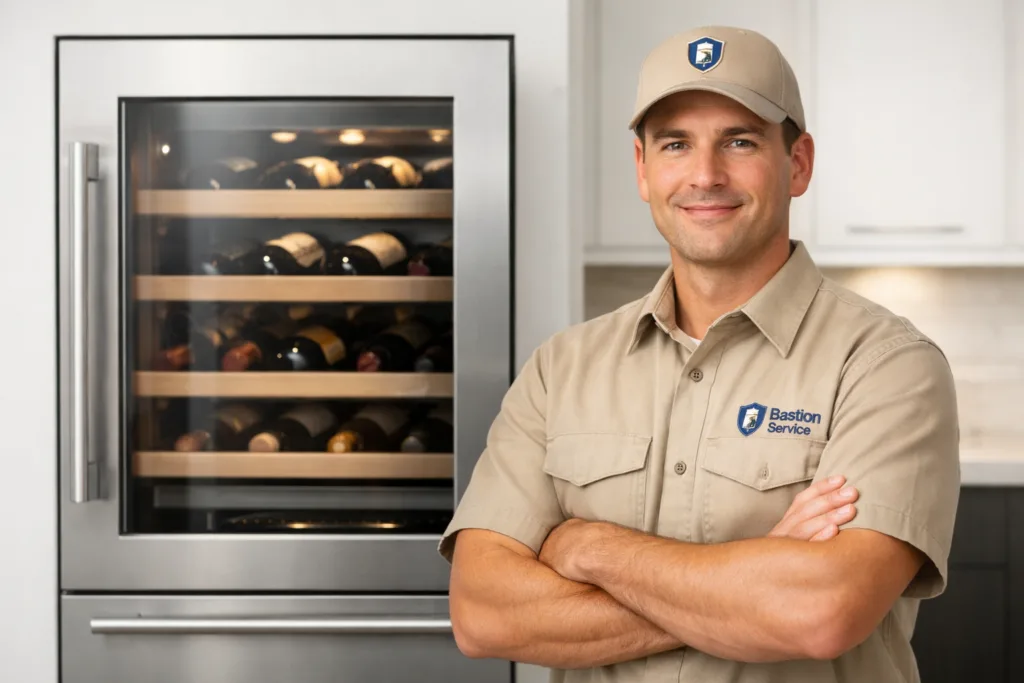
Temperature problems in a wine cooler are rarely random. A KitchenAid unit that starts running too warm, cycling too often, collecting moisture, or making new noise is usually showing a pattern that can be traced to airflow, sensing, door sealing, drainage, or a cooling-system fault. For homeowners in Beverly Hills, early attention matters because wine storage conditions can drift long before the unit stops working completely.
Common KitchenAid wine cooler symptoms and what they may mean
Many service calls begin with a complaint that the displayed setting does not match the actual cabinet temperature. If bottles feel warmer than expected, the issue may be tied to restricted air movement, a fan that is slowing down, a sensor reading inaccurately, or a control problem that is affecting normal cycling. In some cases, the cooler may still run, but it no longer maintains stable conditions from top to bottom.
Long run times are another common warning sign. When a KitchenAid wine cooler seems to stay on for extended periods, it may be struggling with condenser heat removal, warm air entering through the door area, or a cooling problem that is preventing efficient temperature pull-down. Even if the unit is still partially cooling, excessive run time usually means it is working harder than it should.
Noise changes often help narrow the diagnosis
A wine cooler does not need to be silent, but it should sound consistent. Buzzing, rattling, clicking, or a fan-like scraping noise can point toward different causes. A loose panel or vibration issue may be minor, while a failing evaporator fan, condenser fan, or compressor start component may need prompt attention. If the sound is new, louder than before, or appears during every cycle, it is worth having checked.
Condensation, water, and frost are not all the same problem
Moisture around or inside the cabinet can come from more than one source. Water near the base may indicate a drainage issue, while heavy condensation on the door or interior walls may suggest warm room air is entering through a weak seal or repeated door opening. Frost buildup can mean the cooler is not regulating airflow or temperature correctly. These symptoms may look similar at first, but they often lead to different repairs.
Symptom-based repair guidance for homeowners
The wine cooler is not cooling enough
If the unit powers on but struggles to reach the selected setting, the most common possibilities include faulty sensing, poor internal airflow, fan failure, blocked ventilation, or a sealed-system issue. The key is separating a control-side problem from a more serious cooling failure. A cooler that is only a few degrees off may still have an underlying issue that worsens over time.
The cabinet is too cold or bottles are freezing
Overcooling often points to a sensor or control problem rather than a simple adjustment mistake. If the wine cooler continues to run past the target temperature, it may not be receiving or responding to accurate temperature feedback. This should be addressed quickly because freezing can damage labels, affect wine quality, and signal unstable operation.
The display is blank, inaccurate, or erratic
When the panel stops responding, flashes unexpectedly, or shows a temperature that does not match the interior, the problem may involve the user interface, control board, wiring, or power delivery inside the unit. A display issue does not always mean the cooling system itself has failed, but it does make normal operation harder to trust without testing.
The door does not seal the way it should
A worn or misshapen gasket can create several symptoms at once: longer run times, condensation, frost, inconsistent temperatures, and extra strain on the compressor. Sometimes the door looks closed but is not sealing evenly along the frame. In built-in residential kitchens, even slight alignment issues can affect performance.
Why wine coolers often decline gradually
Unlike some appliances that fail all at once, wine coolers commonly show a slow drop in performance first. A fan may begin weakening before it stops. A gasket may lose flexibility over time. A sensor may drift enough to create noticeable temperature swings without causing a total shutdown. Because the unit still appears to be working, these early symptoms are easy to put off.
The downside of waiting is that the cooler may continue running under strain. Extended operation with poor airflow, recurring condensation, or unstable temperature control can increase wear on other components and make the final repair more involved than it needed to be.
When service is worth scheduling
It usually makes sense to schedule service when any of the following keeps happening:
- The cabinet temperature does not match the selected setting
- The unit runs constantly or cycles much more than before
- Water, condensation, or frost keeps returning
- The fan or compressor area becomes noticeably louder
- The controls, display, or interior light behave inconsistently
These are signs that the issue is active, not cosmetic. If the appliance is still cooling somewhat, that does not mean it is operating normally. Ongoing use without diagnosis can turn a manageable repair into a larger problem.
Repair or replacement depends on the exact failure
For many Beverly Hills households, the decision comes down to the age of the wine cooler, the condition of the cabinet and door, and the type of fault involved. Problems related to fans, sensors, controls, gaskets, switches, or drainage are often more straightforward repair candidates. If testing points to a major sealed-system failure in an older unit, replacement may be the more sensible path.
That decision is best made after the actual cause is identified. A cooler that seems completely unreliable may have a contained repair need, while a unit with mild symptoms can sometimes be showing early signs of a more expensive problem. Diagnosis is what separates those two situations.
What a service visit should accomplish
A focused visit for KitchenAid wine cooler repair in Beverly Hills should do more than confirm that the unit is “not cooling right.” It should verify the temperature complaint, evaluate fan and airflow behavior, inspect the door seal and cabinet condition, check drainage if moisture is present, and determine whether the issue is primarily electrical, mechanical, or related to the cooling system.
That process gives homeowners a realistic picture of what repair involves and whether it is practical for the appliance they have. If your KitchenAid wine cooler is warming, overcooling, leaking, frosting, or making unusual noise, the next step is to match the repair plan to the exact symptom pattern the unit is showing in your home.