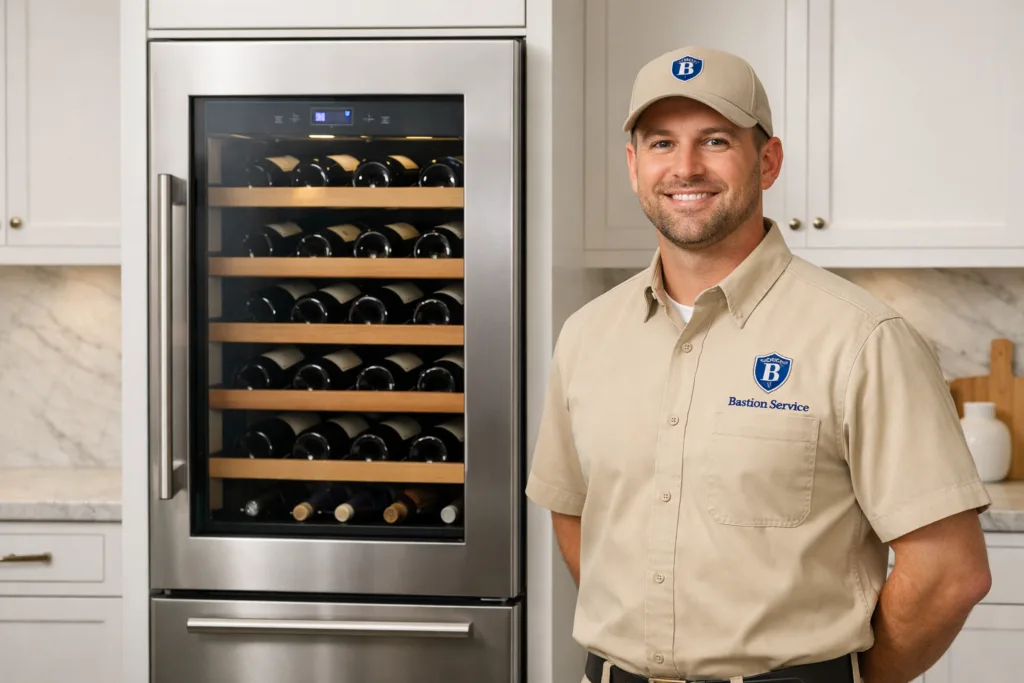
Temperature instability is usually the first sign that a wine cooler needs attention. A cabinet that reads one setting but stores noticeably warmer or colder can point to several different issues, including a dirty condenser, weak airflow, failing fan motor, faulty temperature sensor, control-board error, or a sealed-system problem. Because wine storage depends on consistency more than speed, even small swings can become more damaging over time than a complete shutdown that gets noticed right away.
Common wine cooler problems and what they may indicate
Cabinet not cooling enough
If bottles are no longer staying at the intended serving or storage temperature, the problem may be as simple as restricted ventilation around the unit or as serious as compressor-related failure. Built-in models are especially sensitive to airflow conditions, and a blocked grille or heat buildup in surrounding cabinetry can make the appliance run longer without recovering temperature properly.
Unit runs constantly or cycles too often
A wine cooler that never seems to rest is often struggling to maintain the set point. Dirty coils, a worn door gasket, sensor drift, fan failure, or refrigerant-system trouble can all create long run times. Short cycling can be just as concerning, because repeated start-and-stop operation puts stress on electrical components and may signal a control issue rather than a simple cooling loss.
Condensation or moisture inside
Moisture on shelving, glass, or around the door usually means warm air is entering the cabinet or humidity is not being managed correctly. That can come from a poor seal, frequent door opening, drainage blockage, or temperature regulation problems. In a household setting, this often shows up first as fogging, damp labels, or water collecting at the base of the cooler.
Unusual noise
A light hum is normal, but clicking, rattling, buzzing, grinding, or repeated restart sounds are not. Some noises come from loose panels or shelving vibration, while others suggest a fan blade obstruction, fan motor wear, compressor strain, or mounting issues. New noise paired with weak cooling should be treated as a stronger warning sign than noise alone.
Symptoms that deserve prompt service
Interior light works, but cooling does not
When the display, touch controls, or interior light still work, it is easy to assume the unit has power and the problem is minor. In practice, a wine cooler can appear normal electrically while failing to cool because of a bad start device, failed fan, compressor problem, thermostat issue, or control failure. A proper diagnosis separates a smaller electrical repair from a larger refrigeration-system issue.
Repeated frost or airflow restriction
Some wine coolers develop cold spots, light frost, or uneven temperatures because air is not circulating properly. If the cabinet takes too long to recover after the door is opened, or one section cools while another stays warm, airflow and evaporator performance should be checked. Homeowners dealing with similar freezing or temperature-recovery issues in a separate freezer compartment often run into related household refrigeration concerns here: Freezer Repair in Beverly Hills
Door seal problems
A gasket that does not close tightly can cause temperature drift, excess run time, and recurring condensation. This issue is easy to underestimate because the appliance may still cool, just less efficiently and less consistently. Over weeks or months, that extra strain can accelerate wear on other parts.
What a wine cooler diagnosis typically checks
An effective service visit should focus on actual cabinet temperature, sensor accuracy, control response, fan operation, compressor behavior, door sealing, drainage, and visible signs of moisture or airflow blockage. On dual-zone units, both compartments should be evaluated separately, since one side may fail while the other appears normal.
In many homes, a wine cooler problem appears alongside broader kitchen cooling issues. If fresh-food temperatures are also inconsistent, produce spoils faster than usual, or the main appliance has similar cycling problems, the next step may involve looking at the primary refrigeration system as well: Refrigerator Repair in Beverly Hills
Repair versus replacement
Not every malfunction means the cooler should be replaced. Many service calls come down to fan motors, thermostats, sensors, controls, door gaskets, start components, or drainage-related faults that are often reasonable to repair. Replacement becomes more likely when the unit has severe sealed-system failure, repeated major breakdowns, corrosion, or age-related inefficiency combined with costly parts.
The best decision usually depends on the age of the appliance, the exact fault, and whether the repair is likely to restore steady temperature control. For a storage appliance, reliability matters more than whether the lights come on or the display still responds.
Special considerations for homes in Beverly Hills
Residential wine coolers are often installed under counters, inside bars, or within custom cabinetry, which makes ventilation especially important. When warm air cannot move away from the condenser area, the unit may run longer, overheat, or lose temperature stability. That is one reason built-in wine cooler problems can seem intermittent at first and then become more obvious during heavier daily use.
Households that rely on multiple cold-storage appliances may also notice related symptoms elsewhere, such as weak ice production, slow fill issues, or inconsistent freezing tied to broader cooling or water-supply problems. When those symptoms appear at the same time, it can help to compare them with the ice system separately: Ice Maker Repair in Beverly Hills
When it makes sense to schedule service
It is usually worth scheduling wine cooler repair when the unit cannot hold the set temperature, starts making new noises, leaks, shows repeated condensation, freezes part of the cabinet, or runs almost nonstop. Service is also worth considering when bottles are being exposed to recurring temperature swings even though the cooler still appears to be operating.
For homeowners in Beverly Hills, the goal is not just getting the appliance running again, but restoring stable, predictable cooling that protects what is stored inside. A careful diagnosis helps determine whether the issue is straightforward, whether continued operation could worsen the damage, and whether repair remains the practical choice.