




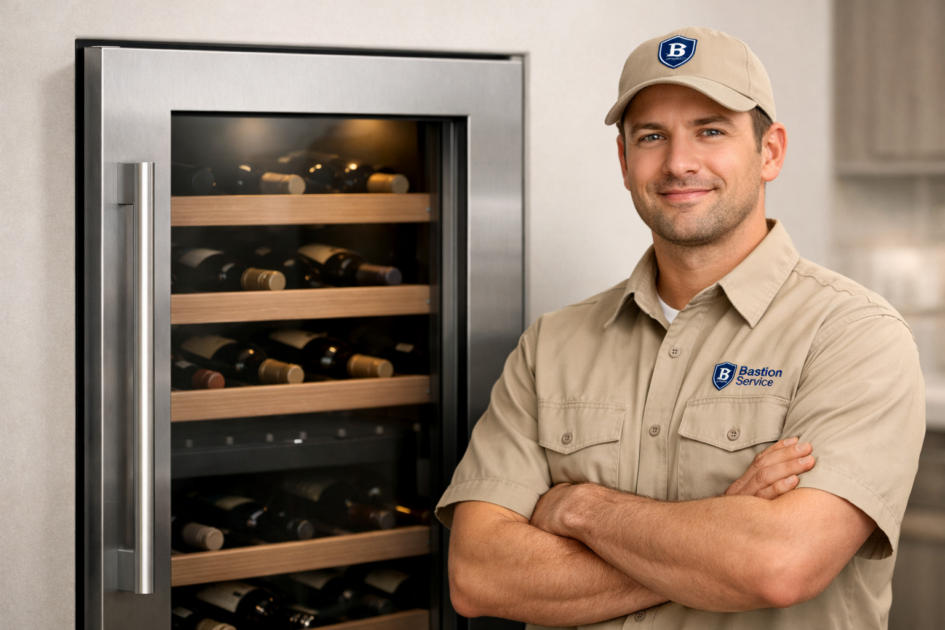
Wine storage problems rarely stay minor for long. If your Fisher & Paykel wine cooler is drifting off temperature, building condensation, or making new noises, the most useful next step is to match the symptom to the likely system involved rather than guessing at parts. In Beverly Hills homes, that often means checking airflow, controls, door sealing, fan operation, and cooling performance together so the repair decision is based on what the unit is actually doing.
Related Fisher & Paykel and wine cooler service paths in Beverly Hills include Fisher & Paykel Appliance Repair in Beverly Hills, Wine Cooler Repair in Beverly Hills, and Fisher & Paykel Refrigerator Repair in Beverly Hills.
Symptoms homeowners often notice first
Most wine cooler issues begin with a change in day-to-day performance. The cabinet may feel slightly warm, bottles may not seem as cool as usual, or the temperature may rise and fall even though the settings have not changed. Some units start running longer than normal, while others begin showing moisture on the glass, water near the base, or unusual fan or compressor noise.
These signs may look similar from the outside, but they do not always point to the same failure. A door seal problem, a sensor issue, restricted airflow, or a more serious refrigeration fault can all show up as poor cooling. That is why symptom-based testing matters before deciding whether a Fisher & Paykel wine cooler repair in Beverly Hills is straightforward or more involved.
The cooler is running, but the temperature is too warm
When the unit has power and appears to be operating but the interior is warmer than expected, common possibilities include weak fan circulation, dirty condenser surfaces, sensor or thermostat errors, control board issues, or sealed-system trouble. In some cases, the cooler is technically running the entire time but cannot remove heat efficiently enough to recover after the door is opened.
This symptom is worth addressing early because prolonged warm operation can put extra strain on the compressor. If the cabinet is no longer reaching the set range, repeated adjustments on the control panel usually do not solve the root cause.
The temperature swings up and down
Temperature instability usually points to a control, sensing, airflow, or door-sealing problem. A cooler that overcools and then warms back up may be cycling incorrectly, while a unit that struggles after each door opening may be leaking air or losing circulation inside the cabinet. Uneven cooling from one section to another can also suggest fan performance issues or blocked internal airflow.
For wine storage, consistency matters as much as the displayed number. If the cabinet cannot maintain a stable environment, the problem deserves attention even if it still cools part of the time.
There is condensation inside or around the door
Condensation usually means warm air is entering the cabinet or cold surfaces are not being managed properly. A worn gasket, poor door alignment, frequent opening, or cooling system underperformance can all contribute. Moisture on shelves or the inner glass may start as a light film and become more noticeable as the unit struggles to recover temperature.
In built-in installations, limited ventilation can make condensation worse by reducing the cooler’s ability to reject heat. If moisture keeps returning after the door has been fully closed and the settings are unchanged, the cause should be checked rather than ignored.
There is water under the appliance
Water near the base can come from condensation collecting where it should not, a drainage problem, or excess moisture caused by warm air entering the cabinet. While a small amount of water may look harmless, it is often a sign that the unit is no longer managing humidity and temperature the way it should.
The wine cooler has become louder
New buzzing, rattling, clicking, or a fan sound that seems harsher than before can indicate a loose component, fan blade obstruction, failing motor, or a compressor working harder because another part of the system is underperforming. Noise changes do not always mean major failure, but they often appear before cooling performance drops more noticeably.
What these symptom patterns can mean
A wine cooler is made up of several systems that affect one another. When one part starts to fail, the symptom may show up somewhere else. For example, a warm cabinet might be caused by a bad sensor, but it can look very similar to poor airflow or refrigerant trouble. Condensation may seem like a door issue, yet the real problem may be a cooler that is not maintaining proper cabinet temperature.
That is why a service call should sort out whether the issue is primarily related to:
- Airflow and condenser performance
- Evaporator or circulation fan operation
- Door gasket condition and alignment
- Temperature sensors or thermostatic controls
- Main electronic controls or display faults
- Drainage and moisture management
- Compressor or sealed-system performance
Separating these categories matters because the repair path, cost, and long-term outlook can be very different depending on which one is failing.
Built-in installation issues that can affect performance
Many residential wine coolers are installed into cabinetry, which makes ventilation especially important. If air cannot move properly around the unit, heat removal becomes less effective and the cooler may run longer, cool unevenly, or build more moisture. Homeowners in Beverly Hills sometimes notice this first during periods of heavy use, such as gatherings when the door is opened repeatedly and the cabinet has to recover more often.
Restricted clearance, dust buildup on heat-releasing surfaces, or a cabinet opening that traps warm air can all reduce performance without meaning the entire appliance has failed. A proper diagnosis should distinguish between a true component failure and an installation or maintenance condition that is causing the cooler to struggle.
When service should not be delayed
It is time to schedule service when the wine cooler cannot hold a stable temperature, runs almost constantly, shows repeated condensation, leaks water, or starts making unusual mechanical sounds. The same is true if the display flashes, settings do not respond normally, or the unit turns on and off in short cycles.
Waiting is especially risky when the cabinet is getting progressively warmer or the compressor seems to be working nonstop. Continued operation under those conditions can increase wear and turn a smaller problem into a more expensive one.
One of the most common homeowner reactions is to lower the set temperature again and again in hopes that cooling will recover. That often masks the problem for a short time while placing more load on the system. If performance has changed without any clear reason, testing is more helpful than trial-and-error setting changes.
Repair versus replacement
Not every malfunction means the cooler should be replaced. Problems involving fans, sensors, controls, gaskets, alignment, and some drainage issues are often repairable when the cabinet itself is in good condition. These repairs can make sense if the unit is otherwise stable and the cooling system remains sound.
Replacement becomes more likely when the sealed system has a major failure, the compressor has ongoing trouble, parts availability is limited, or the projected repair cost is too high relative to the condition and value of the appliance. The decision usually comes down to more than whether one part can be changed. What matters is whether the repair is likely to restore reliable temperature control for normal household use.
What a service visit should help clarify
A worthwhile appointment should answer a few practical questions: what is failing, how the failure was confirmed, whether continued use could cause more damage, and whether the recommended repair has a sensible chance of restoring stable operation. For a wine cooler, that means looking beyond the obvious symptom and identifying whether the real issue is in the controls, airflow path, sealing, moisture handling, or refrigeration system.
Early attention often gives homeowners more options. A slight temperature drift, minor condensation, or a new fan sound may still point to a manageable repair. Once the cabinet stops cooling altogether, the path is often narrower and the risk to the bottles inside is much higher.