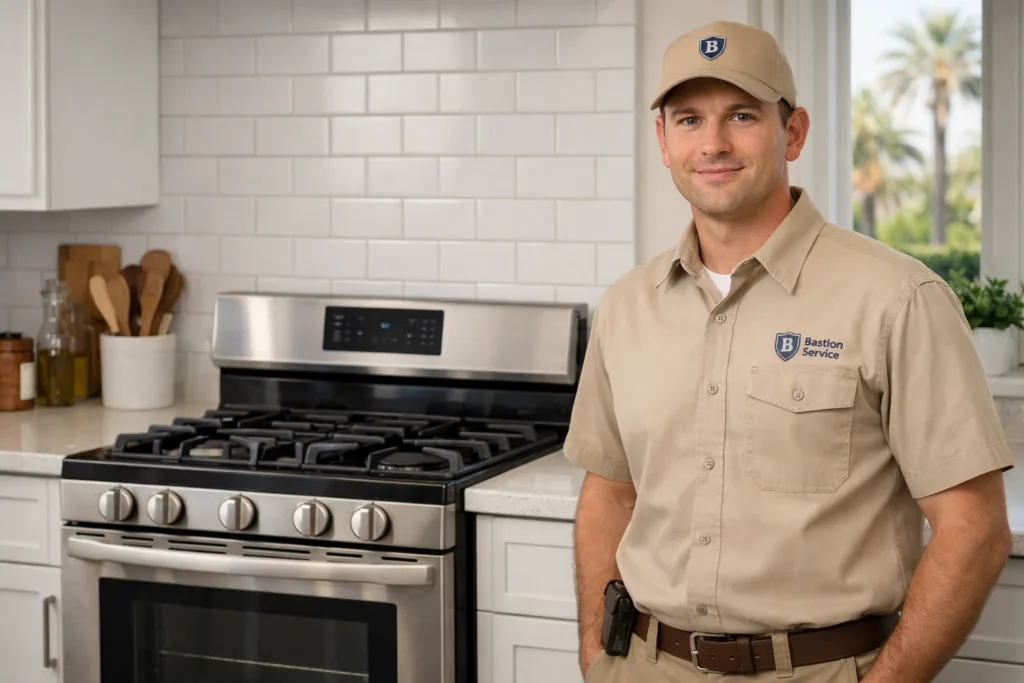
Small stove problems have a way of disrupting an entire kitchen routine. A burner that will not ignite, an element that runs too hot, or controls that stop responding can all point to different underlying faults, so the most helpful next step is identifying whether the issue is isolated to one burner, tied to the controls, or affecting the appliance more broadly.
Common stove problems homeowners notice first
Many service calls start with one clear symptom: a burner clicks but does not light, an electric element stays cold, the flame looks uneven, or the stove trips a breaker during use. While those issues may seem similar from the user side, they can come from very different causes such as clogged burner ports, failed igniters, worn switches, damaged wiring, or a control problem that is interrupting normal operation.
In gas models, repeated clicking often suggests trouble around the ignition system, but it can also be caused by moisture, food buildup, or a burner cap that is not seated correctly. In electric models, a burner that barely heats or overheats may indicate a failing element or a switch that is no longer regulating power properly. If the problem is limited to the surface burners alone, Cooktop Repair in Palms may be the more appropriate service path for that layout.
Signs the issue may be getting worse
Some symptoms develop gradually before a full failure happens. Burners that only work on certain settings, knobs that feel loose, sparking that continues after ignition, or heat that no longer matches the selected level can all be early warning signs. Intermittent behavior is especially important to check because it often points to wear in switches, wiring, or control components that may become less reliable over time.
What different symptom patterns can indicate
If one burner will not light at all, the fault may be isolated to that burner’s ignition parts, burner head, or switch. If several burners are acting up, the diagnosis may shift toward shared electrical components, power supply issues, or a larger control failure. A stove that seems completely dead can sometimes trace back to terminal block damage, a tripped circuit, or an internal electrical fault rather than the burners themselves.
Surface heat complaints do not always stay limited to the stovetop. When households in Palms notice burner trouble along with poor baking, uneven roasting, or preheat problems, Oven Repair in Palms may be the better fit if the oven compartment is part of the same concern.
Configuration matters too. If the symptom involves both the burners and the oven in one combined appliance, such as weak burner heat alongside inconsistent oven temperature, Range Repair in Palms may be the better service to compare because the issue may involve the full cooking unit rather than the stove surface alone.
When to stop using the stove
Some symptoms move beyond inconvenience and should not be ignored. Stop using the appliance if a burner will not shut off, a gas burner releases a persistent odor of gas, an electric unit repeatedly trips the breaker, or sparking continues abnormally during operation. Those signs can indicate a condition that is no longer safe for everyday cooking.
Less urgent problems still deserve attention when they start affecting daily meal preparation. A single weak burner may seem manageable at first, but if pans heat unevenly, cooking times become unpredictable, or family routines keep shifting around one failing component, a repair visit becomes the more practical option.
How stove repair is usually approached
A useful diagnosis usually starts with the exact symptom pattern rather than assuming one part is to blame. That may include checking ignition response, burner performance, switch operation, wiring condition, and how the appliance behaves under load. For electric stoves, the technician may focus on elements, switches, connections, and power-related faults. For gas stoves, the attention often turns to burner assembly condition, igniters, flame quality, and ignition sequence.
In some kitchens, what appears to be a stove problem is actually tied to a separate built-in cooking appliance. If the surface unit seems fine but the trouble is centered on a built-in oven installed apart from it, Wall Oven Repair in Palms may be the more relevant option for that setup.
Repair or replace?
That decision usually depends on the age of the appliance, overall condition, part availability, and whether the current problem is isolated or part of a longer pattern. A targeted repair often makes sense when the issue is limited to a burner, igniter, switch, or control component and the rest of the stove is still performing well. Replacement becomes more reasonable when multiple systems are failing, repair costs begin stacking up, or the unit has repeated ignition or electrical issues that keep returning.
For homeowners in Palms, the value of service often comes down to getting a practical answer based on the way the stove is actually failing in the kitchen. Once the source of the problem is identified, it becomes much easier to decide whether the appliance needs a straightforward repair, should stay out of use until fixed, or is approaching the point where replacement is the smarter long-term move.