
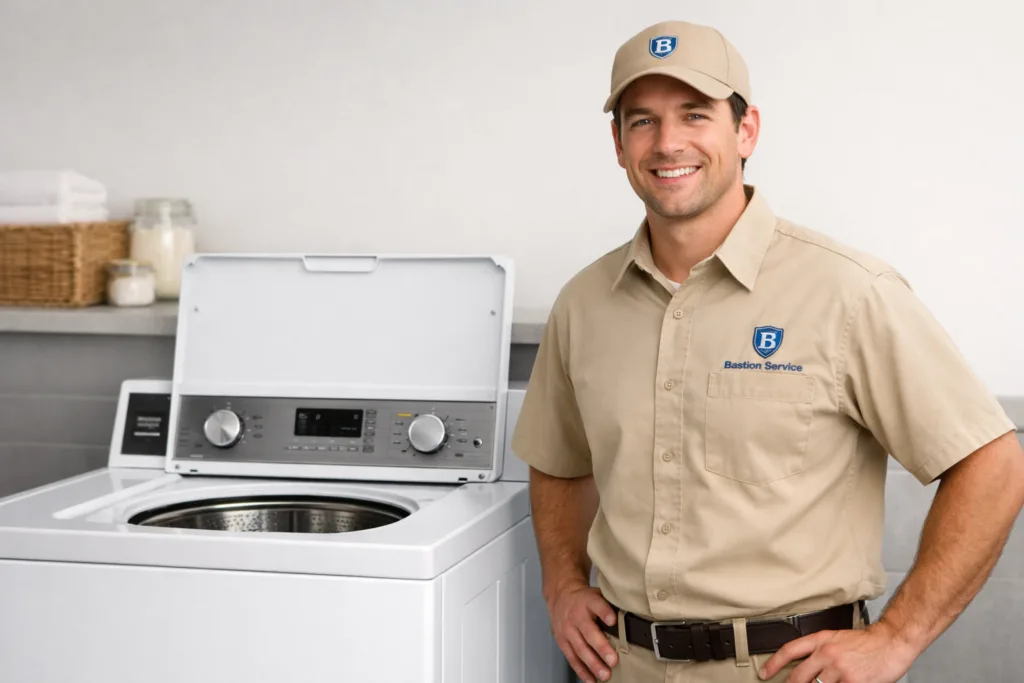




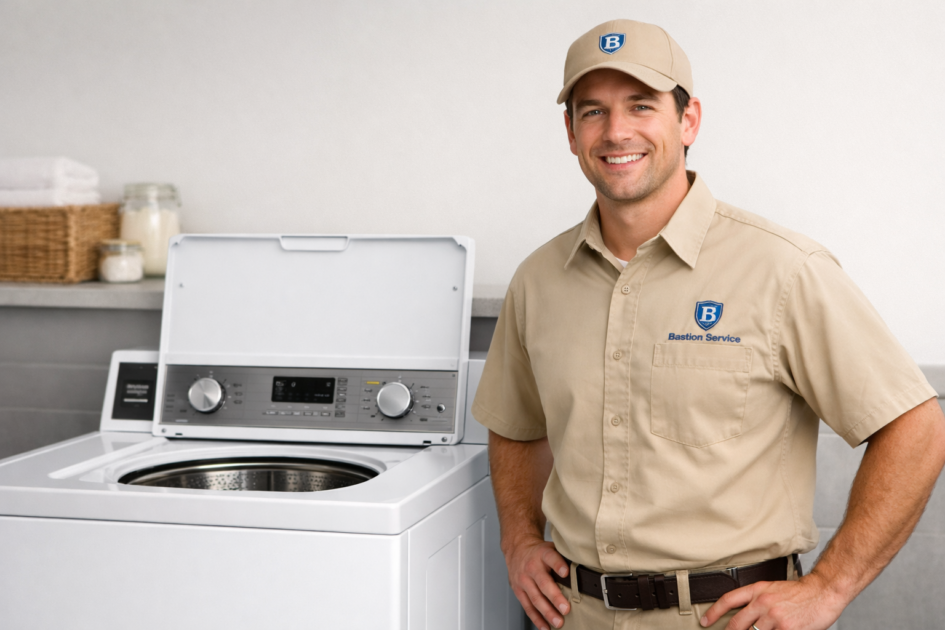
A laundry interruption is frustrating enough on its own, but the bigger issue is often uncertainty. A Speed Queen washer that leaves clothes wet or a dryer that tumbles without finishing the load can point to several different faults, and the smartest next step is to match the symptom pattern to the system most likely involved before deciding what to repair.
How to read washer symptoms before the problem gets worse
Speed Queen washers are built for regular household use, but they still rely on a chain of electrical, mechanical, and water-handling parts working together. When one part begins to fail, the machine often gives clues early.
Washer will not start
If nothing happens when you press start, the issue may be as simple as a power supply problem, but it can also involve the lid switch, door lock, timer, control board, or start circuit. If the display responds but the cycle does not begin, that often points in a different direction than a washer that appears completely dead.
Washer fills but will not agitate or spin
This symptom usually means the unit is getting power and water but cannot complete the drive portion of the cycle. Possible causes include belt wear, motor trouble, a failed coupling or drive component, control problems, or a lid-lock related interruption. If the tub is full of water at the same time, a drain issue may be preventing spin from starting.
Washer will not drain fully
Standing water at the end of the cycle commonly comes from a clogged drain path, a weak or jammed pump, a kinked hose, or an item stuck where it should not be. Slow draining may look minor at first, but it often leads to spin complaints because many washers will not move into full-speed extraction until draining is complete.
Washer is leaking
Leaks should be taken seriously because the source is not always obvious. Water on the floor can come from supply hoses, internal hoses, a failing pump, over-sudsing, a door seal issue on front-load models, or a drainage backup. The location of the water matters: front, rear, under the center, or only during a certain part of the cycle can each suggest a different source.
Washer shakes, bangs, or walks
Not every vibration problem means a broken part. An uneven load, bulky item, or floor issue can create a one-time event. But repeated heavy movement may point to worn suspension components, tub support wear, leveling problems, or a spin system issue. If the machine is striking the cabinet or making hard knocking sounds, continued use can increase damage.
Washer noises that should not be ignored
Sound changes are often among the best early warning signs. A squeal can suggest belt or bearing wear. Grinding may indicate a foreign object, pump problem, or drive-system trouble. A scraping sound during spin can mean internal components are no longer moving in proper alignment.
If the noise is new, repeatable, and getting worse, it is usually worth stopping use until the cause is identified. Running repeated loads through a washer with a mechanical fault can turn a single-part repair into a larger one.
Common Speed Queen dryer problems and what they usually mean
Dryer issues are often easier to notice than washer issues because the result is immediate: clothes stay damp, cycles run too long, or the unit makes noise that was not there before. Even so, the same symptom can still have multiple causes.
Dryer runs but does not heat
This is one of the most common complaints. Depending on the model, the problem may involve the heating element, igniter, thermal fuse, high-limit thermostat, gas-heat components, wiring, airflow restrictions, or the control system. A dryer that tumbles normally but produces no heat should be checked promptly, especially if loads are repeatedly being rerun.
Dryer takes too long to dry
Long dry times are not always caused by a failed heater. Restricted airflow is a major possibility, especially when the dryer gets warm but not hot enough or finishes with clothes still damp in spots. Moisture sensor issues, cycling thermostat problems, partial heating faults, and venting restrictions can all produce the same complaint.
Dryer will not start
A no-start dryer may have a tripped thermal fuse, bad door switch, failed start switch, motor problem, electrical issue, or control fault. If the unit has power but only hums, the motor or drum movement components may need closer inspection. If it is completely unresponsive, the diagnosis often starts with the power path and safety-related components.
Dryer starts and then shuts off
When a dryer runs briefly and quits, overheating is often part of the picture. Airflow restrictions, failing motors, and safety cutoffs are common suspects. This symptom should not be brushed off, because repeated shutdowns usually mean the machine is protecting itself from a deeper problem.
Dryer noises that often signal worn moving parts
A dryer has several components that support the drum while it turns. Over time, rollers, glides, belts, and idler parts can wear out. The sound can help narrow it down:
- Squealing: often related to belt or idler wear
- Thumping: may come from flat-spotted rollers or a drum issue
- Scraping: can suggest drum support or glide problems
- Rumbling: often points to worn support components
These sounds usually do not fix themselves. If the dryer keeps running with worn support parts, secondary damage to the drum or motor system can follow.
When to stop using the appliance right away
Some symptoms are more than an inconvenience and should be treated as stop-use conditions.
- Active water leaking from the washer
- Burning or overheating smells from either appliance
- Breaker tripping during operation
- Sharp grinding, scraping, or metal-on-metal sounds
- Dryer shutting off repeatedly mid-cycle
- Visible sparking, smoke, or scorched marks
In those situations, continuing to run more loads can increase damage and make the eventual repair more expensive.
Repair or replace: what actually matters
Homeowners often ask whether a Speed Queen washer or dryer is still worth fixing. The answer depends less on one dramatic symptom and more on the overall condition of the machine.
Repair is often the better choice when the fault is limited to one system, the appliance has otherwise been performing well, and the cabinet and core structure remain in good shape. Replacement becomes easier to justify when there are multiple failures at once, serious rust, major recurring issues, or signs that the machine has broader wear beyond the immediate complaint.
Age matters, but it is not the only factor. A newer machine with neglected leak damage may be a worse candidate than an older unit with a single straightforward mechanical failure. The real comparison is repair scope versus remaining useful life.
What homeowners in Santa Monica should pay attention to
In Santa Monica households, laundry equipment often handles steady weekly use, which means small performance changes tend to show up quickly in daily routines. Clothes taking two cycles to dry, towels finishing heavier than usual, or a washer becoming louder over a short period are all signs worth noticing early.
Prompt attention matters because many appliance failures begin as performance loss before they become total shutdowns. Catching a drainage issue before it strains the spin system, or a dryer airflow problem before heat components fail, can make the repair path much simpler.
What a useful service visit should provide
A worthwhile appointment should do more than confirm that the machine is malfunctioning. It should identify which system failed, explain how that failure matches the symptoms you are seeing, and help you understand whether the repair makes sense for the condition of the appliance.
That is especially important with washers and dryers because symptom overlap is common. A washer that will not spin may really have a draining problem. A dryer with poor drying results may have an airflow issue rather than a failed heater. Good troubleshooting separates those possibilities so the next step is based on evidence rather than guesswork.
Choosing the next step for a Speed Queen washer or dryer
If your washer is leaking, leaving clothes soaked, refusing to start, or making new mechanical noise, it is best to pause and have the fault checked before running more loads. If your dryer is heating poorly, shutting off, running loudly, or extending dry times, early inspection can help prevent more wear to the drum, motor, or heating system.
For many homeowners, the best outcome is not just getting the appliance running again, but understanding why it failed and whether the fix is likely to hold up. That makes the repair decision easier, protects the household routine, and helps avoid paying for the wrong part or the wrong assumption.


