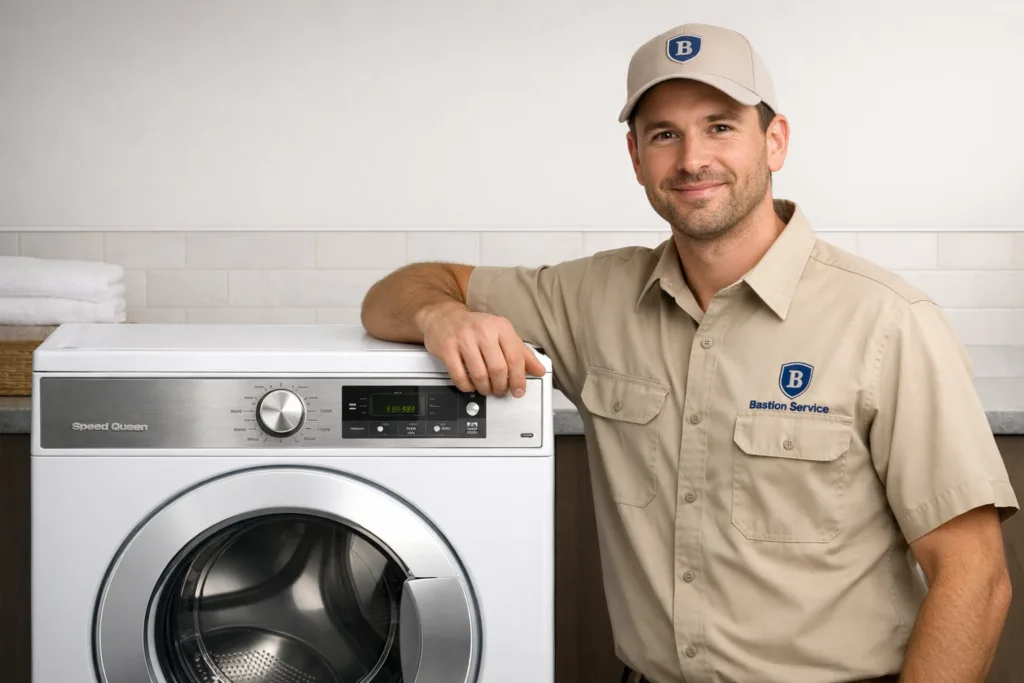
Dryer problems usually become noticeable in everyday laundry first: towels stay damp after a full cycle, the cabinet feels hotter than normal, the drum starts squealing, or the machine simply refuses to start. With a Speed Queen dryer, the most useful next step is to match the symptom to the system that is most likely failing rather than guessing at a part.
Common Speed Queen dryer problems seen in Santa Monica homes
Most service calls fall into a few familiar patterns. While the symptoms can seem similar at first, the repair path can be very different depending on whether the issue involves heat production, airflow, drum support, controls, or electrical supply.
Dryer runs but produces no heat
If the drum turns normally but clothes come out cold, the problem may involve the heating circuit or fuel ignition components, depending on the dryer type. Electric models may have an issue with the element, thermostat, thermal fuse, or incoming power. Gas models can show similar no-heat symptoms when the igniter or gas valve components fail.
This is one of the most common situations where symptom-based diagnosis matters. A dryer can appear to have a bad heating part when the real cause is elsewhere in the circuit, and replacing parts without testing can lead to extra cost without fixing the machine.
Dryer heats up but takes too long to dry
When heat is present but drying performance is weak, airflow is often part of the story. Lint buildup in the internal path, restricted venting, crushed ducting, or a cycling issue can all cause long dry times. Clothes may feel warm yet still remain damp because moisture is not leaving the dryer as it should.
Warning signs include:
- Loads needing two or three cycles to finish
- The dryer feeling unusually hot on the outside
- A strong hot-lint smell during operation
- Thick items drying unevenly while light items overdry
Continued use under these conditions can put added strain on heating components and other internal parts.
Dryer makes squealing, thumping, scraping, or grinding sounds
New noise is often a mechanical wear issue rather than something that will go away on its own. Common causes include worn drum rollers, a weak idler pulley, a damaged belt, drum glides, or an object caught where it should not be. A rhythmic thump may point to support wear, while a high squeal often suggests parts in the belt path are drying out or failing.
If the sound gets worse from one load to the next, it is wise to stop using the dryer before a small support problem turns into a larger no-run repair.
Dryer will not start or stops mid-cycle
A no-start or intermittent shutoff problem may involve the door switch, start circuit, motor, thermal protection, timer, or electronic control components. In some cases, the machine works again after cooling down, which can suggest overheating or a motor-related fault. In others, the dryer may appear completely unresponsive even though power is present.
These symptoms are worth checking promptly because repeated attempts to run the dryer can increase wear on already stressed components.
How specific symptoms help narrow down the cause
Looking at the full pattern of behavior often reveals more than any one symptom alone. For example, no heat by itself suggests one set of likely failures, but no heat combined with a normal drum speed, no unusual noise, and consistent cycle operation points the diagnosis in a more focused direction. Long dry times combined with overheating suggest something different from long dry times with low heat.
Helpful details include:
- Whether the drum is turning normally
- Whether the dryer gets hot, slightly warm, or stays cold
- Whether the cycle ends too early or runs too long
- Whether the issue happens every load or only sometimes
- Whether there is any burning odor, humming, or breaker tripping
These details help determine whether the problem is isolated or whether one issue may have contributed to another.
Signs the problem may be airflow-related
Airflow restrictions are especially important to catch early because they can mimic other failures. A Speed Queen dryer with poor venting may still heat, but the trapped hot air prevents proper moisture removal and can push internal temperatures higher than intended.
Airflow may be part of the problem if you notice:
- Clothes drying slowly even though the dryer is clearly heating
- The laundry room feeling unusually warm during operation
- The dryer shutting off before a load is actually dry
- Outside panels becoming hotter than usual
- A musty or burnt-lint smell during cycles
In these cases, the repair decision should take both the failed component and the venting condition into account.
When to stop using the dryer and schedule service
Some symptoms are more than an inconvenience. If the dryer produces a burning smell, trips the breaker, becomes excessively hot, grinds loudly, or stops mid-cycle repeatedly, it should not be pushed through normal household use until the cause is checked. These conditions can increase component damage and may create a safety concern.
It also makes sense to schedule service when:
- Laundry is no longer drying in one normal cycle
- The dryer starts only after repeated attempts
- The drum turns unevenly or sounds rough
- Heat seems inconsistent from one cycle to the next
- The machine has become unreliable enough to disrupt weekly laundry
Repair or replace?
Many Speed Queen dryer problems are practical to repair when the failure is limited to a serviceable part and the rest of the machine is in good working condition. That is often the case with isolated heating faults, support component wear, switch failures, or certain control-related issues.
Replacement becomes a more serious consideration when diagnosis shows multiple major failures, heavy overall wear, or a repair path that does not make sense compared with the condition of the appliance as a whole. The age of the dryer matters less than how it has been operating overall and whether the repair is likely to restore reliable use.
What a focused repair visit should accomplish
A useful service call should do more than identify one failed part. It should explain why the symptom is happening, whether any related wear or airflow issues are contributing, and what repair path makes sense for the machine in its current condition. That gives homeowners in Santa Monica a clearer basis for deciding how to move forward.
Whether the issue is no heat, long dry times, startup trouble, or drum noise, the goal is to restore normal laundry use with a repair that fits the actual condition of the dryer rather than a trial-and-error approach.