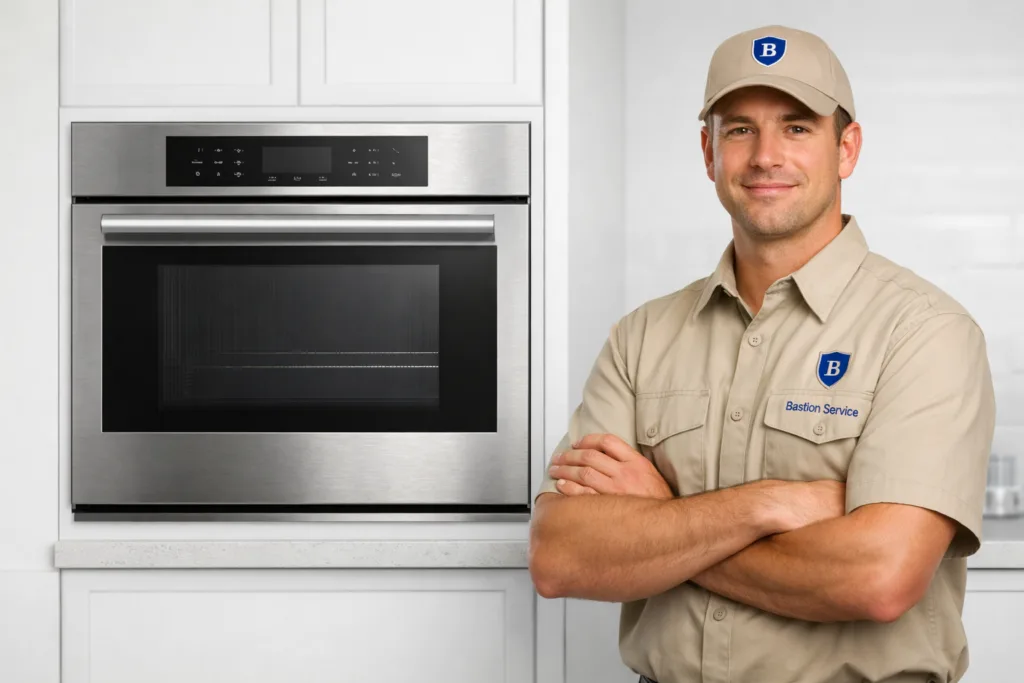
Wall oven problems often start with subtle signs: longer preheat times, uneven browning, temperatures that feel off, or a display that behaves inconsistently. With Bosch units, those symptoms can point to very different failures, so the most useful next step is to match the behavior of the oven to the most likely component or electrical issue before deciding on repair.
How Bosch wall oven problems usually show up
Many homeowners notice performance changes before the oven stops working completely. A dish that always baked evenly may start coming out pale on one side. Preheat may seem normal one day and noticeably slow the next. In some cases, the control panel responds, lights come on, and the fan runs, but the cavity never reaches the selected temperature.
That symptom pattern matters because a no-heat complaint can come from an element issue, a sensor reading incorrectly, a relay not sending power, a control problem, or wiring damage. The right repair path depends on which part is actually failing and whether the problem affects bake, broil, convection, or multiple functions.
Common symptoms and what they can mean
Oven will not heat
If the oven powers on but stays cool, the cause may be a failed bake element, a broil element that is not assisting preheat, a bad temperature sensor, a control board fault, or a wiring problem inside the unit. On some models, the display can appear normal even while the heating circuit is not operating correctly.
This is usually more than a convenience issue. Continued attempts to run the oven can place extra stress on controls and relays, especially if the appliance is repeatedly trying to start a heat cycle without completing it.
Slow preheat
A Bosch wall oven that eventually gets hot but takes much longer than usual may have a weak heating element, a sensor that is reading out of range, or a control problem affecting how the oven cycles during warmup. Slow preheat is easy to tolerate for a while, but it often develops into poor temperature performance or complete no-heat if ignored.
Uneven baking or temperature swings
If cookies brown unevenly, casseroles need extra time in the center, or recipes that used to be reliable suddenly become inconsistent, the oven may be cycling incorrectly. Possible causes include sensor drift, convection fan issues, element problems, or control faults that cause the oven to overshoot and undershoot temperature.
These complaints are especially common when the unit still “works,” which can make diagnosis feel less urgent. But recurring temperature instability usually indicates a real component issue rather than normal variation.
Error codes, resets, or touchpad issues
Fault codes and control glitches can point to communication errors, sensor failures, latch faults, moisture or heat damage affecting electronics, or a failing user interface. If the display flickers, buttons stop responding, or the oven shuts off mid-cycle and then comes back, the problem is typically deeper than a simple reset.
Intermittent electronic symptoms can also become less predictable over time, which is why it helps to note exactly when the failure happens and whether it appears during preheat, cooking, or self-clean.
Door will not lock, unlock, or seal well
Door-related problems can affect both safety and cooking results. A worn gasket, damaged hinge, faulty latch motor, or switch issue may allow heat to escape or prevent the oven from entering or exiting certain cycles properly. If the door seems misaligned or the lock system is stuck after self-clean, forcing it can create a larger repair.
Breaker trips or oven loses power during use
When a wall oven trips the breaker, shuts down after heating for a while, or cuts out unexpectedly, the issue may involve a shorted element, damaged wiring, a failing relay, or another electrical fault. This is one of the clearest signs to stop using the appliance until it has been evaluated, especially if there is a burning smell or visible arcing.
Symptoms that should not be ignored
Some issues are mainly about cooking performance. Others can lead to further damage if the oven keeps running in a compromised state. It is smart to pause use and arrange service when you notice:
- Repeated breaker trips
- Burning electrical smells
- Overheating or food scorching unexpectedly fast
- Sparking or popping sounds
- An oven that shuts off and restarts on its own
- A door latch that will not release properly
These symptoms suggest more than ordinary wear and can increase repair scope if they continue.
What helps speed up diagnosis
Before service, it helps to note a few simple details. Homeowners in Mid-Wilshire can make a Bosch wall oven visit more efficient by paying attention to whether the problem affects bake only, broil only, convection only, or every mode. It is also helpful to know whether the issue started suddenly or worsened gradually.
Other useful observations include:
- Whether the oven reaches any temperature at all
- How long preheat takes compared with normal
- Any error code shown on the display
- Whether the issue began after a self-clean cycle
- Whether the breaker trips immediately or only after the oven gets hot
- Any unusual smells, fan noises, or clicking sounds
Those details often help separate a straightforward component failure from a more involved electrical or control issue.
Repair or replace?
Many Bosch wall oven repairs are worthwhile when the failure is limited to a sensor, element, fan motor, latch part, or isolated control-related component. Replacement becomes a bigger consideration when the appliance has multiple failing systems, a long history of repeated issues, or major electronic problems combined with age and limited part availability.
The practical decision usually comes down to the condition of the oven overall, the specific failed parts, expected reliability after repair, and whether the cost makes sense for the unit’s remaining service life. A symptom-based inspection is the best way to make that call without guessing too early.
What residential service should focus on
For households in Mid-Wilshire, the goal is usually simple: restore normal cooking without wasting time on trial-and-error part changes. Good Bosch wall oven repair in Mid-Wilshire should identify the actual fault, confirm whether continued use is safe, and outline the repair path based on the oven’s exact behavior rather than a broad assumption.
That is especially important with built-in cooking appliances, where temperature control, door operation, and electrical performance all affect everyday use. When the symptom is understood clearly, homeowners can make a better decision about timing, cost, and whether repair is the right next step.